 comparison
Strength Coaching Programs Compared for Real Results
Last Updated: October 30, 2026
Quick Summary
A quality strength coaching program delivers a written plan built around your goals, movement feedback on how you execute each lift, and progress tracking that shows whether the plan is working. Judge any program on exercise selection, personalization, coaching feedback, progress tracking, and total cost before you pay.
- Life Time's 2026 Wellness Survey found 42.3% of respondents named getting physically stronger as their top health goal.
- Weekly video review of your main lifts is worth more than daily text check-ins that never look at your movement.
- Barbell Logic frames remote coaching against an in-person trainer at $75 per session, or about $900 per month for 12 sessions.
- Three training days per week done consistently for a year beats six days abandoned by February.
- Re-test a benchmark lift every four weeks and adjust volume if two sessions in a row feel flat.
Table of Contents
- What Strength Coaching Programs Actually Deliver
- How We Evaluated These Strength Coaching Programs
- Online Strength Coaching: What Remote Programs Can and Cannot Do
- Doug Briggs Strength: Personalized Coaching Backed by 30 Years
- Trainwell, Future, and Barbell Logic: How the Subscription Options Stack Up
- Building a Personalized Strength Training Program That Fits Your Week
- A Strength Training Program for Beginners: What to Expect in the First 90 Days
- Turning Any Strength Training Workout Plan into Measurable Progress
- Frequently Asked Questions
What Strength Coaching Programs Actually Deliver
According to Life Time's 2026 Wellness Survey, 42.3% of respondents named getting physically stronger as their top health goal for the year, making it the survey's most common answer.
A quality strength coaching program delivers a written plan built around your goals, movement feedback on how you execute each lift, and progress tracking that shows whether the plan is working.
Below, we break down what each type of program actually delivers, what it costs, and who it suits.
| Program Type | Typical Format | Coaching Feedback | Best For |
|---|---|---|---|
| Personalized coaching | Custom plan, direct coach access | Ongoing, individual | Athletes with specific goals or limitations |
| Subscription app | One-on-one remote coach, monthly fee | Regular, app-based | People who want structure and accountability |
| Template or course | Fixed program, self-guided | None or limited | Self-directed lifters on a budget |
| Certification course | Curriculum and exam prep | Instructor-led coursework | People pursuing a coaching credential |
How We Evaluated These Strength Coaching Programs
Strength coaching programs can be judged on several criteria: exercise selection quality, personalization, coaching feedback, progress tracking, and total cost. A program that ignores your injury history or schedule fails no matter how good the programming is. Here is the mechanism behind each criterion, and how to run the same evaluation yourself before you pay anyone.
1. Exercise Selection Quality
Good programming is not a list of hard exercises; it is a list chosen to close a specific gap. Ask whether the plan includes a squat pattern, a hinge, a push, a pull, and a carry or rotation, and whether variations suit your training age. A beginner needs stable, loadable movements; an experienced lifter needs variation to keep progressing. If the program cannot explain why an exercise is in the plan, that is a warning sign.
2. Personalization
Personalization is not a questionnaire. It is whether the plan changes when your inputs change. A coach who adjusts your volume because you slept poorly or a lift stalled is personalizing. A coach who sends the same eight-week block to every client is not, however detailed the intake form.
3. Coaching Feedback
Feedback has a frequency and a format. Weekly video review of your main lifts is worth more than daily text check-ins that never look at your movement. The National Strength and Conditioning Association sets the standard for certified strength and conditioning professionals, so we weighted whether a coach holds real credentials, but credentials tell you the coach passed an exam, not that they will review your footage.
4. Progress Tracking
A program that tracks progress should be able to show you a trend line, not just a log. Load and reps on the main lifts are the baseline. Sleep, soreness, and adherence are the context that explains the trend. If a service cannot export your data or show you a four-week comparison, you cannot tell whether the plan is working.
5. Total Cost
A program that tracks progress should show a trend line, not just a log. Load and reps on the main lifts are the baseline; sleep, soreness, and adherence explain the trend. If a service cannot export your data or show a four-week comparison, you cannot tell whether the plan is working.
The Category Problem Nobody Resolves
Total cost is not the monthly sticker price. Add the subscription, any equipment you need, and the value of your time. A $149-per-month service requiring a barbell, plates, and a rack is a different purchase than one that works with bodyweight and dumbbells. Ask what is included and what is extra before comparing two numbers.
Our Verdict
The results for this keyword mix four different products: athlete training programs, coach certification courses, subscription coaching apps, and one-to-one coaching practices. They are not substitutes, and comparing them on price alone is a mistake. A certification course is a career investment; a subscription app is an accountability tool; a personalized practice is a service relationship. Decide which category you are shopping in first.
Online Strength Coaching: What Remote Programs Can and Cannot Do
Online strength coaching is remote programming and feedback delivered through an app or video calls, and it works well when the coach reviews your training footage and adjusts your plan. It cannot replicate hands-on cueing, so lifters with complex movement problems may need in-person sessions first.
What remote coaching does well:
- Fits training around a busy week
- Delivers written programming you can review
- Makes feedback possible through video review
What it struggles with:
- Correcting subtle technique faults in real time
- Building the trust that comes from shared gym time
If you are weighing a remote arrangement, our guide on how to hire a personal strength coach online walks through the process step by step.
Doug Briggs Strength: Personalized Coaching Backed by 30 Years
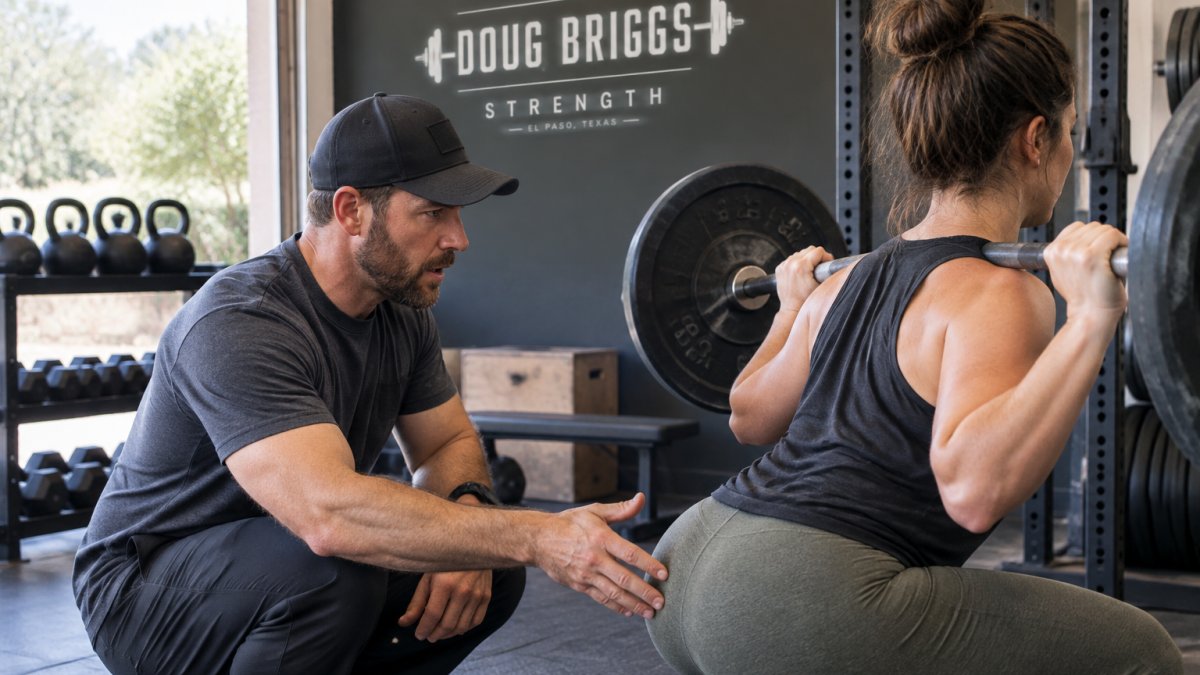
Doug Briggs Strength is a personalized coaching practice built on more than 30 years of experience with youth, adult, and tactical athletes.
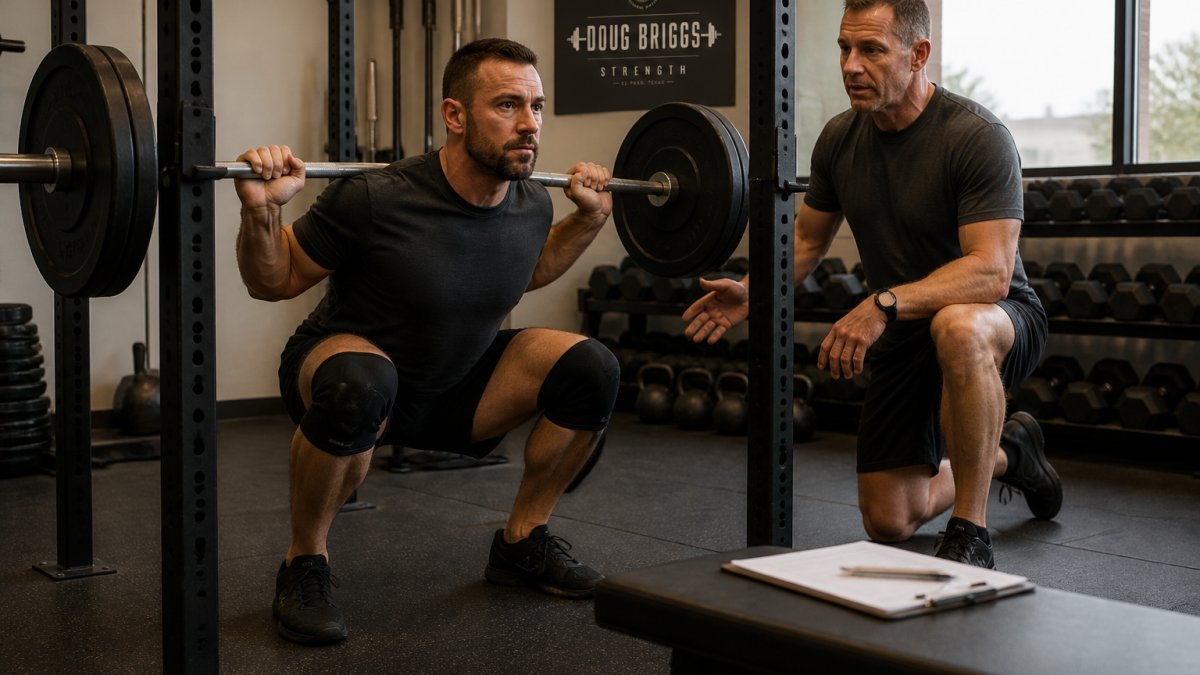
Credentials include a Ph.D., CSCS,*D, and RSCC,*E, with ties to the National Strength & Conditioning Association (NSCA), USA Weightlifting (USAW), and The Cooper Institute. The practice also offers hands-on, gym-based seminar options for athletes who want in-person instruction.
Where Doug Briggs Strength Wins
Personalization is the core strength. Clients get a plan built around their goals and lifestyle. See measurable results from personalized fitness coaching.
Where It Falls Short
Pricing depends on the program and format, so request current rates directly from Doug Briggs Strength.
Trainwell, Future, and Barbell Logic: How the Subscription Options Stack Up
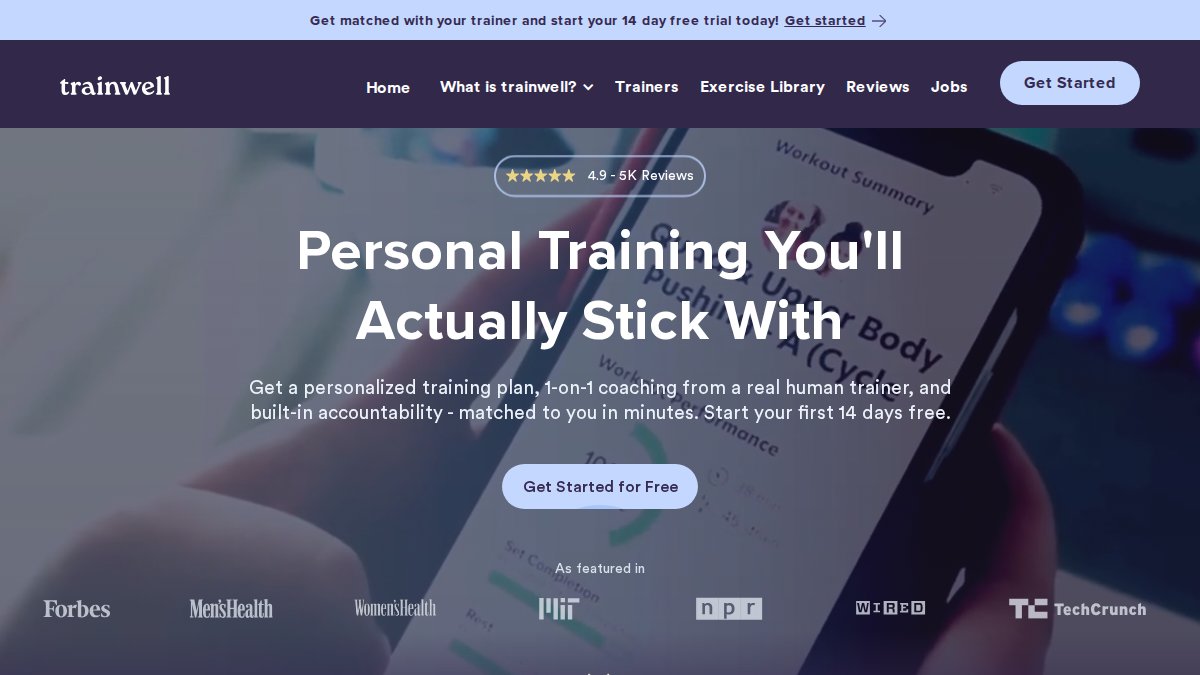
Barbell Logic offers online coaching and frames its value against in-person training. Its own page estimates an in-person trainer at $75 per session, three times per week, or about $900 per month for 12 sessions. That comparison is useful context, not a statement of Barbell Logic's own price, which the source does not list. The framing matters, though: Barbell Logic is arguing that remote coaching should be judged against the $900-per-month in-person alternative, not against a $15 app subscription.
What the Subscription Tier Shares
All three deliver recurring monthly cost, app-based delivery, and a coach who reviews your training. None of them require you to buy a package of sessions up front, and all three let you cancel on a monthly cadence rather than an annual contract. That flexibility is the main reason this tier has taken share from traditional personal training.
Where the Subscription Tier Falls Short
What these services lack is depth of practice. A subscription coach may carry a certification, but the service is built to scale, which means your coach is managing a book of clients and your programming is likely drawn from a template library rather than built from scratch around your injury history, sport, and schedule. That is not a knock on the coaches, it is a structural feature of the business model.
How to Choose Within the Tier
Use three questions to separate them:
- What does the coach actually review? Video form checks and written feedback are worth more than a chat thread that says "nice work."
- What is the cancellation and refund policy? Month-to-month is standard, but confirm before you enter payment details.
If you want to see how subscription apps compare more broadly, read our breakdown of alternatives to generic fitness apps for strength.
Building a Personalized Strength Training Program That Fits Your Week
A personalized strength training program starts with your real schedule, not an ideal one. Three training days per week, done consistently for a year, beats six days abandoned by February.
Start with these decisions:
- Pick training days you can protect, including one backup day
- Choose compound lifts first: squat, hinge, press, pull
- Set a weekly volume you can recover from
- Track load and reps for every working set
The JEFIT analysis of 2026 strength training trends identifies structured recovery, intentional volume, and consistent progress tracking as the priorities shaping programming this year.
For a deeper walkthrough on scheduling, see our guide to the best training plan that fits your life for consistency.
A Strength Training Program for Beginners: What to Expect in the First 90 Days
A strength training program for beginners typically focuses on technique and consistency in the first few weeks, with load added gradually as form holds.
Beginners who start with a clear list of exercises progress faster. Our article on 5 basic strength training exercises for beginners covers the movements you will actually be doing in the first weeks.
Turning Any Strength Training Workout Plan into Measurable Progress
A strength training workout plan becomes measurable when you define the numbers before you start. Pick two or three markers, record them weekly, and review the trend every four weeks.
Use this tracking checklist:
- Record load and reps for every main lift
- Note sleep and soreness on a 1-5 scale
- Film one set per lift each week for form review
- Re-test a benchmark lift every four weeks
- Adjust volume if two sessions in a row feel flat
Changing exercises every few weeks can make results harder to compare, so keeping the main lifts stable helps progress tracking mean something.
The SFIA's 2026 fitness participation trends note that strength training participation keeps growing, which means more noise in the market. A coach who tracks your numbers cuts through it.
Frequently Asked Questions
What should a strength coaching program include?
A solid program covers a structured training plan built around your goals, exercise selection matched to your experience and any injuries, and regular feedback on technique. It should also include progress tracking so you can see whether strength, mobility, and movement quality are improving.
Are online strength coaching programs effective?
Online strength coaching works when it includes real one-on-one attention rather than a generic template. Remote programs like Trainwell, at a reported $149 per month, and Future, listed at $149 to $199 per month, pair clients with a coach. The deciding factor is whether the coach adjusts your plan based on your feedback and schedule. A 2019 case study of a graduate soccer coaching program found that curriculum and delivery quality shaped outcomes, and the same applies to remote coaching.
How much does strength coaching typically cost?
Costs vary widely by format. Subscription coaching runs around $149 to $199 per month for services like Trainwell and Future. In-person personal training is far more expensive: Barbell Logic's comparison cites $75 per session, three times a week, or about $900 per month. Doug Briggs Strength does not publish pricing because it depends on the program format, session frequency, and whether you choose remote or gym-based seminars. Request a quote for current rates.
Is personalized coaching better than a strength training app?
Apps deliver a plan; a coach adjusts it. Personalized coaching accounts for old injuries, a three-day-a-week schedule, and goals like feeling strong rather than building a bodybuilder physique. Personalized coaching can adjust a plan as your progress and needs change.
Most strength coaching programs sell you a plan and hope you follow it. The ones that work hold you accountable to numbers you can see. Doug Briggs Strength combines 30+ years of coaching experience with personalized programming, progress tracking, and hands-on seminar options, so your training fits your life and your results are measurable. Get started with Doug Briggs Strength and book a free consultation to build a plan around your goals.