 comparison
Bench Press Coach: How to Choose the Right One
Table of Contents
- What a Bench Press Coach Actually Does for You
- Bench Press Coach Comparison: Services, Formats, and What You Get
- What Does Powerlifting Coach Cost Actually Cover?
- Online Powerlifting Coaching: How Remote Bench Work Really Runs
- What a Bench Press Form Check Should Catch
- Matching a Bench Press Training Program to Your Goal
- How to Evaluate a Coach Before You Pay
- Conclusion
- Frequently Asked Questions
Last Updated: October 13, 2026
What a Bench Press Coach Actually Does for You
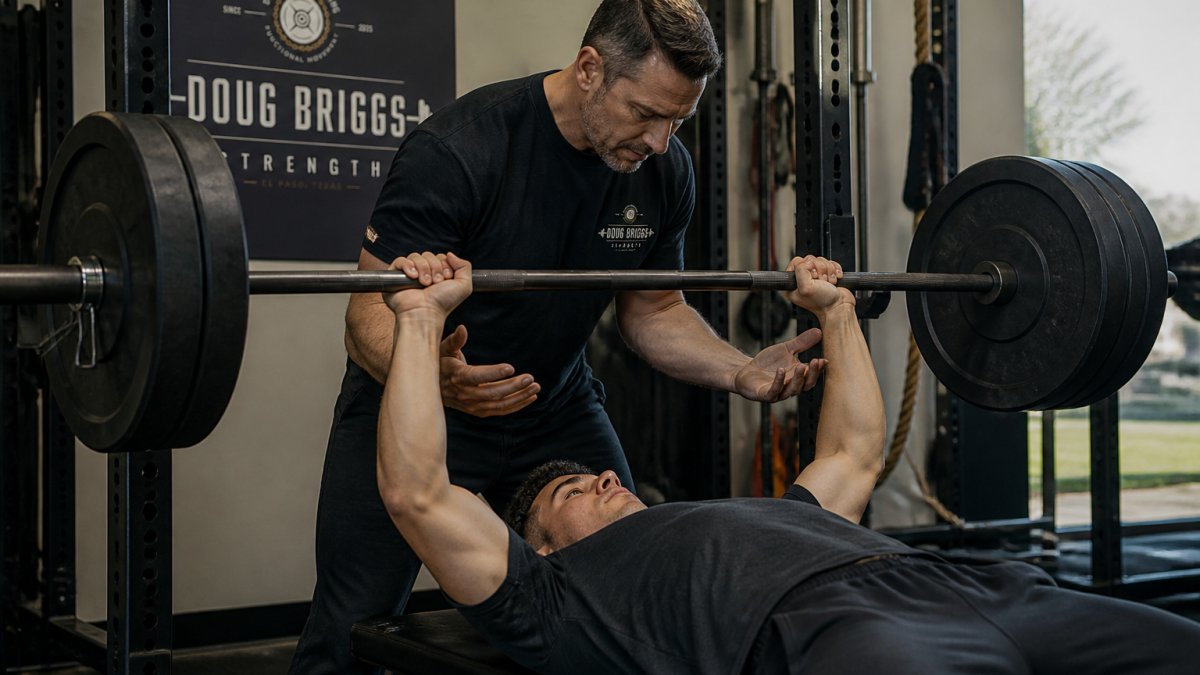
A bench press coach watches how you set up, brace, and press, then corrects the faults holding your numbers back, the difference between adding weight for years and stalling at the same plate for twelve months.
At Doug Briggs Strength, we have spent more than 30 years coaching youth, adult, and tactical athletes, and the pattern is always the same: lifters do not fail from lack of effort, but because nobody has told them what their bar path actually looks like.
Coaching vs. Free Programs: What Changes
Free programs give you a spreadsheet. A coach gives you a diagnosis.
A well-built bench press training program tells you sets, reps, and percentages.
If you have run free programming for a year and your bench has not moved, the problem is almost certainly technique, not volume. A coach identifies the fault, prescribes the fix, and checks whether it held.
Bench Press Coach Comparison: Services, Formats, and What You Get
The bench press coaching market splits into four formats, each suiting a different lifter. Knowing which one you need saves money and wasted months.
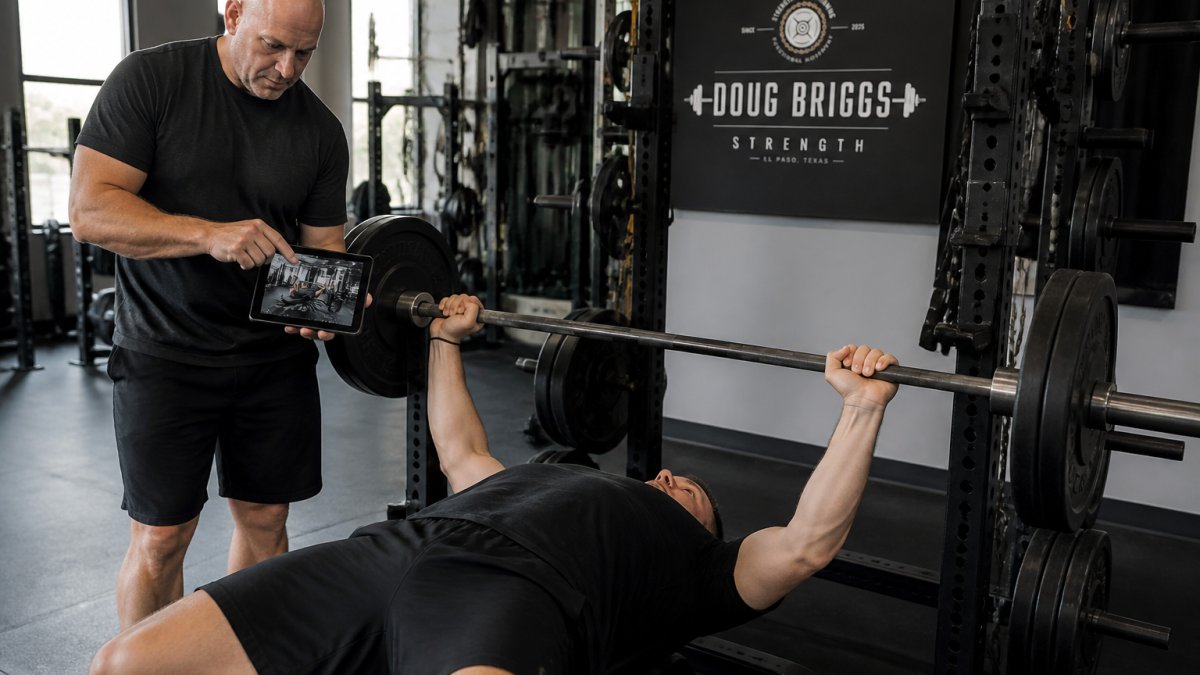
Specialist bench coaching focuses narrowly on the press itself, including equipped lifting. KolbStrong bench press coaching is built around this model, with options centered on improving the bench and equipped pressing.
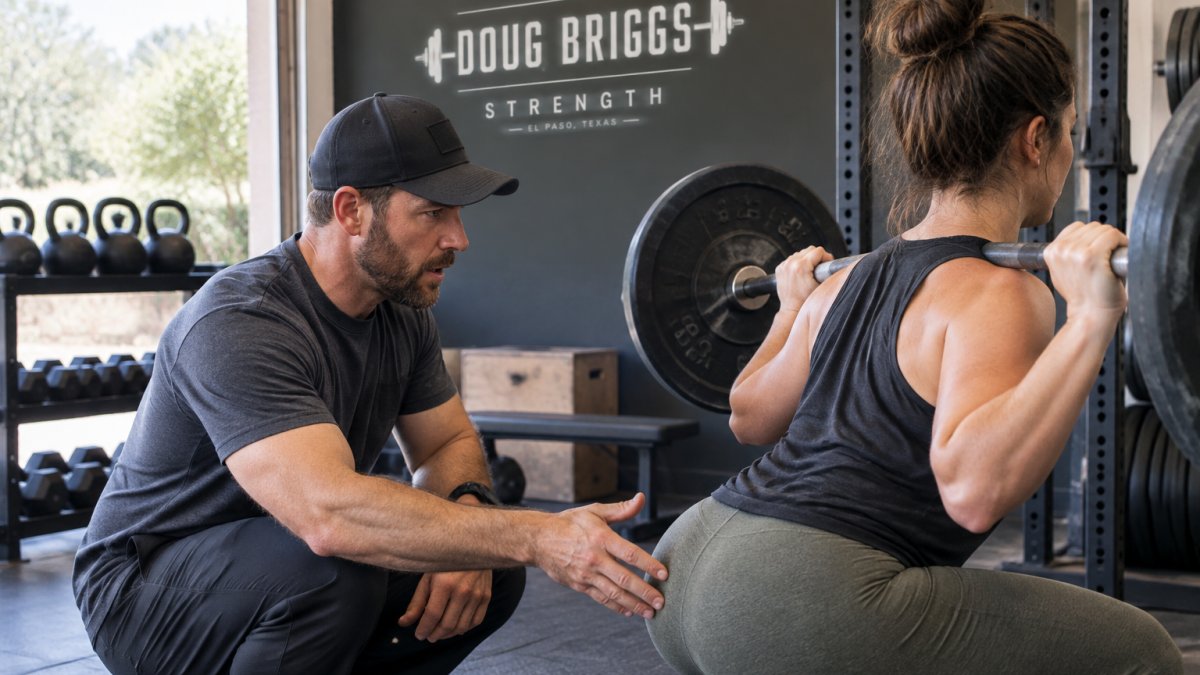
Single-session private coaching suits lifters who need one sharp correction. A 90-minute session covers squat, bench, or deadlift form and includes a short follow-up plan.
Free program libraries give you structure without individual attention. Lift Vault's bench press program collection lists multiple bench programs with spreadsheets and selection guidance.
Side-by-Side Comparison Table
| Format | What You Get | Typical Pricing Structure | Best For | Feedback Style |
|---|---|---|---|---|
| Specialist bench coaching | Narrow press focus, equipped options, shirt and groove work | Higher per-hour or per-block rate | Competitive pressers | Direct, technical |
| Single private session | 90 minutes plus short written plan | One-time fee | One-off form correction | In-person or live video |
| Ongoing remote coaching | Video review plus written plan and adjustments | Monthly retainer | Busy adults training 3 days a week | Asynchronous, scheduled |
| Free program libraries | Spreadsheets and selection tips | Free | Beginners building a base | None |
How to Read the Table
Two services at the same monthly rate can deliver very different value. Ask four questions in writing before you pay:
- How many video reviews per month, and what is the turnaround time?
- How many programming adjustments per month, and who initiates them?
- Is there direct messaging access, or only scheduled check-ins?
- What happens if progress stalls, and is that included or an upsell?
A coach who answers all four clearly is selling coaching; one who deflects to a sales page is selling a template.
What Does Powerlifting Coach Cost Actually Cover?
Powerlifting coach cost reflects time, attention, and how much of your training the coach owns. Two services at the same price can deliver wildly different value, so the useful question is not "what does it cost" but "what does that cost buy."
Most coaching fees cover some combination of five inclusions:
- An initial movement assessment, often by video
- A written training plan with sets, reps, and percentages
- Video review of your lifts on a set schedule
- Written cues specific to your faults
- Ongoing contact, either scheduled check-ins or direct messaging
What varies is how much of that is individual. A generic template with a monthly check-in is not the same product as weekly video breakdowns with cues written for your body. The price can be identical. The value is not.
What Drives the Price Up or Down
Four factors move the number more than anything else:
Frequency of video review. Weekly review costs more than monthly review because it consumes more coach time, the single biggest driver of price differences between otherwise similar services.
Direct contact access. A service that lets you message your coach between sessions costs more than one limited to scheduled check-ins.
Specialization. A coach who only trains the bench, or only equipped lifters, can charge more because the diagnosis is faster and cues more precise.
Programming ownership. If the coach writes and adjusts your entire plan, you are paying for more than form correction.
What to Ask Before You Pay
We do not publish rates because a single number would mislead you; cost tracks the amount of individualized attention involved. Ask any coach for a written list of what is included before you pay, and compare that list, not the headline figure. Specifically:
- How many video reviews per month, and what is the turnaround time?
- How many programming adjustments per month?
- Is direct messaging included, or is contact limited to scheduled check-ins?
- What happens when progress stalls, and is that included?
- Is there a minimum commitment, and what is the cancellation policy?
A coach who answers all five in writing is selling a defined service; one who answers vaguely is selling a hope.
Measuring Whether You Got Your Money's Worth
Price only makes sense against outcomes. Track four measures over a training block:
- Estimated one-rep max, tested or calculated from a heavy set
- Successful attempts at a target weight, not just attempts
- Technique consistency, judged by whether the same faults recur on video
- Training adherence, meaning the percentage of prescribed sessions you actually completed
If your estimated max is climbing, your technique faults are shrinking, and you are hitting your sessions, the coaching is working regardless of the rate. If none move after a full block, the price was too high no matter what you paid.
Online Powerlifting Coaching: How Remote Bench Work Really Runs
Online powerlifting coaching works through video, and it works well when the feedback loop is short. Quality depends almost entirely on turnaround time.
Here is how a typical remote cycle runs:
- You film your bench sets from a front and side angle at the prescribed weights.
- You upload the footage to the coach's platform or shared folder.
- The coach reviews bar path, touch point, and tension, then writes cues specific to your faults.
- Your next week's plan adjusts based on what the footage showed.
- You repeat, and the coach tracks whether the correction held under heavier load.
The variable separating good remote coaching from bad is how fast that loop closes. A coach who reviews your footage within a day or two can adjust training while the fault is fresh; one who reviews monthly is guessing.
Can remote coaching match in-person work? For most lifters, yes.
What a Bench Press Form Check Should Catch
A bench press form check should catch the faults you cannot feel, which is most of them. Lifters are poor judges of their own bar path.
When we review a bench press, we look at a fixed checklist. Use the same one to evaluate any coach's feedback:
- Setup: shoulder blades retracted and pinned to the bench before the unrack
- Grip width: forearms vertical at the bottom, wrists stacked over elbows
- Foot placement: feet set flat or on the toes, positioned to drive
- Leg drive: force pushed through the floor, not just planted feet
- Upper-back position: stable arch held through the whole rep
- Full-body tension: glutes and quads engaged, no slack anywhere
- Bar path: bar travels down and back, then up and slightly toward the face
- Touch point: consistent contact on the chest, same spot every rep
- Lockout: elbows locked without losing shoulder position
- Breathing: air held and braced through the descent
If a coach's feedback does not reference at least three of these, you are getting encouragement, not analysis. Form correction is specific: "keep your shoulders tight" is not a cue; "retract your scapula and hold it as the bar touches" is.
Matching a Bench Press Training Program to Your Goal
The right bench press training program depends on your goal, and the answer changes the whole plan.
If you are returning from a shoulder injury, the plan starts with range of motion and control before load.
For busy professionals training three days a week, consistency beats optimization. A three-day plan you actually complete will outperform a five-day plan you skip half of.
How to Evaluate a Coach Before You Pay
Evaluate a coach on credentials, feedback specificity, and fit, in that order. Certifications are the floor, not the ceiling.
Start with credentials. Look for a Certified Strength and Conditioning Specialist with Distinction (CSCS,*D) or a Registered Strength and Conditioning Coach, Emeritus (RSCC,*E) through the National Strength and Conditioning Association.
Then test the feedback. Send a short video before committing and see what comes back.
Ask about the population they work with.
Finally, ask what happens when progress stalls. Good coaches change the stimulus, revisit technique, or adjust recovery. Coaches without an answer simply add more weight and hope.
Conclusion
Finding the right bench press coach comes down to one question: does this person watch you lift and tell you something you did not already know? If not, you are paying for programming you could find free.
Doug Briggs Strength builds every plan around the individual, drawing on more than 30 years of coaching experience across youth, adult, and tactical athletes. If you train three days a week and want measurable results, book a free consultation and we will map out where your bench actually stands.
Frequently Asked Questions
What should I look for in a bench press coach?
Look for credentials first: a CSCS or similar certification, plus documented coaching experience with lifters at your level. Then check whether the coach offers individualized feedback rather than a template. Ask how they handle a bench press form check, what turnaround you get on video review, and whether they program around your schedule. A coach who asks about your injury history, training days, and goals before quoting a plan is doing the job properly.
How much should a powerlifting coach cost?
Pricing depends on format, session length, and how much individualized attention you get. Single in-person sessions, monthly remote programming, and full one-on-one coaching sit at very different points. Some coaches publish rates; others quote after a consultation. Rather than anchoring on a number, compare what each option includes: form review frequency, programming updates, and direct access. Ask for a written scope before committing so the powerlifting coach cost matches what you actually receive.
Is online bench press coaching effective?
Online powerlifting coaching works well when the feedback loop is tight. Video submitted from a consistent angle, reviewed within a set turnaround, with specific cues returned, produces the same technique corrections as in-person work for most lifters. What remote coaching cannot replicate is hands-on spotting and immediate physical adjustment during a heavy attempt. If you train alone, pair remote coaching with a reliable spotter or safety pins for maximal lifts.
How often should a coach review my bench press form?
Every heavy session deserves a review, but that is rarely practical. A workable rhythm is one video submission per week during a technique block, dropping to every two to three weeks once your setup and bar path hold steady under load. New lifters and anyone returning from a shoulder injury should submit more often at first. Ask your coach to set the cadence explicitly, and film from a 45-degree angle so grip width, touch point, and bar path are all visible.
Do I need a powerlifting coach to increase my bench press?
Not always. A free bench press training program with clear progression can add weight for a lifter with clean technique and no injury history. A coach earns their place when progress stalls, when pain shows up, when you compete and need peaking, or when you cannot tell why a lift failed. The deciding factor is whether you can diagnose your own sticking points. If you cannot, individualized feedback saves months of guessing.