 how-to
Hire a Personal Strength Coach Online: A Step-by-Step Guide
Table of Contents
- Why Hire a Personal Strength Coach Online
- How to Choose an Online Fitness Coach
- Questions to Ask a Potential Strength Coach
- Understanding Online Strength Training Program Cost
- What to Expect From a Customized Workout Program
- How Online Coaches Provide Real-Time Feedback and Accountability
- Getting Started With Your Online Strength Coach
- Frequently Asked Questions
Last Updated: September 20, 2026
Why Hire a Personal Strength Coach Online
When you hire personal strength coach online, you get programming built specifically for your body, goals, and life, not generic programs designed for thousands.
A certified personal trainer assesses your movement patterns, adjusts exercises in real time, and provides direct feedback on form and program fit, eliminating guesswork.
Online coaching often provides more accountability than in-person training through video consultations, progress tracking, and regular check-ins, and consistency beats intensity in strength training.
The real advantage of hiring a personal strength coach online is that you can work with someone who specializes in your specific situation. Whether you're recovering from an injury, training for tactical performance, managing a busy schedule, or learning strength training fundamentals as a woman in a male-dominated space, you can find expertise tailored to your needs. Doug Briggs Strength, for example, brings 30 years of coaching experience to athletes across all these categories, without requiring you to be in the same location.
How to Choose an Online Fitness Coach
Choosing the right online fitness coach depends on four factors: credentials, experience with your goals, coaching style fit, and communication preferences.
Not all certifications carry equal weight. The most respected come from organizations requiring extensive education and continuing education, like the NSCA or USAW.
A certified coach may lack experience with your specific situation. If you're a woman new to strength training, recovering from injury, or tactical personnel, you need a coach with relevant experience in your domain.
Check Certifications and Credentials
Look for certifications from the National Strength & Conditioning Association (NSCA) or USA Weightlifting (USAW), which require documented education, exams, and ongoing professional development.
Ask what credentials a coach holds and which organization issued them. Beyond formal credentials, look for specialized training relevant to your needs, corrective exercise for injury history, sport-specific experience for athletes.
Assess Experience With Your Goals
Ask about their track record with clients similar to you. If you're a busy professional, ask how many clients train 3 days per week. If recovering from injury, ask about experience with your specific injury type. Experience with your goal type reveals whether a coach understands the nuances your situation requires.
Identify Your Coaching Style Preference
Coaching style alignment is often overlooked but critical. Misalignment is a primary reason people abandon online coaching despite having a qualified professional.
Coaches range from "drill sergeants" (direct, intensity-focused) to "empathetic mentors" (collaborative, confidence-building). Ask during consultation: "How do you motivate clients who are struggling?" Their answer reveals their default style and whether it matches yours.
Also clarify communication frequency preference, daily check-ins versus monthly reviews, detailed notes versus brief instructions, to ensure alignment.
Assess Compatibility With Your Life Constraints
Ask how a coach handles constraints: "If I miss a week due to travel, how do we adjust?" A coach experienced with time-limited clients will explain their flexibility philosophy. Also clarify expectations around progress timelines and setbacks.
Questions to Ask a Potential Strength Coach
Before committing to work with a coach, ask these questions directly. Their answers reveal whether they understand your situation and can deliver what you need.
"How would you approach my specific situation?" A strong response acknowledges your constraints, history, and goals; a weak one generalizes.
"How do you handle programming when a client can only train three days per week?" A coach experienced with time-limited clients will explain how they prioritize exercises to maximize results within your constraints.
"What does accountability look like in your program?" Clarify whether they check in weekly or monthly, via app, email, or video, and ensure it matches your preference.
"How do you modify exercises when someone has an injury or limitation?" A good answer includes specific examples and demonstrates understanding of biomechanics.
"What results should I realistically expect, and on what timeline?"
Understanding Online Strength Training Program Cost
Pricing varies based on experience, customization level, and check-in frequency. Understand what drives cost differences to evaluate value accurately.
What Drives Cost Differences
Experience, credentials, and communication frequency drive cost. Tiered packages typically include: basic (initial assessment + monthly check-ins), standard (bi-weekly video reviews), and premium (weekly+ contact). Equipment requirements and time-zone complexity also affect pricing.
Financial Optimization: Insurance and HSA/FSA Eligibility
Health Savings Accounts (HSAs) and Flexible Spending Accounts (FSAs) offer another path. These tax-advantaged accounts allow you to set aside pre-tax dollars for qualified medical expenses. Personal training and strength coaching are eligible expenses under IRS guidelines if they are prescribed by a healthcare provider to treat a specific medical condition or prevent disease. This means if your doctor recommends strength training for back pain, arthritis, diabetes prevention, or post-injury recovery, you can pay for coaching with HSA or FSA funds, reducing your taxable income.
To use HSA/FSA funds for coaching:
- Obtain a written prescription or recommendation from your physician stating that strength training is medically necessary for your condition.
- Provide this documentation to your HSA/FSA administrator and ask them to approve the expense.
- Pay your coach and submit receipts to your HSA/FSA for reimbursement, or use your HSA/FSA debit card directly if the coach is set up to accept it.
Evaluating Cost Against Value
When evaluating cost, consider what you're actually getting. Generic app-based programs are inexpensive because they're not customized and offer no human feedback. A certified personal trainer providing customized programming, form correction, and accountability costs more because you're paying for expertise and attention. The question isn't whether personalized coaching is expensive, it's whether the results justify the investment.
Calculate the cost per session or per month and compare against what you'd pay for in-person training in your area. Online coaching often costs less than in-person while offering the same or greater customization, since the coach isn't limited by geography.
Also consider the cost of not hiring a coach: months of ineffective training, injury from poor form, plateau in progress, or abandonment due to lack of accountability. Many people spend more on fitness apps, supplements, and equipment than they would on a qualified coach, without getting results. A coach's expertise can prevent expensive mistakes and accelerate progress, making the investment cost-effective over a 3-6 month period.
Don't hesitate to ask a coach about payment plans, package discounts for longer commitments, or whether they offer free consultations to discuss your goals and what investment makes sense for your situation. A coach confident in their value will be transparent about pricing and willing to discuss how to make their services accessible to you.
What to Expect From a Customized Workout Program
A customized workout program built by a qualified coach looks different from what you'll find in apps or generic online programs. The difference is in the details and how the program evolves based on your response.
Your coach should conduct a thorough assessment before writing your program. This includes understanding your training history, current fitness level, movement limitations, injury history, lifestyle constraints, and specific goals. A coach who jumps straight to programming without this assessment is cutting corners.
A quality customized program includes progressive overload, gradually increasing challenge over time. Your program shouldn't stay the same for months. As you adapt, exercises progress in difficulty, weight increases, or rep ranges shift. This progression is what drives continued improvement.
The program should also account for your real life. If you travel for work, a good program includes modifications you can do in a hotel. If you have limited equipment at home, the program works with what you have. If you can only train three days per week, the program is structured to deliver results within that frequency, not designed for someone training five days per week.
How Online Coaches Provide Real-Time Feedback and Accountability
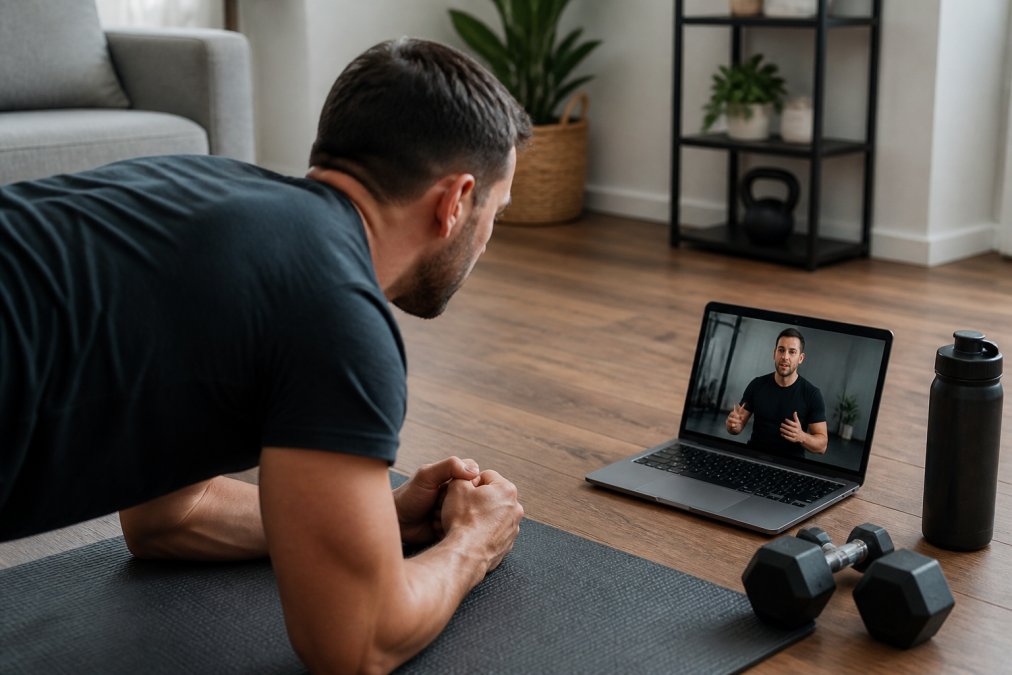
Real-time feedback separates effective remote coaching from generic programming. Video consultations allow your coach to watch your form, spot compensations, and correct movement patterns immediately, the same way an in-person trainer would.
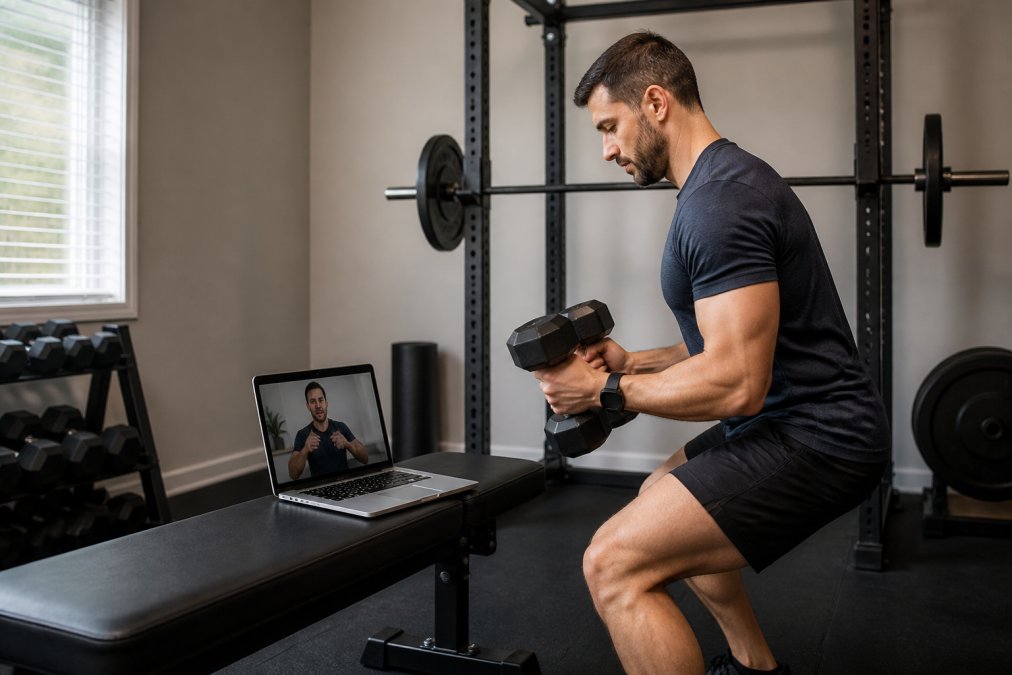
During video sessions, your coach can see whether you're moving correctly. They catch subtle issues, a slight knee drift, uneven weight distribution, or limited range of motion, and adjust your execution in real time. This feedback prevents injury and ensures you're actually training the muscles you intend to train.
Accountability happens through regular check-ins and progress tracking. Some coaches ask you to submit weekly videos of key exercises. Others schedule monthly video calls to review how you're feeling, what's working, and what needs adjustment. This structure keeps you consistent and gives your coach data to modify your program if needed.
Communication between sessions matters too. A coach who responds to questions within 24 hours provides support when you need it. A coach who disappears for weeks creates uncertainty. Clarify communication expectations upfront so you know what to expect.
Getting Started With Your Online Strength Coach
The process of getting started when you hire personal strength coach online typically follows a clear sequence. Understanding what to expect removes uncertainty and helps you prepare.
First comes the consultation.
Frequently Asked Questions
What certifications should a reputable online strength coach hold?
Look for credentials from recognized organizations like the National Strength & Conditioning Association (NSCA), USA Weightlifting (USAW), or The Cooper Institute. A certified strength and conditioning specialist (CSCS) has passed rigorous exams on exercise science, program design, and client safety. Coaches should also have CPR certification. Ask about their specific credentials and how they stay current with continuing education in strength training.
How much does an online strength coach typically cost?
Online strength training program cost varies based on the coach's experience, program customization level, and support frequency. Pricing depends on factors like one-on-one guidance intensity, nutrition coaching inclusion, and communication frequency. Contact Doug Briggs Strength or other providers directly for current pricing and package options that match your budget and training goals.
Is online strength coaching as effective as in-person training?
Online strength coaching can be highly effective when the coach provides real-time feedback through video consultations, form correction, and customized workout plans tailored to your goals and limitations. The key difference is accountability and personalization rather than location. A certified personal trainer can assess your biomechanics, adjust progressions, and provide one-on-one guidance remotely just as effectively as in person.
How do online strength coaches track progress and form?
Reputable online coaches use video consultations where you perform exercises on camera for form correction and real-time feedback. Many also request progress photos, fitness tracking data from wearables, and regular check-ins on strength gains and body composition changes. Structured programming with progressive overload ensures measurable results, and accountability features like progress reports help you stay consistent with your training frequency and exercise programming.