 Listicle
7 Best Tactical Fitness Equipment for Home Workouts
Last Updated: November 22, 2026
Quick Summary
The best tactical fitness equipment for home workouts is gear that survives hard, repeated use and trains the tasks you actually need: carrying load, moving fast under fatigue, and staying durable. Judge each piece by load capacity, construction, and footprint before you buy, then match it to your three most important tactical tasks.
- Check stated weight capacity against your heaviest realistic lift, not your current max.
- A barbell and bumper plates are the single best investment in a home tactical gym.
- Begin rucking with 20-30 lb for 30-45 minutes on flat ground.
- Add either distance or weight each week, never both at once.
- Map each piece of gear to the outcome it trains before programming sessions.
Table of Contents
- How to Judge Tactical Fitness Equipment Before You Buy
- The Best Tactical Fitness Equipment for Home Workouts at a Glance
- 1. Barbell and Bumper Plates: The Core of Tactical Strength
- 2. Adjustable Dumbbells and Kettlebells for Compact Strength
- 3. Pull-Up Bars and Resistance Bands for Bodyweight Work Capacity
- 4. Load Carriage Gear: Plate Carriers and Rucking Equipment
- 5. Compact Home Gym Equipment for Small Spaces
- 6. Home Gym Equipment for Strength and Conditioning Programming
- Frequently Asked Questions
How to Judge Tactical Fitness Equipment Before You Buy
The best tactical fitness equipment for home workouts is gear that survives hard, repeated use and maps directly to the tasks you train for: carrying load, moving fast under fatigue, and staying durable. The gear question comes up constantly.
Here's the uncomfortable truth most buying guides skip: equipment that wins in a commercial gym review often fails a tactical athlete's needs.
Below, we'll show you exactly how to judge gear before you spend, then walk through the seven categories that matter most.
Durability, Weight Capacity, and Footprint
Three specs separate tactical-grade gear from weekend-warrior gear: load capacity, construction, and footprint. Check stated weight capacity against your heaviest realistic lift, not your current one. Look for steel gauge on racks and bars, welded versus bolted joints, and finishes that resist chalk and sweat. Footprint matters more than most buyers expect: a power rack needs clearance above and around it, and a low garage ceiling can rule out overhead pressing entirely.
Watch out: buying a bar or rack rated just above your current max. Tactical training adds load over time, and a bar that flexes under a heavy deadlift is a safety issue, not a convenience one.
Matching Gear to Tactical Tasks
Tactical fitness is not general fitness with a different logo. The demands are specific: work capacity under load, grip endurance, and the ability to move your own bodyweight plus equipment. Rucking, loaded carries, and pull-ups belong in almost every tactical program, and your equipment list should reflect that. Our complete guide to tactical athlete training covers the training side in depth.
A simple rule we use with clients: list your three most important tactical tasks, then buy only gear that trains at least one directly. Before spending a dollar, read our breakdown of how to improve tactical physical readiness at home.
The Best Tactical Fitness Equipment for Home Workouts at a Glance
Here is the short version. The table below maps each category to its primary training outcome, so you can scan by goal rather than product name.
| Category | Primary Outcome | Space Needed | Best For |
|---|---|---|---|
| Barbell and bumper plates | Max strength, power | Moderate to large | Squat, deadlift, press |
| Adjustable dumbbells and kettlebells | Compact strength, unilateral work | Small | Limited-space lifters |
| Pull-up bar and resistance bands | Bodyweight work capacity | Minimal | Beginners, travel, rehab |
| Load carriage gear | Rucking endurance, grip | Minimal storage | Tactical task specificity |
| Compact all-in-one systems | Full-body conditioning | Small to moderate | Small apartments, garages |
| Conditioning tools | Work capacity, power endurance | Small | Circuit and interval work |
One habit that pays off regardless of which category you start with: track your sessions. Our Old School Workout Tracking Log gives you a no-app way to log strength work and see whether the gear you bought is actually moving your numbers.
1. Barbell and Bumper Plates: The Core of Tactical Strength
A barbell and bumper plates are the single best investment in a home tactical gym. They train the squat, deadlift, and press, which build the raw strength everything else sits on.
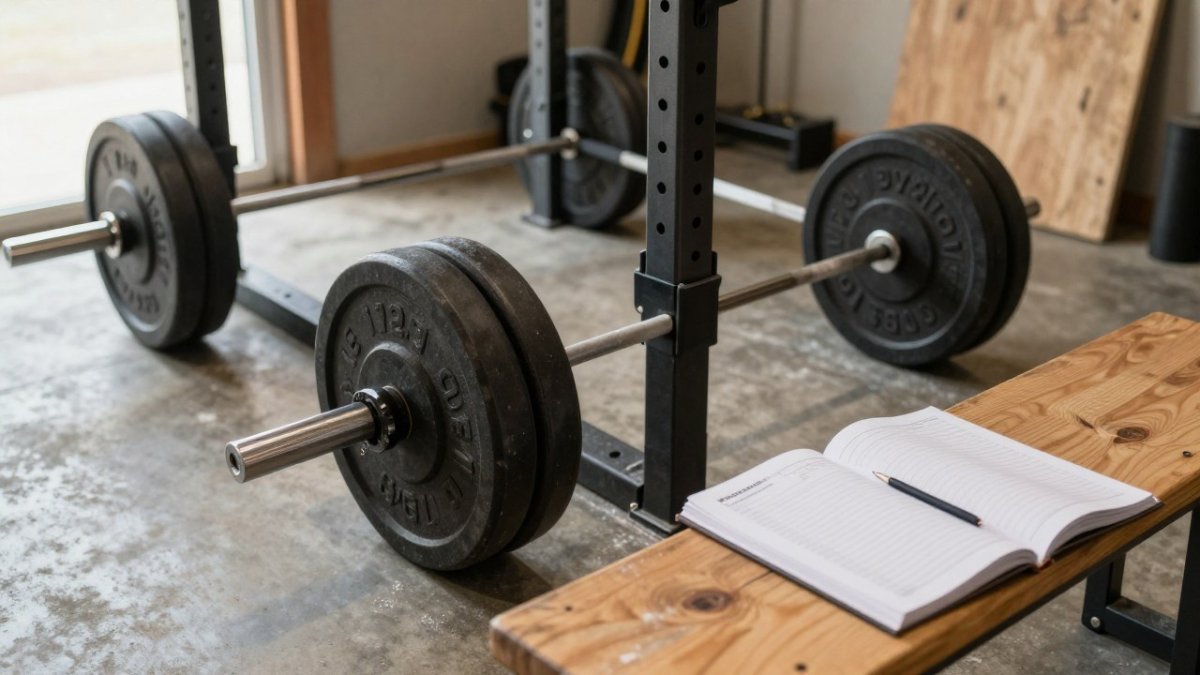
Bumper plates matter because they tolerate drops from overhead and from the top of a deadlift, which is how you'll actually train.
Best for: anyone with garage or basement space and a strength base to build. Skip if: you're in an apartment with a shared floor and no room for a rack.
2. Adjustable Dumbbells and Kettlebells for Compact Strength
Adjustable dumbbells deliver the widest strength range per square foot of floor space. Adjustable dumbbell sets like the Bowflex SelectTech can cover a wide loading range in a small footprint. Kettlebells add swing and carry work dumbbells can't replicate as cleanly.
The honest limitation: adjustable sets have moving parts, and moving parts wear. Dial mechanisms don't love being dropped, so treat them as controlled-lift tools. Kettlebells are nearly indestructible, but you need several sizes to progress, which adds cost and clutter.
Best for: lifters with limited space who want real loading options. Skip if: you plan to drop weights from height regularly.
3. Pull-Up Bars and Resistance Bands for Bodyweight Work Capacity
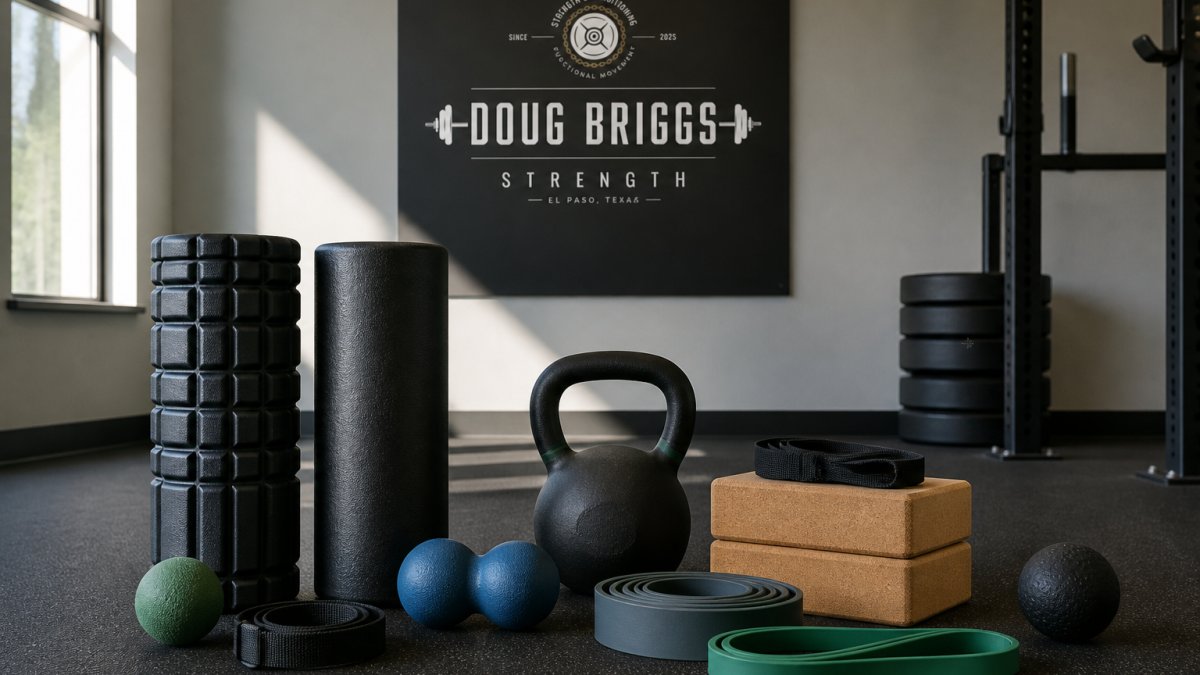
A pull-up bar and a set of resistance bands cover the cheapest, most portable slice of tactical fitness. Pull-ups train grip and upper-body pulling endurance; bands add scalable resistance for pressing, pulling, and mobility work, and they pack into a bag for travel.
What most guides miss is how well bands serve injured or deconditioned athletes. Pair them with the functional durability exercises for tactical athletes we use with clients for a complete bodyweight session.
Watch out: cheap door-mounted bars and low-quality bands. Check the bar's stated weight limit and inspect bands for nicks before every session.
4. Load Carriage Gear: Plate Carriers and Rucking Equipment
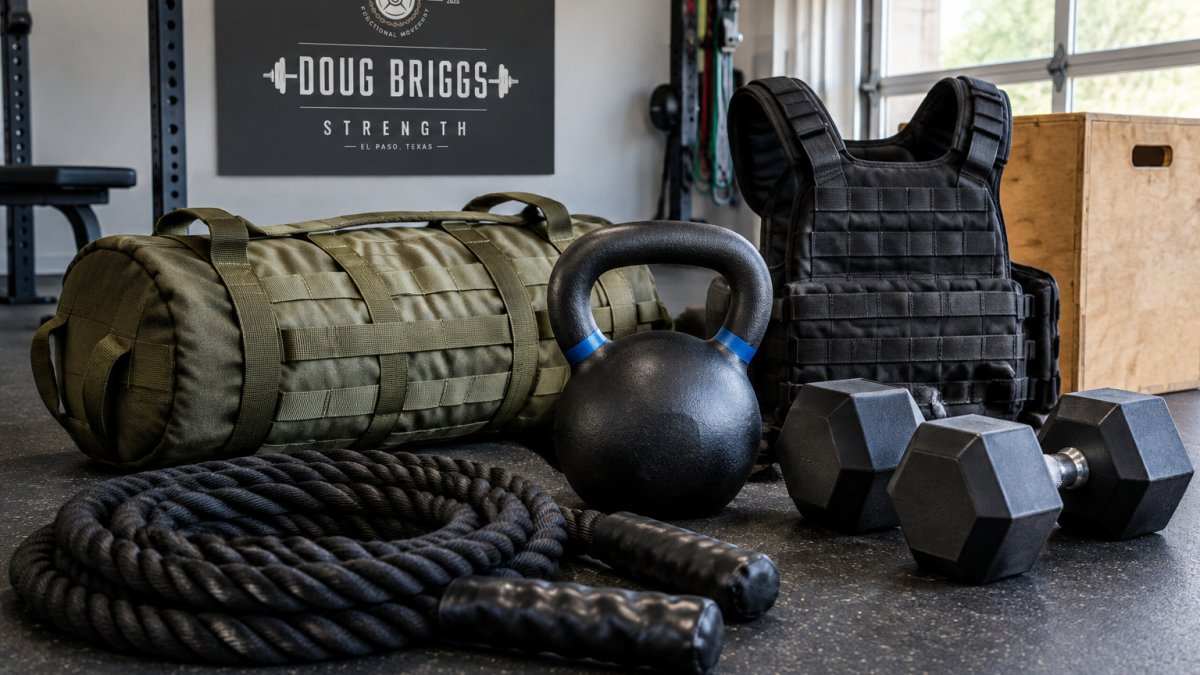
Load carriage is the most tactical-specific category on this list, and the one competitors cover least. A plate carrier and a ruck let you train exactly what the job demands: moving under load for time. No barbell replicates that.
Rucking Equipment: What to Buy and How to Load It
A ruck is a weighted backpack built for walking under load. A ruck can also make room for small recovery essentials, bringing wellness products for home into a routine that balances loaded walks with rest.
Load selection is where most people go wrong: starting too heavy and too far. Begin with 20-30 lb and 30-45 minutes on flat ground, then add either distance or weight, not both in the same week.
Watch out: rucking with a load that sits low and away from your spine. It shifts your center of mass and increases strain on the lower back and shoulders.
Plate Carriers: Fit, Load, and Progression
A plate carrier is a vest that holds one or two hard plates. For training, most people use a single curved steel or composite plate in the 10-20 lb range, or a pair for a two-plate duty setup. Fit matters more than brand: a carrier that shifts under movement will rub and distract.
Start with bodyweight and light loaded carries before adding a carrier to conditioning work. A sensible progression is to wear the carrier for walks, then for bodyweight circuits, then for loaded carries and short runs. Keep total added load conservative at first and build joint tolerance before intensity.
Watch out: wearing a plate carrier for high-impact running before you have built hip and trunk tolerance.
Durability, Inspection, and Storage
Load carriage gear takes abuse, so inspect it regularly. Check stitching at the shoulder straps and cummerbund, buckle integrity, and the plate pocket for wear. Store plates out of the carrier if it's wet, and dry the pack fully after sweaty sessions to prevent mildew.
Best for: military, first responder, and tactical candidates training for selection or duty standards. Skip if: you're early in a strength base and haven't built joint tolerance yet.
5. Compact Home Gym Equipment for Small Spaces
Compact home gym equipment for strength and conditioning means all-in-one systems and folding or wall-mounted pieces that train the whole body in a small footprint.
Best for: apartments, small garages, and lifters who need variety in a tight footprint. Skip if: your primary goal is a heavy squat or deadlift.
6. Home Gym Equipment for Strength and Conditioning Programming
Home gym equipment for strength and conditioning only pays off when it's programmed, not just owned. The gear you buy should slot into a weekly schedule with clear strength days, conditioning days, and recovery. Military gym equipment for sale online is plentiful, but a plate carrier and a ruck sitting in a corner build nothing.
Mapping Equipment to Training Outcomes
Before you write a single session, map each piece of gear to the outcome it trains. This keeps you from buying redundant equipment and from programming around gear you don't have.
- Max strength: barbell and plates, heavy kettlebells, adjustable dumbbells.
- Work capacity: kettlebells, medicine balls, resistance bands, bodyweight.
- Loaded endurance: ruck, plate carrier, heavy dumbbells or kettlebells for carries.
- Grip and pulling endurance: pull-up bar, towels, loaded carries.
- Power: medicine balls, kettlebells, jump rope.
A common pattern is to own three pieces that all train the same outcome and none that train the one you actually need. Audit your gear against this list before your next purchase.
A Sample Three-Day Week
Here's how we'd structure a three-day week around the gear above. Each session pairs a primary strength or conditioning stimulus with accessory work that supports it.
Day 2 (work capacity): kettlebell swings 5 sets of 15-20, loaded carries 4 sets of 40-60 seconds, band-resisted push-ups 3 sets, and a short bodyweight circuit to finish.
Day 3 (endurance): ruck march 45-60 minutes at a conversational pace, then a bodyweight circuit of squats, push-ups, and pull-ups.
Watch out: stacking a heavy ruck and a heavy barbell day back to back.
Progression and Recovery
Progression should be visible in your log, not just felt. Add reps before weight, and weight before volume. If you're new to structured training, our list of the 5 best tactical strength training programs for beginners pairs well with any setup here.
The hardest part of a home tactical gym isn't buying gear. It's building a plan you'll actually follow when work, family, and fatigue get in the way. Doug Briggs Strength builds personalized, evidence-based programs around your life, with 30+ years of coaching experience, expertise in tactical performance training, and hands-on seminar options.
Frequently Asked Questions
What equipment do you need for tactical fitness training at home?
Start with a barbell and bumper plates, which are a versatile foundation for home strength training. Add adjustable dumbbells or kettlebells for unilateral work, a pull-up bar for bodyweight exercises, and resistance bands for mobility and accessory work. If your role involves load carriage, add a plate carrier or rucking pack. That combination covers squat, deadlift, press, pull-up, and loaded carries without filling a garage.
Can you build tactical fitness with a small home gym?
Yes. Compact home gym equipment such as adjustable dumbbells can cover a broad range of strength work in a small footprint. Pair it with a doorway pull-up bar and resistance bands and you can train push, pull, squat, hinge, and carry patterns. The limiting factor is usually programming discipline, not floor space. A coach can help you sequence limited equipment into a plan that still builds work capacity.
How do you choose home gym equipment for strength and conditioning?
Judge each piece on four things: weight capacity, footprint, durability under repeated use, and whether it supports the movements your training plan requires. A power rack gives you squat, press, and pull-up stations in one footprint, while adjustable dumbbells cover lighter full-body work. Buy for the exercises you will actually program, not the ones you might try once.
Where can you find military gym equipment for sale?
Focus on the specification, not the label: check steel gauge on racks, plate weight tolerances, and warranty terms before buying. Confirm the seller's return policy and whether freight delivery is included, since shipping on heavy equipment can change the total significantly.
What is the most effective workout equipment for home use?
A barbell and bumper plates deliver the widest range of effective training per dollar, supporting squat, deadlift, press, and clean variations that build strength and power. For tactical athletes, the next most valuable additions are a pull-up bar and load carriage gear for rucking. Guided machines can suit trainees who want fixed movement patterns. Effectiveness depends on matching the tool to a structured plan rather than accumulating equipment.