 listicle
7 Ways to Improve Mobility for Athletes
Table of Contents
- Why Mobility for Athletes Is Not the Same as Flexibility
- Mobility vs. Flexibility: What the Difference Means in Training
- 1. Build a Dynamic Warm-Up for Athletes Before Every Session
- 2. Pick Mobility Exercises for Athletes That Match Your Sport
- 3. Use a Measurable Assessment to Track Range of Motion
- 4. Follow an Athlete Mobility Routine You Can Repeat
- 5. Program Progressions, Regressions, and Pain Modifications
- 6. Pair Mobility Work With Strength Training and Recovery
- 7. Know How Often to Do Mobility Training for Real Results
- Frequently Asked Questions
Last Updated: October 20, 2026
Why Mobility for Athletes Is Not the Same as Flexibility
Mobility for athletes is the ability to move a joint through its full range of motion under control, with strength and stability behind it. Flexibility only describes how far a muscle can lengthen. That distinction matters because a loose hamstring that can't stabilize a landing won't keep you on the field.
At Doug Briggs Strength, we leverage over 30 years of experience coaching youth, adult, and tactical athletes. The athletes who stay durable aren't the ones who stretch the longest; they're the ones who train movement quality with intent. Below, we'll show you exactly how to build that into a week you can actually repeat.
Mobility vs. Flexibility: What the Difference Means in Training
Flexibility is passive length; mobility is usable length. You can demonstrate flexibility lying on the floor in a hamstring stretch, then fail to reach that same range standing on one leg. Mobility is what shows up in a squat, a cut, or a throw.
In practice, this means static stretching alone rarely changes how you move. The American College of Sports Medicine position stands on flexibility training make the same point: range of motion work belongs inside a broader training plan, not apart from it.
1. Build a Dynamic Warm-Up for Athletes Before Every Session
A dynamic warm-up for athletes raises tissue temperature and rehearses the movements your sport demands, all in 5 to 10 minutes. Skip the stationary bike and the toe touches. Use movement drills that take each joint through its range with control.
A Five-Minute Movement Preparation Sequence
- Leg swings, front to back and side to side, 10 each
- Arm circles, small to large, 10 each direction
- Cat-cow, 8 slow reps
- World's Greatest Stretch, 3 per side
- Ankle rocks in a half-kneeling position, 10 per side
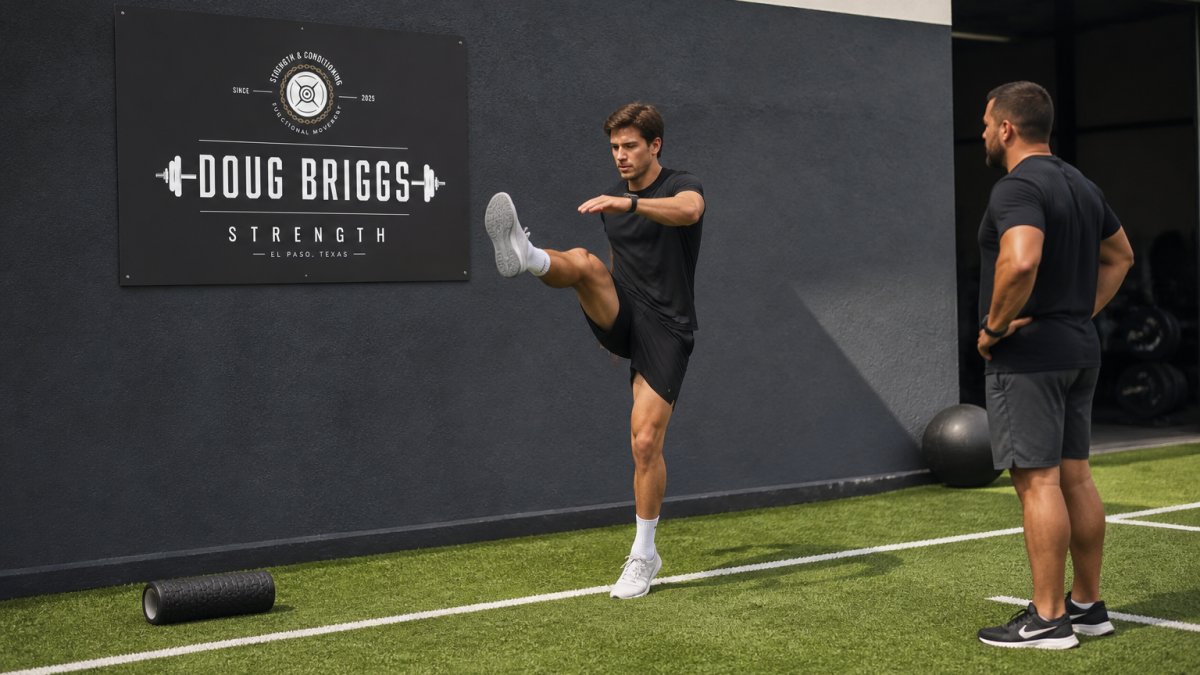
2. Pick Mobility Exercises for Athletes That Match Your Sport
The best mobility exercises for athletes are the ones that mirror your sport's demands. A sprinter needs ankle and hip range; a swimmer needs shoulder and thoracic rotation; a tactical athlete carrying load needs hips and mid-back that hold up under fatigue. Copying a generic list without checking whether it addresses your weak link is a common mistake.
Sport-Specific Mobility Priorities
Use this matrix to decide where to spend your 10 to 15 minutes. Pick the row that matches your primary sport, then choose one drill from each priority area.
| Sport profile | Primary mobility priorities | Best drills | Why it matters |
|---|---|---|---|
| Runners (sprint, distance, field) | Ankle dorsiflexion, hip extension, big-toe extension | Half-kneeling ankle rocks, couch stretch, toe yoga | Ankle range sets stride length and shock absorption; restricted big toe limits push-off |
| Field and court athletes (soccer, basketball, lacrosse) | Hip internal/external rotation, adductor range, ankle | 90/90 hip switches, lateral lunge rocks, Copenhagen-style adductor holds | Cutting and decelerating demand hip rotation and adductor control |
| Lifters (powerlifting, Olympic, CrossFit) | Thoracic extension, hip flexion, ankle dorsiflexion | Wall slides, deep squat holds, front-rack stretch | Thoracic and ankle range determine squat and overhead position |
| Overhead athletes (baseball, volleyball, swimming, tennis) | Shoulder external rotation, thoracic rotation, scapular control | Banded shoulder dislocates, open-book rotations, wall slides | Throwing and serving rely on thoracic rotation and posterior shoulder range |
| Tactical athletes (military, fire, law enforcement) | Hip flexor length, thoracic extension, ankle | Half-kneeling hip flexor rocks, cat-cow, ankle rocks under load | Carrying load and wearing gear shortens hip flexors and stiffens the mid-back |
Hip, Ankle, Shoulder, and Full-Body Priorities
- Hip mobility: 90/90 hip switches, half-kneeling hip flexor rocks, deep squat holds
- Ankle and foot mobility: ankle circles, calf raises off a step, rolling the foot with a golf ball
- Shoulder mobility: arm circles, wall slides, banded shoulder dislocates
- Full-body: World's Greatest Stretch, cat-cow, downward dog
A common mistake is copying a generic list without checking whether it addresses your weak link. If your ankles limit your squat depth, shoulder drills won't fix it. Start with the assessment in the next section, then choose drills from the row that matches your sport and your restriction.
3. Use a Measurable Assessment to Track Range of Motion
You can't improve what you don't measure. A simple mobility assessment gives you a baseline and shows whether your athlete mobility routine is working. Test the same movements every four to six weeks.
Here's how we'd run it:
- Overhead squat with a dowel: does the dowel stay over your feet?
- Half-kneeling ankle rock: can your knee reach the wall with your heel down?
- 90/90 hip switch: can you rotate both directions without hands?
- Standing shoulder flexion: do your arms reach the wall without arching?
- Film a bodyweight squat from the side and compare to your last check
Filming a squat is a low-tech way to spot what you can't feel, a habit TrainHeroic's mobility guidance for athletes also recommends.
4. Follow an Athlete Mobility Routine You Can Repeat
Consistency beats intensity. An athlete mobility routine should be short enough to do on a busy day and structured enough to hit every priority area. Ten to fifteen minutes, most days, is plenty. The schedule below specifies sets, reps, and timing so you can repeat it without guessing.
Sample Weekly Mobility Schedule
| Day | Focus | Time | Sets and reps |
|---|---|---|---|
| Monday | Dynamic warm-up plus hip drills | 10 min | 2 rounds of 8 to 10 reps per drill |
| Tuesday | Shoulder and thoracic work | 10 min | 2 rounds of 8 to 10 reps per drill |
| Wednesday | Ankle and foot mobility | 8 min | 2 rounds of 10 to 12 reps per drill |
| Thursday | Full-body flow plus foam rolling | 12 min | 2 rounds of 6 to 8 reps per drill; 60 seconds per foam-roll area |
| Friday | Dynamic warm-up plus hip drills | 10 min | 2 rounds of 8 to 10 reps per drill |
| Saturday | Sport-specific movement drills | 15 min | 3 rounds of 6 to 8 reps per drill |
| Sunday | Low-effort movement, walk and stretch | 15 min | 20 to 30 minutes easy walking; 30-second holds per area |
How to Program the Details
- Frequency: 10 to 15 minutes daily or near-daily beats one long session per week. If you only have three days, hit hips, ankles, and thoracic work each time.
- Timing: Do dynamic drills before training and static or loaded end-range work after training or in a separate session.
- Sets and reps: Two to three rounds of 6 to 12 controlled reps per drill is a practical default. Holds run 20 to 30 seconds; dynamic drills move smoothly without bouncing.
- Progression: Every two to three weeks, add a round, add a light band, or pause two seconds at end range. Regress by reducing range or removing load.
- Between strength sets: Use one mobility drill as active recovery between sets, for example, 90/90 hip switches between squat sets or wall slides between pressing sets.
A Repeatable Daily Minimum
On busy days, do this five-minute version: 10 leg swings per side, 8 cat-cow reps, 3 World's Greatest Stretch reps per side, and 10 ankle rocks per side. It hits hips, spine, and ankles without requiring equipment.
5. Program Progressions, Regressions, and Pain Modifications
Every drill needs an easier version and a harder one. Progressions add range, load, or control; regressions reduce them. Pain is a signal to modify, not push through.
- Regression: half-kneeling hip flexor rock instead of a deep lunge reach
- Progression: add a light band or a pause at end range
- Pain modification: shorten the range to where movement stays clean, then rebuild
6. Pair Mobility Work With Strength Training and Recovery
Mobility sticks when it's loaded. Strength training through your new range teaches your body to use it, and recovery work keeps tissue healthy between sessions. That's why we build mobility into the same plan as strength, not alongside it.
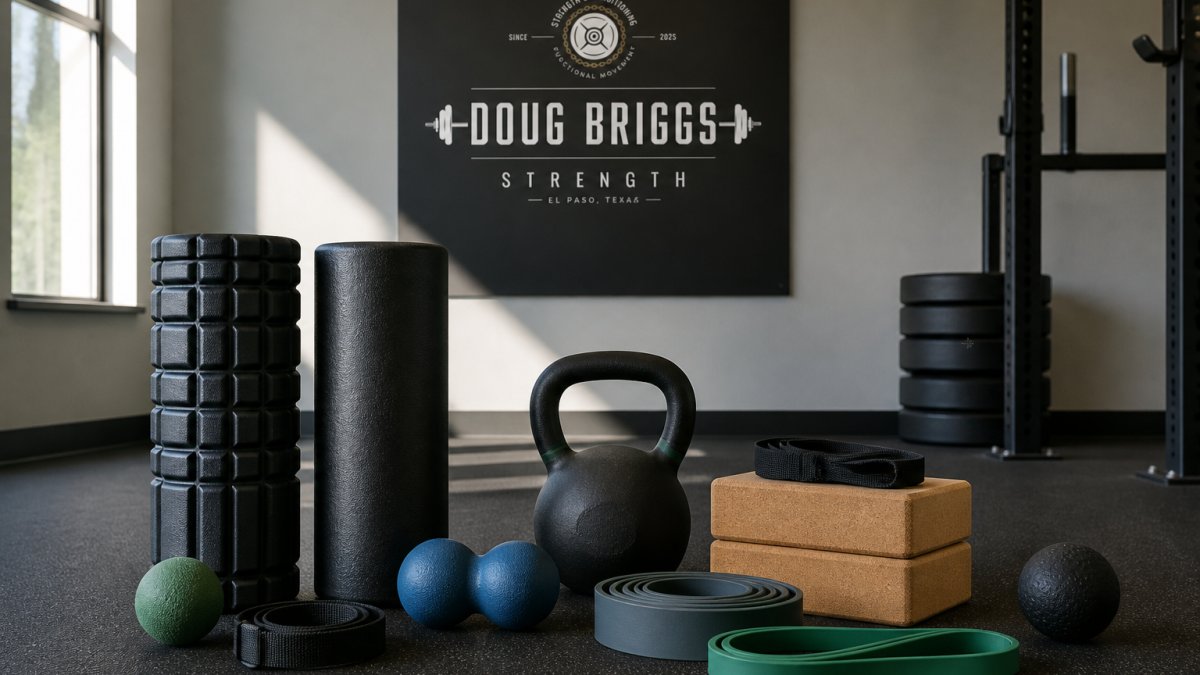
Self-myofascial release with a foam roller before or after training can help you feel ready to move. Pair it with sleep, protein, and hydration, and the range you gain will hold up under real training loads.
7. Know How Often to Do Mobility Training for Real Results
How often to do mobility training depends on your goals, but most athletes do well with 10 to 15 minutes daily or near-daily. Short and frequent beats one long session a week. Think of it as daily movement, not an event.
The NSCA's guidance on flexibility and mobility supports regular, controlled range-of-motion work as part of a complete program. Track your assessment results and adjust every few weeks. Results come from training consistency, not a single heroic stretch session.
Frequently Asked Questions
What is the difference between mobility and flexibility?
Flexibility is how far a muscle can lengthen passively, while mobility is your ability to move a joint through its full range with control and strength. An athlete can be very flexible but still lack usable mobility if the joint is unstable or the movement is uncoordinated. That is why mobility for athletes pairs range of motion with active drills like leg swings, 90/90 hip switches, and controlled squats rather than relying on static stretching alone. Training both matters, but mobility work transfers more directly to sport.
How often should athletes do mobility exercises?
Most athletes do well with a short session most days: 10 to 15 minutes of targeted mobility work, plus a dynamic warm-up before every training session. Two or three longer sessions per week can address stubborn areas like hips or ankles. Consistency beats duration. If you are unsure how often to do mobility training for your sport and schedule, a coach can build it into your weekly plan so it supports rather than competes with strength work.
Should athletes do mobility exercises before or after a workout?
Before training, use dynamic mobility and movement preparation: leg swings, arm circles, hip openers, and ankle drills that raise tissue temperature and prime the joints. Save longer static holds and foam rolling for after training or a separate session, when the goal is restoring range of motion and calming the nervous system. A short between-set mobility drill, such as a hip flexor stretch during rest periods, can also help without cutting into your main work.
How long does it take to improve mobility?
Many athletes notice better movement quality within two to four weeks of consistent daily practice, while measurable range-of-motion changes often take six to eight weeks. Progress depends on your starting point, how specific the drills are to your sport, and whether you also build strength in the new range. Track a few simple tests, like a bodyweight squat or an overhead reach, every couple of weeks so you can see change instead of guessing.
Can mobility training reduce injury risk?
Mobility work supports joint health and movement quality, which can lower stress on areas like the ankles, hips, and shoulders during sport. It is not a guarantee against sprains, strains, or tears, and it works best alongside strength training, good technique, and adequate recovery. Athletes with a history of injury should get an individual assessment before adding aggressive stretching or new drills, especially if pain flares during certain movements.
Building mobility that lasts takes structure, accountability, and a plan that fits your life. That's exactly what we do at Doug Briggs Strength: personalized, evidence-based coaching backed by more than 30 years of experience, with measurable results in movement and performance. We build mobility into your strength plan so it holds up under real training loads, and we help you develop habits you can actually keep. Book a free consultation and let's find your starting point.