 listicle
5 Best Tactical Strength Training Programs for Beginners
Table of Contents
- Quick Comparison: 5 Tactical Strength Training Programs for Beginners
- 1. Doug Briggs Strength: Personalized Coaching for Tactical Strength
- 2. MTNTOUGH Tactical Strength Program: Minimal Equipment, Maximum Durability
- 3. Warfighter Athletic Training Programs: Built for Military and Law Enforcement Standards
- 4. StrongLifts 5x5: Free Strength Foundation Before Tactical Conditioning
- 5. Combat Fitness ONE: All-in-One System for Busy Schedules
- Tactical Athlete Conditioning Standards: What Beginners Should Aim For
- How to Build Work Capacity for Tactical Operations at Home or in a Gym
- Frequently Asked Questions
Last Updated: September 28, 2026
Quick Comparison: 5 Tactical Strength Training Programs for Beginners
The best tactical strength training programs for beginners balance three things: a strength foundation, work capacity, and a schedule you can actually keep. This guide compares five programs built for tactical athletes, from free compound-lift plans to fully personalized coaching.
Quick Picks:
- Best Overall: Doug Briggs Strength, personalized coaching built around your schedule and injury history
- Best Minimal Equipment: MTNTOUGH Tactical Strength Program, 9-week progression with a rucksack
- Best Free Option: StrongLifts 5x5, simple compound-lift foundation at no cost
| Program | Starting Price | Equipment | Best For |
|---|---|---|---|
| Doug Briggs Strength | Free consultation; pricing on request | Gym or home setup | Personalized tactical strength coaching |
| MTNTOUGH | Contact for pricing | Rucksack or weighted pack | Minimal-equipment durability |
| Warfighter Athletic | Contact for pricing | Full gym plus ruck | Military and law enforcement prep |
| StrongLifts 5x5 | Free | Barbell, rack, plates | Raw strength foundation |
| Combat Fitness ONE | Contact for pricing | Varies by plan | Busy, varied schedules |
1. Doug Briggs Strength: Personalized Coaching for Tactical Strength
Most beginner programs hand you a template and wish you luck. Doug Briggs Strength takes the opposite approach: over 30 years of coaching experience, applied to your specific body, schedule, and goals. That matters most for tactical athletes juggling shift work, old injuries, or a first-ever strength program.
Pricing and Who It's For
Pricing depends on the coaching format and session frequency, so the team quotes it directly after a free consultation. There is no fixed public rate card.
Pros:
- 30+ years of coaching experience across youth, adult, and tactical athletes
- Programs tailored to your life, not a generic template
- Hands-on, gym-based seminar options available
- Free consultation before you commit
Cons:
- Pricing requires a conversation rather than a checkout page
- Personalized coaching costs more than a free app
2. MTNTOUGH Tactical Strength Program: Minimal Equipment, Maximum Durability
MTNTOUGH built its tactical strength program around a 9-week structured progression that asks for almost nothing: a rucksack or weighted pack and the will to show up. For beginners training in a garage, a barracks room, or a small apartment, that low barrier is the whole point.
Pros:
- Accessible for home or field training
- Progressive overload designed around tactical demands
- Short, structured sessions
Cons:
- Requires consistent access to a rucksack or weighted pack
- Less individualized feedback than one-on-one coaching

3. Warfighter Athletic Training Programs: Built for Military and Law Enforcement Standards
Warfighter Athletic designs its programs around the physical standards military and law enforcement candidates actually face. Expect rucking, endurance integration, and conditioning protocols that mirror the demands of selection and academy training.
Pros:
- Directly relevant to tactical job requirements
- Trains strength and endurance together
- Intensity scales across fitness levels
Cons:
- Demanding for true beginners
- Best suited to people with a test date on the calendar
4. StrongLifts 5x5: Free Strength Foundation Before Tactical Conditioning
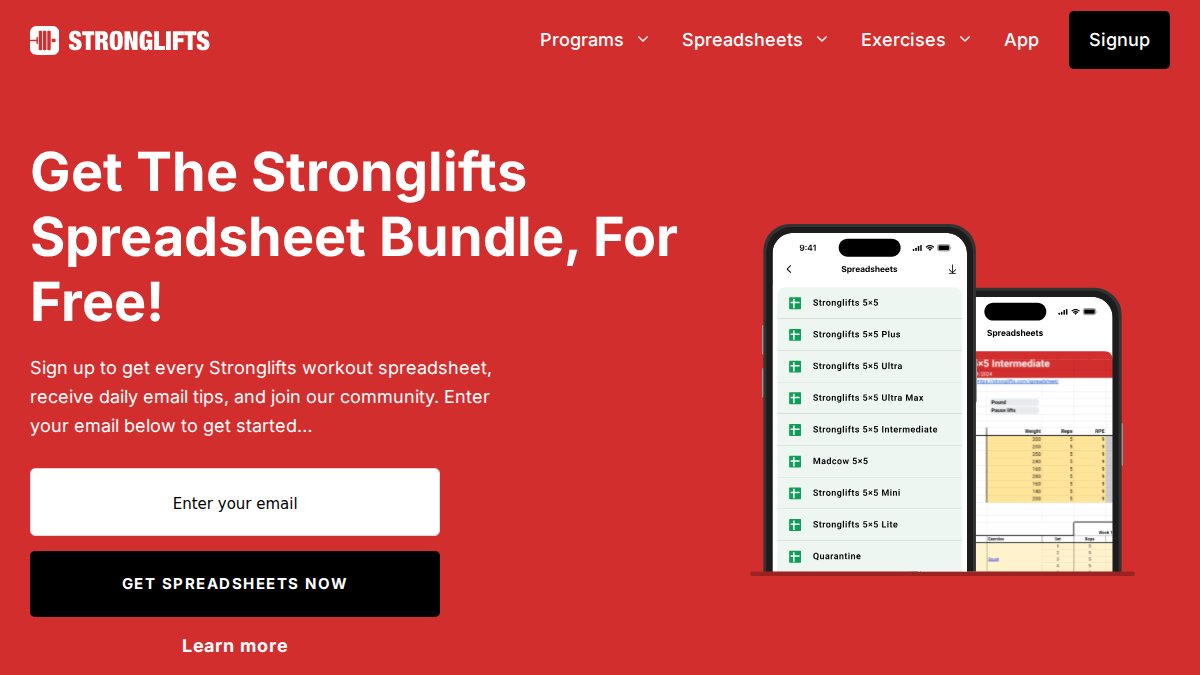
StrongLifts 5x5 is the simplest way to build raw strength before you specialize. Five compound lifts, a linear progression model, and a free app for tracking sets and reps. Nothing about it is tactical, and that is fine. Squat, bench, deadlift, press, and row build the base that every tactical program assumes you already have.
Pros:
- Completely free, including the tracking app
- Proven for novice strength gains
- Extremely easy to follow
Cons:
- No tactical conditioning or endurance work
- No coaching or form feedback
5. Combat Fitness ONE: All-in-One System for Busy Schedules
Combat Fitness ONE packages tactical training into a single integrated system with flexible programming for people whose weeks never look the same. If you rotate shifts or travel, the built-in flexibility beats a rigid 12-week spreadsheet.
Pros:
- Designed specifically for tactical athletes
- Flexible programming for irregular schedules
- Functional movement focus
Cons:
- Requires commitment to one system
- Less personalization than dedicated coaching
Tactical Athlete Conditioning Standards: What Beginners Should Aim For
Tactical athlete conditioning standards are the benchmarks that separate "works out" from "operationally ready." Most beginner guides list a handful of numbers and move on. That is a mistake, because the standards only matter if you understand what each one is testing, how to progress it, and how to modify it when your body pushes back.
The Four Domains Behind Every Standard
Tactical conditioning benchmarks almost always fall into four buckets. Knowing which bucket a test belongs to tells you what it is actually measuring and how to train for it.
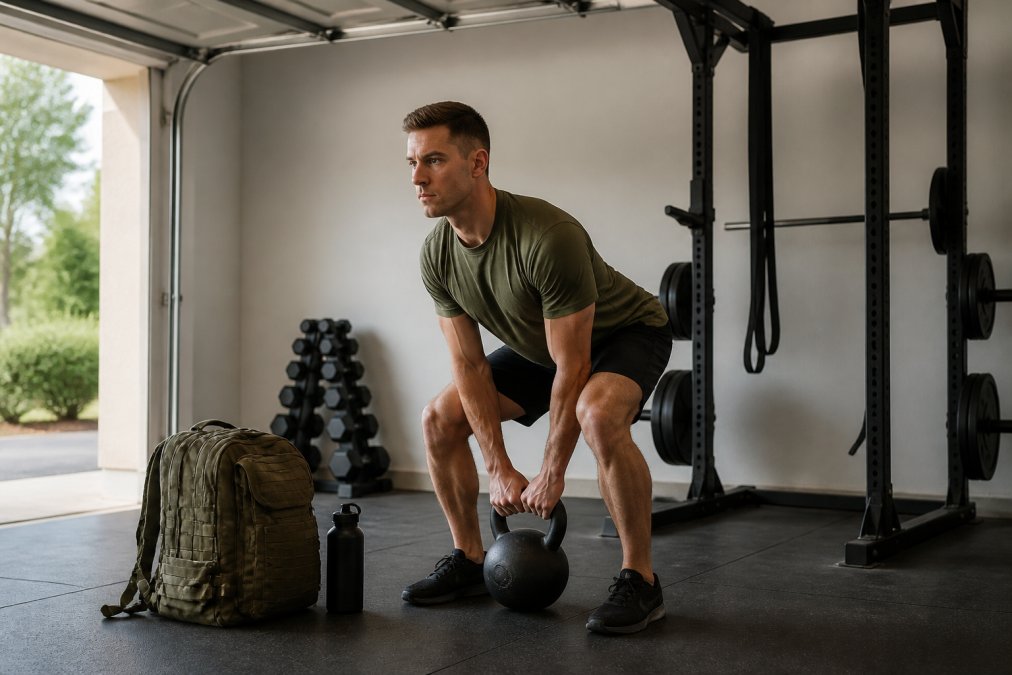
- Loaded carry and ruck capacity, tests your aerobic base, grip, and trunk stability under load. A 30-to-45-minute ruck at a conversational pace is the entry point.
- Relative strength, tests force production per unit of bodyweight. Push-ups, pull-ups, and bodyweight squats live here.
- Trunk and spinal endurance, tests your ability to resist extension and rotation under fatigue. Planks, carries, and dead bugs live here.
- Repeat-effort capacity, tests how fast you recover between hard bouts. Short intervals, shuttle runs, and circuit work live here.
A Practical Starting Checklist
Use these as entry gates, not finish lines. Hit them with clean form before you add intensity.
- Ruck 30 to 45 minutes at a pace where you can still speak in short sentences
- Complete 5 strict push-ups and 5 bodyweight squats with full range of motion
- Hold a front plank for 60 seconds with a neutral spine and no hip sag
- Deadlift and squat a load you can control for 5 reps with two reps left in the tank
- Return to baseline heart rate and normal soreness within 24 to 48 hours of a hard session
How to Progress Each Standard
Once you clear the entry gates, add load or time before you add speed. A common pattern is to increase ruck weight by 5 to 10 pounds every two to three weeks, add one rep per set per week on bodyweight movements, and extend the plank by 10 seconds weekly until you hit two minutes.
Modifying Standards Around Prior Injuries
This is the part most guides skip, and it is the part that matters most for beginners. Many new tactical trainees arrive with old knee, shoulder, or low-back issues from prior sports or service.
- Knee history: swap deep squats for box squats or goblet squats to a controlled depth, and replace running intervals with rowing or cycling until pain-free.
- Shoulder history: substitute incline push-ups for floor push-ups, and use neutral-grip pressing instead of barbell bench until overhead range is clean.
- Low-back history: prioritize carries, dead bugs, and hip hinges with light load before adding heavy deadlifts. A physical therapist or physician should clear any movement that reproduces pain.
Tracking Without Overthinking
Log four numbers weekly: total ruck minutes, total loaded-carry weight moved, hardest set of push-ups and squats, and average sleep hours. Those four data points tell you whether you are building capacity or just accumulating fatigue. Track them monthly against the checklist, and let the trend, not a single bad session, decide when to add intensity.
How to Build Work Capacity for Tactical Operations at Home or in a Gym
Building work capacity for tactical operations means raising your ability to repeat effort without breaking down. You can do that in a commercial gym or a garage with the same principles: progressive overload, aerobic base work, and recovery protocols. What almost no beginner guide addresses is the constraint that actually breaks tactical trainees: shift work, broken sleep, and a schedule that changes every week.
Home Setup vs. Gym Setup: What Each Actually Buys You
Home setups lean on calisthenics, sandbags, kettlebells, and rucking. They win on convenience and consistency, which matter more than equipment variety for a beginner. Gym setups add barbells, racks, and machines for heavier compound lifts and safer maximal loading.
| Goal | Home Method | Gym Method | Frequency |
|---|---|---|---|
| Strength | Goblet squats, sandbag carries, push-up progressions | Barbell squat, deadlift, press, row | 2-3x per week |
| Work capacity | Rucking, kettlebell swings, bodyweight circuits | Rower, bike, sled push, treadmill intervals | 2x per week |
| Mobility | Dedicated mobility work | Same, plus foam rolling | Daily, 10 minutes |
| Recovery | Sleep, hydration, deload weeks | Same | Ongoing |
Programming Around Shift Work and Broken Sleep
A fixed Monday-Wednesday-Friday split falls apart the moment your rotation changes. Instead, program by session type and let the calendar decide which one you run.
- A-session (strength): 30 to 45 minutes, compound lifts or their home equivalents, 3 to 5 sets of 5 to 8 reps.
- B-session (work capacity): 20 to 30 minutes, ruck or intervals at a pace you can hold.
- C-session (recovery): 10 to 20 minutes, mobility, easy walk, breathing drills.
Fueling and Recovery on a Tactical Schedule
You do not need a complicated nutrition plan. Aim for a palm-sized portion of protein at each meal, a source of carbohydrate before hard sessions, and consistent water intake across the shift. Caffeine helps on night rotations but loses its edge if you use it every day. Sleep is the single highest-leverage recovery tool, and it is the one most tactical trainees sacrifice first.
The Biggest Mistake Beginners Make
The biggest mistake is adding intensity before they can recover from it. Build the base, track your performance, then specialize. If your ruck times are getting slower and your sleep is getting shorter, you are under-recovered, and the fix is a lighter week, not a harder one.
Frequently Asked Questions
What is the best beginner strength program for tactical athletes?
The best program depends on your access and goals. StrongLifts 5x5 is a free, simple starting point for raw strength using compound lifts. MTNTOUGH Tactical Strength is ideal if you train at home with minimal equipment. For personalized coaching that adapts to injuries or a busy schedule, Doug Briggs Strength offers evidence-based programming. Beginners should prioritize progressive overload, movement quality, and consistency over intensity.
Do I need a gym membership for tactical strength training?
No. Many tactical strength programs work with minimal equipment. MTNTOUGH requires only a rucksack or weighted pack, and StrongLifts 5x5 can be done with a barbell and rack at home. Combat Fitness ONE and Warfighter Athletic offer flexible options that can be scaled to home setups. A gym helps for compound lifts like squats and deadlifts, but it is not mandatory to build tactical strength.
How does tactical strength training differ from bodybuilding?
Tactical strength training focuses on functional fitness, work capacity, and operational readiness rather than muscle size. Programs emphasize compound lifts, load carriage, rucking, and metabolic conditioning to prepare for job-specific demands. Bodybuilding prioritizes hypertrophy and aesthetics. Tactical athletes need strength endurance, grip strength, and cardiovascular health to carry equipment, move under load, and recover quickly.
How long does it take to see results from a tactical training program?
Most beginners notice improved movement quality and energy within 3 to 4 weeks of consistent training. Measurable strength gains typically appear by weeks 6 to 8 with progressive overload. Tactical athlete conditioning standards like faster ruck times or higher work capacity may take 8 to 12 weeks. Results depend on training frequency, recovery, and adherence. Three days per week is enough to make steady progress.
What are the core components of a tactical strength program?
A well-rounded tactical strength program includes compound lifts (squats, deadlifts, presses), load carriage (rucking), metabolic conditioning, mobility work, and recovery protocols. It should also address core stability, grip strength, and explosive power. Beginners should start with a base of strength and gradually add conditioning. Programs like Warfighter Athletic and Combat Fitness ONE integrate these components into structured plans.
Tactical strength training rewards consistency far more than intensity, and the hardest part for beginners is picking a plan that survives a busy week. At Doug Briggs Strength, coaching is built around your real schedule, your injury history, and your goals, with over 30 years of experience behind every program and hands-on seminar options when you want in-person guidance. Book a free consultation with Doug Briggs Strength and start building strength that holds up on the job and off it.