 listicle
7 Functional Durability Exercises for Tactical Athletes
Last Updated: October 23, 2026
Quick Summary
Durability exercises are movements that build tissue resilience, joint stability, and work capacity under load, so the body handles repeated stress without breaking down. The seven we build programs around are loaded carries, split squats, hinge patterns, push and pull work, anti-rotation and anti-extension drills, sled push and drag, and ruck training.
- Durability is built by repeating good positions under gradually increasing load, not by random hard days.
- The loaded carry is the simplest durability exercise and the one we start most people with.
- Pair horizontal and vertical pushing with equal pulling volume to protect the shoulders.
- Sled work builds work capacity with almost no eccentric stress, so soreness stays low.
- In ruck training, build distance before load and never increase both in the same week.
Table of Contents
- Why Functional Durability Exercises Matter for Tactical Athletes
- 1. Loaded Carry: The Foundation of Durability
- 2. Split Squat: Single-Leg Strength That Transfers to the Job
- 3. Hinge Pattern: Deadlift Variations for Backside Durability
- 4. Push and Pull: Upper-Body Durability for Gear and Ground Work
- 5. Anti-Rotation and Anti-Extension: Core Durability Under Load
- 6. Sled Push and Drag: Tactical Athlete Conditioning Exercises That Build Work Capacity
- 7. Ruck Training for Tactical Athletes: Durability Under Load
- Frequently Asked Questions
Why Functional Durability Exercises Matter for Tactical Athletes
Durability is the quality that keeps a tactical athlete on the job after the adrenaline fades. At Doug Briggs Strength, we define durability exercises as movements that build tissue resilience, joint stability, and work capacity under load, so the body handles repeated stress without breaking down. That definition matters because the job does not ask for one heroic effort. It asks for the same effort on hour twelve of a shift.
A systematic review of physical training programs for tactical personnel in PubMed Central's tactical training research examined how these populations are trained and what those programs are meant to achieve. The takeaway for us is straightforward: tactical athletes need structured, repeatable training, not random hard days.
Below, we break down seven exercises we would build a durability program around, with form cues and modifications for each.
| Exercise | Primary Quality | Best For | Key Cue |
|---|---|---|---|
| Loaded carry | Trunk and grip endurance | Everyone | Ribs stacked, no lean |
| Split squat | Single-leg strength | Knee and hip resilience | Front shin vertical |
| Hinge pattern | Posterior chain | Back protection | Push floor away |
| Push and pull | Upper-body balance | Gear handling | Shoulders packed |
| Anti-rotation | Core stiffness | Loaded movement | Resist, don't rotate |
| Sled push and drag | Work capacity | Conditioning | Low hips, long push |
| Ruck training | Load tolerance | Job-specific endurance | Short first, then long |
1. Loaded Carry: The Foundation of Durability
The loaded carry is the simplest durability exercise and the one we start most people with. Pick up a heavy weight, walk with perfect posture, and put it down. That is the whole drill, and it exposes every weakness in the trunk and grip.
Form cues: Stand tall with ribs stacked over hips. Grip hard, brace the abs, and walk with short, controlled steps. Do not lean away from the weight. If you cannot breathe behind the brace, the load is too heavy.
Modifications: Use a single dumbbell or kettlebell at your side (suitcase carry) if a double carry feels unstable. Switch hands every set to balance both sides. For anyone with a history of shoulder issues, start with a farmer's carry at a lighter load and build time before adding weight.
2. Split Squat: Single-Leg Strength That Transfers to the Job
Single-leg strength is where most tactical athletes quietly lose durability. Stairs, uneven ground, and getting up off the floor under load all demand it. The split squat builds that strength without the balance demand of a full lunge.
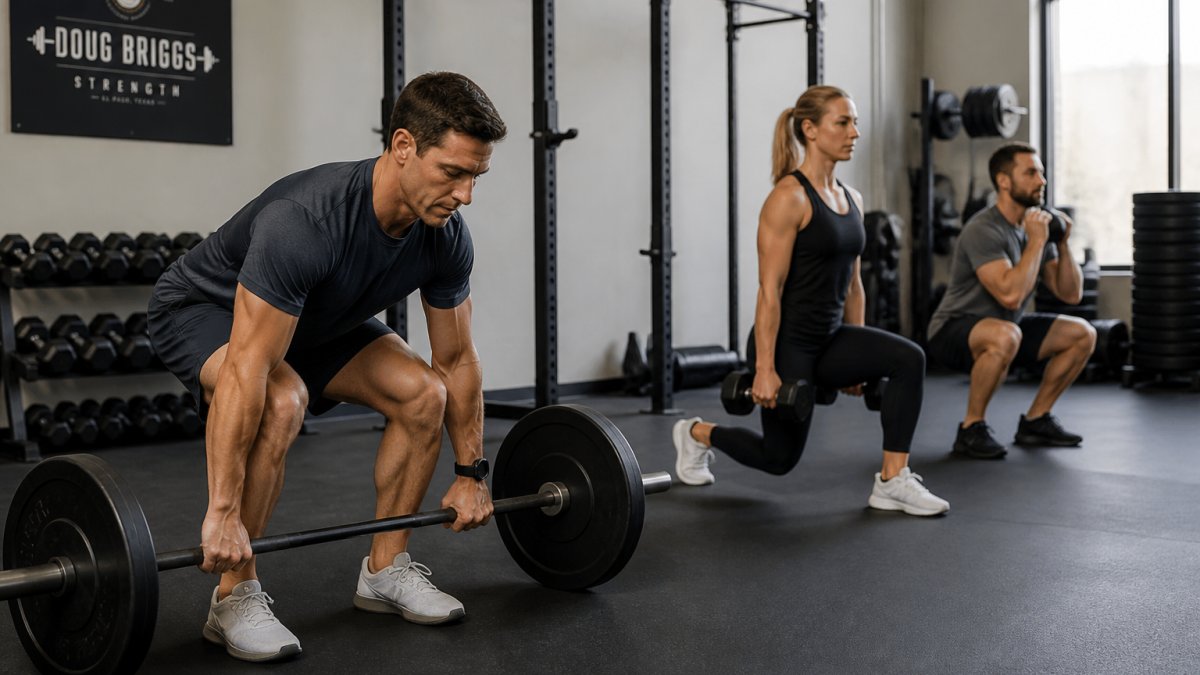
Form cues: Set your feet in a split stance, front shin near vertical, back knee tracking down toward the floor. Descend under control and drive through the front foot to stand. Keep the torso tall.
Modifications: Hold a rail for balance at first. Add load with dumbbells once bodyweight sets feel controlled. If knee discomfort appears, shorten the range of motion and slow the descent rather than pushing through it.
3. Hinge Pattern: Deadlift Variations for Backside Durability
The hinge is the movement pattern that protects the lower back. Every deadlift variation teaches the same lesson: load the hips, keep the spine neutral, and let the legs and glutes do the work.
Form cues: Push the floor away rather than pulling with the back. Keep the bar or weight close to the body. Stop the set when your form changes, not when the clock says so.
Modifications: Trap bar deadlifts and kettlebell deadlifts reduce the technical demand for beginners. Romanian deadlifts build hamstring resilience. For anyone managing an old back injury, start light and prioritize the pattern over the load.
4. Push and Pull: Upper-Body Durability for Gear and Ground Work
Upper-body durability for tactical work is less about maximum bench press and more about repeated pushing and pulling. Carrying gear, dragging a partner, and getting up from the ground all depend on it.
A balanced program pairs horizontal and vertical pushing with equal pulling volume. Rows, pull-ups, and face pulls protect the shoulders that push-ups and overhead work stress. Keep the shoulder blades packed and controlled on every rep.
5. Anti-Rotation and Anti-Extension: Core Durability Under Load
Core durability is the ability to resist movement, not create it. Anti-rotation drills like the Pallof press train the trunk to stay still while force pulls sideways. Anti-extension drills like dead bugs and plank variations train the trunk to resist arching.
Form cues: Brace as if bracing for a light punch. Keep the ribs down and the hips level. Breathe behind the brace instead of holding your breath.
Modifications: Use a band for the Pallof press if a cable stack is unavailable. Reduce lever length on dead bugs until the low back stays flat against the floor.
6. Sled Push and Drag: Tactical Athlete Conditioning Exercises That Build Work Capacity
Sled work builds work capacity with almost no eccentric stress, which makes it one of the safest conditioning tools for tactical athletes. Pushing and dragging a sled raises the heart rate and trains the legs and trunk together, with far less soreness than running intervals.
Form cues: Set the hips low and drive through the whole foot. Keep the arms locked and the trunk braced. For drags, keep the chest up and walk backward with control.
Modifications: Adjust load before adjusting distance. A lighter sled pushed for longer intervals suits beginners. Heavy, short pushes suit anyone with a solid base. This is one of the tactical athlete conditioning exercises we return to most often because it scales so easily.
7. Ruck Training for Tactical Athletes: Durability Under Load
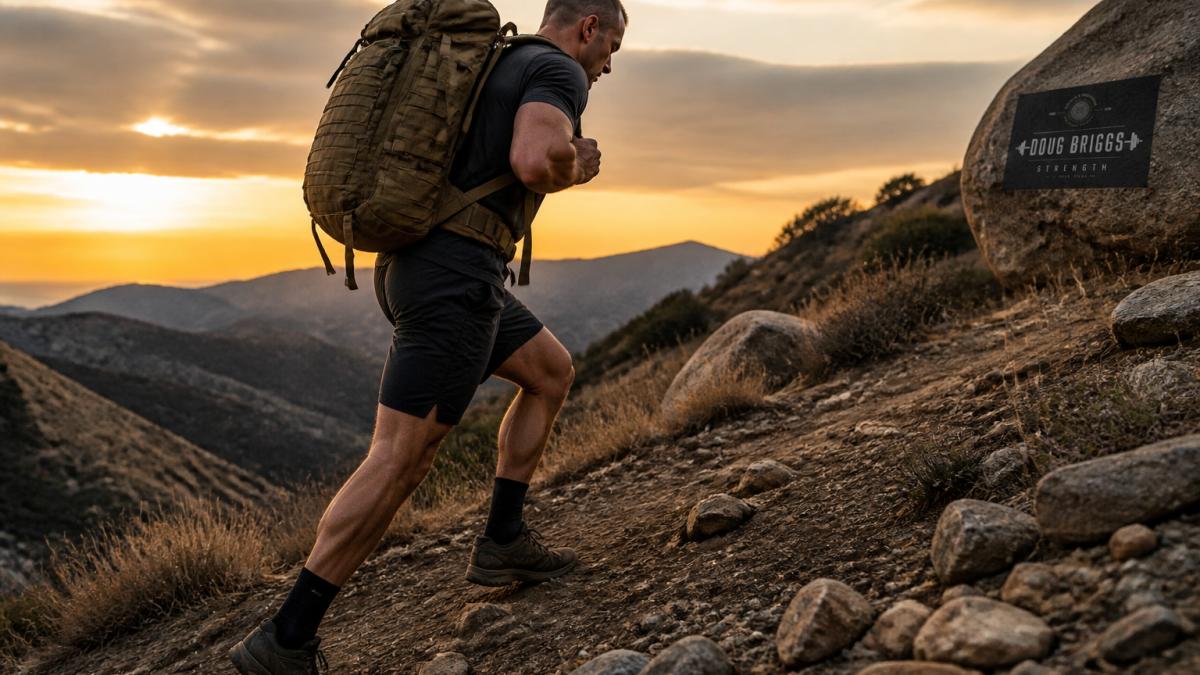
Ruck training for tactical athletes is the most job-specific durability work on this list. It teaches the feet, ankles, hips, and trunk to tolerate load over distance, which is exactly what the job demands.
Start with short distances and light loads, then build one variable at a time. Fit matters more than most people think: a pack that sits too low pulls you into a forward lean and shifts stress to the low back. Build distance before load, and never increase both in the same week.
Functional strength training for tactical athletes should always include some loaded walking. It is the closest thing to a direct rehearsal of the job.
Most tactical athletes we meet are not short on effort. They are short on structure, and that is the real challenge: turning hard training into durable training that survives a full career. Doug Briggs Strength builds personalized, evidence-based programs around exactly that goal, drawing on more than 30 years of coaching experience with youth, adult, and tactical athletes. You get programming tailored to your schedule and your history, hands-on gym-based seminar options, and a plan that develops consistent, accountable habits instead of generic app workouts. Book a free consultation with Doug Briggs Strength and start building strength that holds up on the job.
Frequently Asked Questions
What does durability mean in tactical athlete training?
Durability is the ability to keep performing under load without breaking down. It combines strength, joint resilience, and work capacity so you can carry gear, move a casualty, or hold a position without pain or injury. Durability exercises target the movement patterns your job demands, not just isolated muscles. A 2023 systematic review in PubMed Central examined physical training programs for tactical personnel, though the supplied result does not state its findings or sample size. In practice, durability work means loaded carries, single-leg strength, and controlled core training done consistently.
What exercises build functional strength for tactical athletes?
The core lifts are loaded carries, split squats, deadlift variations, push and pull patterns, anti-rotation core work, sled pushes, and progressive ruck marching. Each one mirrors a real task: carrying equipment, dragging a partner, climbing, or moving under load. A 2025 systematic review in PubMed Central reports that functional training benefits athletes' physical and technical performance, while noting it is a systematic review and does not provide further detail on the evidence base. Start with two to three of these movements and add load gradually.
How often should tactical athletes do durability training?
Two to three sessions per week is a realistic starting point for most tactical athletes, especially those working shifts or training around a full-time job. Durability work fits best as a complement to your main strength sessions rather than a replacement. Rotate the seven exercises across the week so no single pattern gets hammered twice in a row. If you are new to loaded carries or rucking, begin with lighter loads and shorter distances, then add volume every couple of weeks.
How should tactical athletes balance strength and endurance?
Treat strength as the base and endurance as the layer on top. Keep heavy strength work in two sessions per week, then add conditioning like sled pushes or ruck marches on separate days or after lifting. Stacking hard endurance work directly before heavy lifting blunts both adaptations. A 2025 systematic review in PubMed Central reports functional training benefits physical and technical performance, but the supplied result does not detail the evidence base, so individual response still varies. Track how you recover and adjust volume rather than chasing both qualities at maximum intensity.
What is the difference between strength and durability training?
Strength training builds how much force you can produce. Durability training builds how well your body tolerates repeated force over time, which is what keeps tactical athletes on duty. A heavy deadlift shows strength; a 400-meter farmer's carry with good posture shows durability. You need both, but durability work adds single-leg control, core bracing under load, and progressive rucking. The 2023 PubMed Central review of physical training programs for tactical personnel examined this space, though the supplied result does not state its findings or sample size.