 ultimate-guide
The Complete Guide to Tactical Athlete Training
Last Updated: November 1, 2026
Quick Summary
Tactical athlete training is the structured physical preparation of law enforcement officers, firefighters, military personnel, and other physically demanding professions to perform unpredictable, high-stress tasks while carrying heavy equipment. It builds strength under load, endurance, work capacity, mobility, and power, and the best program is one you can execute on your worst week, not your best one.
- Three well-structured training days per week beat five days you abandon by week three.
- The Anchor template suits 12-hour rotating shifts and totals 3.5-4 hours weekly.
- Put power work before strength work, never after, because power quality drops sharply with fatigue.
- Retest the five-test baseline battery every four to six weeks using the same protocol.
- Never add load and volume in the same week to keep injury risk down.
Table of Contents
- What Tactical Athlete Training Actually Requires
- Building a Tactical Athlete Workout Program That Fits Real Life
- Tactical Strength and Conditioning: What the Evidence Shows
- A Tactical Training Program for Beginners
- Assessing Readiness and Tracking Measurable Benchmarks
- Reducing Injury Risk and Returning to Training Safely
- Recovery, Nutrition, and Sleep for Tactical Athletes
- Book a Free Consultation With Doug Briggs Strength
- Frequently Asked Questions
What Tactical Athlete Training Actually Requires
Tactical athlete training is the structured physical preparation of law enforcement officers, firefighters, military personnel, and other physically demanding professions to perform unpredictable, high-stress tasks while carrying heavy equipment.
The demands are real and documented. Job demands in tactical settings impair mental health, with stigma and limited resources acting as significant barriers to care, according to NIH research on tactical athlete mental health.
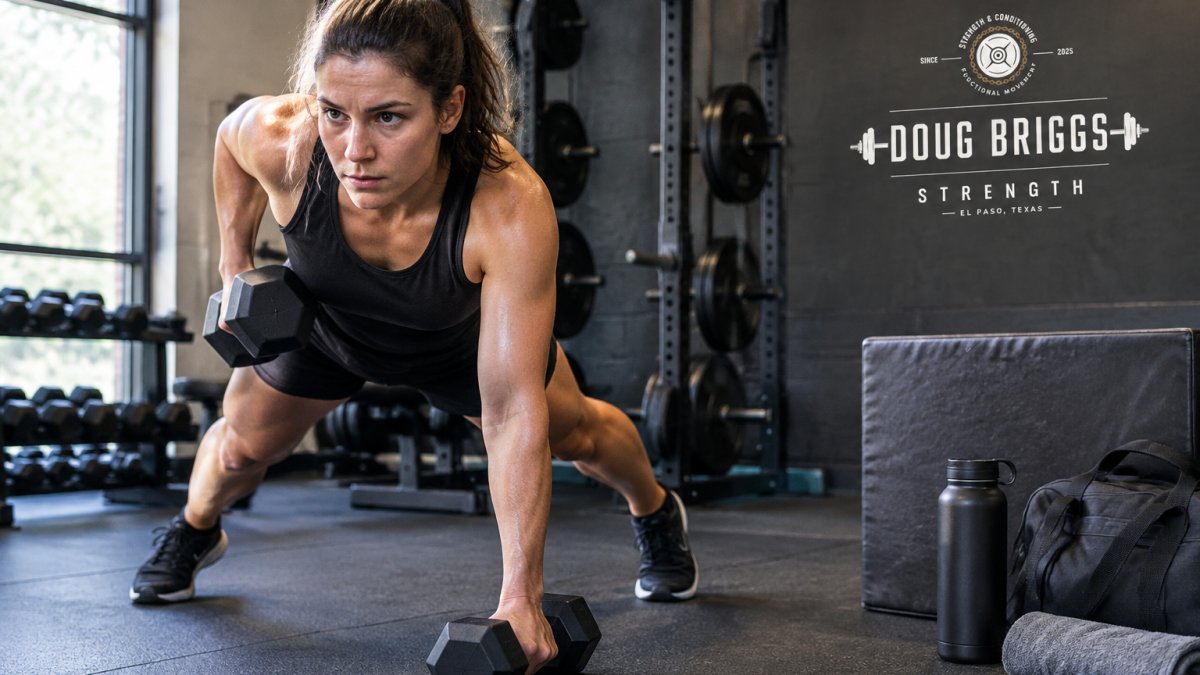
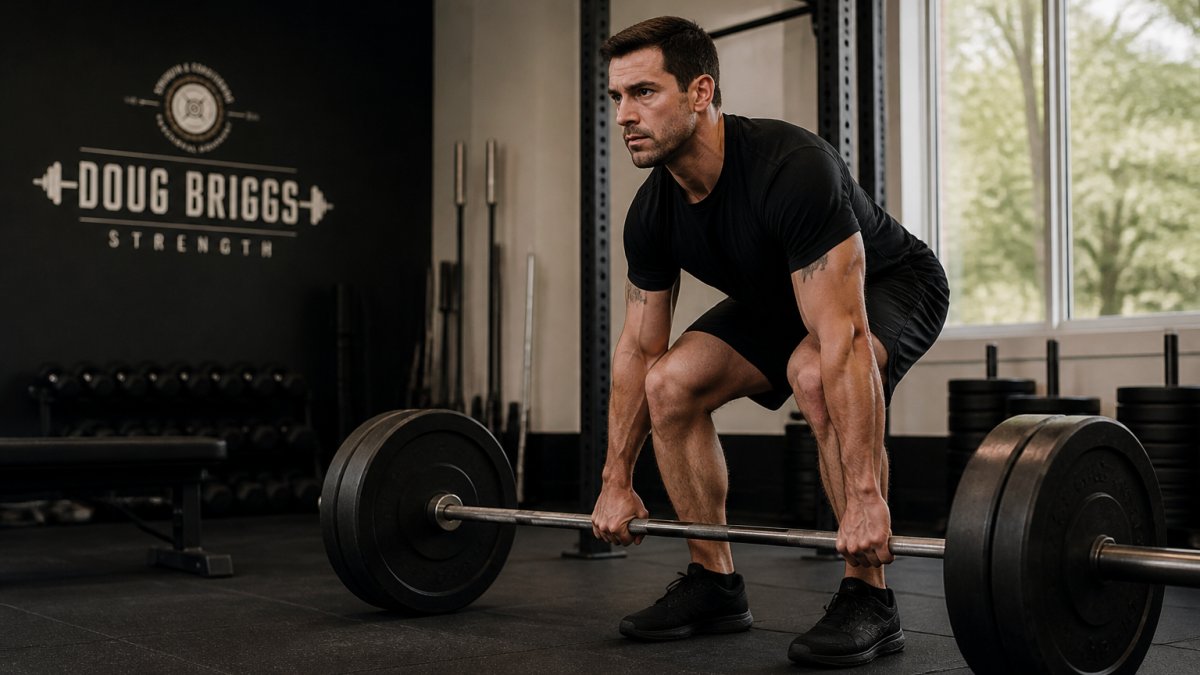
- Strength under load: squats, deadlifts, and carries that mirror dragging a partner or breaching a door
- Endurance and cardiovascular fitness sustained across a shift, not a 5K
- Work capacity: the ability to repeat hard efforts with incomplete recovery
Most guides get this wrong by treating tactical fitness as bodybuilding with a camouflage paint job.
Building a Tactical Athlete Workout Program That Fits Real Life
The best tactical athlete workout program is the one you can execute on your worst week, not your best one. Readers who struggle to fit training into a busy schedule can use a training plan that fits your life for consistency.
Copying a plan built for someone with unlimited recovery time is a common mistake. Shift workers do not have that. We build around fixed anchors: two strength sessions, one conditioning session, and short daily mobility work under ten minutes.
Three Weekly Templates for Different Schedules
No single template fits every tactical athlete. Pick the structure below that matches your actual week, not your ideal week.
| Template | Best For | Weekly Structure | Total Training Time |
|---|---|---|---|
| Anchor | 12-hour shifts, rotating schedules | Mon: lower strength; Wed: conditioning; Fri: upper strength + trunk; daily mobility | 3.5-4 hours |
| Split | Fixed day shifts, predictable recovery | Mon: lower strength; Tue: conditioning; Thu: upper strength; Sat: power + carry; daily mobility | 4.5-5 hours |
| Minimal | Academy, deployment, or high-stress periods | Two full-body strength sessions (Mon/Thu) plus one 20-minute conditioning circuit (Sat) | 2.5-3 hours |
Strength, Endurance, and Work Capacity in One Week
A workable weekly template looks like this:
| Day | Focus | Example Session | Duration |
|---|---|---|---|
| Monday | Lower-body strength | Squats, deadlifts, loaded carries | 45-60 min |
| Wednesday | Conditioning | Intervals, burpees, sled work | 30-40 min |
| Friday | Upper body and trunk | Weighted push-ups, pull-ups, core stability | 45 min |
| Daily | Mobility | Warmup and flexibility flow | 10 min |
Strength work builds the base, conditioning builds work capacity, and daily mobility keeps you available for both. A focused 40 minutes outperforms a distracted 90.
Exercise Progressions and Scaling
Every movement in the template has a regression and a progression. Use the regression when technique breaks down or recovery is poor; use the progression only when the current level is clean for two consecutive sessions.
| Pattern | Regression | Baseline | Progression |
|---|---|---|---|
| Squat | Goblet squat | Back squat | Front squat or pause squat |
| Hinge | Kettlebell deadlift | Trap bar deadlift | Conventional deadlift |
| Push | Incline push-up | Push-up | Weighted push-up |
| Pull | Inverted row | Pull-up | Weighted pull-up |
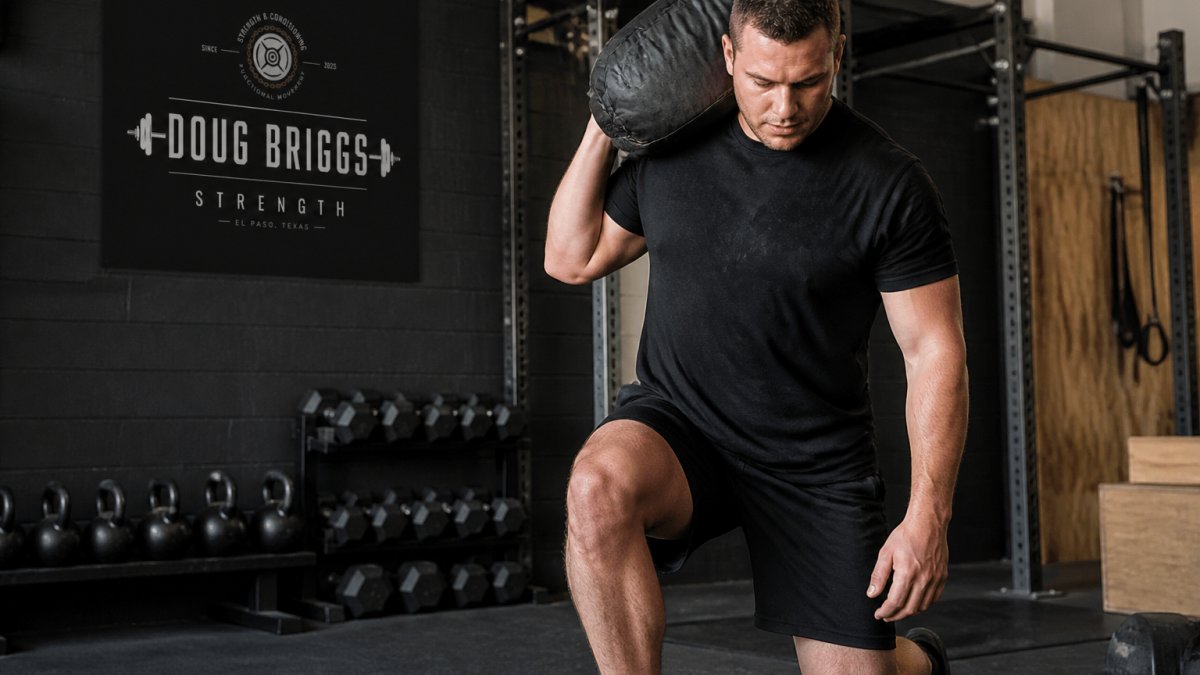
| Carry | Farmer carry, light | Farmer carry, moderate | Suitcase carry or sandbag carry |
| Conditioning | Walk-run intervals | 30-second hard / 90-second easy | Sled push or hill sprint intervals |
Adapting the Plan for Shift Work and Limited Equipment
Shift work disrupts sleep, digestion, and recovery, so the plan has to absorb that disruption. Three practical rules:
- Train after the shift, not before. Most tactical athletes perform better after sleep than after a 12-hour shift, even if the session is shorter.
- Keep a 20-minute backup session. Two rounds of a bodyweight circuit (squat, push-up, row, plank, carry with any heavy object) preserves the habit when the full session is impossible.
- Never stack two hard days back-to-back after a night shift. Use the second day for mobility or an easy walk.
Mobility, Power, and Movement Under Stress
Power and explosive movement deserve their own slot, even if brief. For a deeper guide to structuring power training, see this power training programs guide. Box jumps, medicine ball throws, and short sprints train the quality the job demands most: sudden force under fatigue.
Put power work before strength work, never after. Power quality drops sharply with fatigue, and a fatigued box jump is an injury waiting to happen.
Tactical Strength and Conditioning: What the Evidence Shows
Tactical strength and conditioning works when it is individualized and assessed; it underperforms when it is generic. Readers can see whether tactical strength training is worth it for firefighters in a practical case study. A four-week holistic training program for tactical athletes was associated with improvements in kinesiophobia and overall physical functioning, according to Frontiers in Sports and Active Living study.
The field is also moving toward standardized assessment.
A Tactical Training Program for Beginners
A tactical training program for beginners should start with movement quality, not intensity. The first month builds a base you can repeat, not proof of how hard you can go.
Your First Four Weeks, Step by Step
Total time: 4 weeks, 3 sessions per week, 40-50 minutes each. Difficulty: Beginner.
- Week 1: Learn the squat, hinge, and push-up patterns with light load. Two sets each, focus on position.
- Week 2: Add load to squats and deadlifts. Introduce one conditioning finisher: 6 rounds of 30-second efforts.
- Week 3: Add pull-ups or rows and a loaded carry. Keep total session volume modest.
Expected result: By week four you should move better, recover faster, and know your baseline numbers.
Assessing Readiness and Tracking Measurable Benchmarks
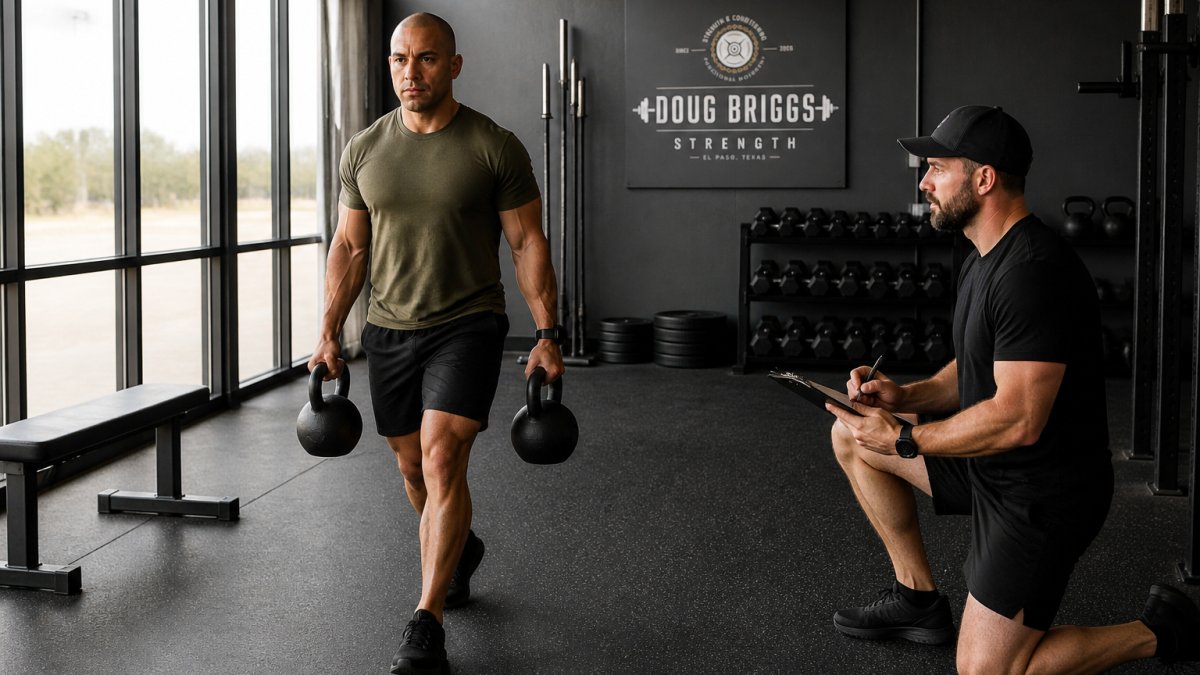
You cannot manage what you do not measure. Tactical fitness assessment should be simple, repeatable, and tied to job tasks. Retest every four to six weeks using the same protocol so the comparison is valid.
The Five-Test Baseline Battery
Run these in order with five minutes of rest between tests. Total time is about 45 minutes.
| Test | Protocol | What It Measures | Scoring Guidance |
|---|---|---|---|
| Trap bar deadlift | Work up to a clean 5-rep set with good technique | Lower-body and total-body strength | Record load and bodyweight; track the ratio over time |
| Front plank | Hold a rigid plank until position breaks | Trunk strength and core stability | Record time to failure with a 3-minute cap |
| Loaded carry | Farmer carry a load equal to roughly half bodyweight for max distance | Grip, trunk, and work capacity | Record distance in yards; stop when posture breaks |
| 1.5-mile run | Timed run on a measured course or track | Aerobic capacity | Record time; compare month to month, not to a single standard |
| Work-capacity circuit | 5 rounds for time: 10 burpees, 10 kettlebell swings, 10 box step-ups | Repeat-effort capacity | Record total time and note where pace dropped |
These five tests cover strength under load, trunk stability, carrying capacity, aerobic fitness, and repeat-effort capacity. None requires specialized equipment beyond a trap bar, a kettlebell, and a stopwatch.
Interpreting Your Numbers
A single test score means little in isolation. What matters is the trend across retests and the relationship between tests. Three patterns are worth watching:
- Strength rising while conditioning falls: usually a sign that conditioning volume dropped too low. Add one interval session per week.
- Conditioning rising while strength stalls: often a recovery or protein-intake issue. Check sleep and protein before adding training volume.
- Both flat for two retests: the program is not providing enough stimulus or recovery. Adjust one variable at a time.
Tracking Training Load Alongside Performance
Performance tests are lagging indicators. Track weekly training load so you can see problems before a retest does: multiply session duration in minutes by a perceived effort rating from 1 to 10, then add the week's total. A sharp jump in weekly load followed by a performance dip two to three weeks later is common; when you see it, hold load steady for a week rather than pushing through.
Track three things in a simple notebook or spreadsheet:
- Weekly training load (duration × effort)
- Sleep hours per night, averaged across the week
- Bodyweight, measured at the same time of day
If performance drops for two consecutive sessions, that is a readiness signal, not a motivation problem. Scale the session down and return.
Job-Task Benchmarks by Role
The five-test battery is universal, but the benchmarks that matter differ by role. Use these as directional targets, not pass/fail standards, and confirm any formal standard with your department or unit.
| Role | Priority Qualities | Benchmark to Watch |
|---|---|---|
| Law enforcement | Carrying, sprinting, control under fatigue | Loaded carry distance and 1.5-mile run time |
| Fire and rescue | Carrying under load, stair climbing, trunk stability | Loaded carry and plank time |
| Military | Rucking, running, repeat efforts | 1.5-mile run and work-capacity circuit time |
A tactical athlete preparing for a specific selection or academy should ask for the published standard and test against it directly. For everyone else, the trend across retests is the most useful signal you have.
Reducing Injury Risk and Returning to Training Safely
Injury prevention in tactical athlete training comes down to load management, technique, and honest progression. Most training injuries we see are not accidents; they are unmanaged spikes in volume or intensity.
Returning to training after injury follows a sequence: restore range of motion, rebuild strength in the affected pattern, then reintroduce power and conditioning. Our article on functional durability exercises for tactical athletes gives you specific movements for the return-to-training phase.
Watch out: pushing through sharp pain to "test" an injury almost always extends the timeline. If a movement reproduces pain, regress it and rebuild.
Recovery, Nutrition, and Sleep for Tactical Athletes
Recovery is training. Sleep, hydration, and adequate protein intake determine whether the work you did translates into physical readiness. Tactical athletes often under-eat protein and under-sleep, then wonder why strength stalls. Aim for consistent sleep and a protein source at each meal; precision matters less than consistency.
Treat recovery with the same structure you apply to training: schedule it, track it, and adjust when performance dips.
Book a Free Consultation With Doug Briggs Strength
Generic apps cannot see your shoulder history, your shift schedule, or your job tasks. That is the gap personalized coaching closes.
Our approach is straightforward: evidence-based programming, measurable benchmarks, and accountable habits that hold up when work gets busy.
Get started with Doug Briggs Strength and build a tactical athlete training plan that fits your life and produces measurable results.
Frequently Asked Questions
What is tactical athlete training?
Tactical athlete training prepares people in physically demanding professions, including law enforcement officers, military personnel, and nurses, for the unpredictable demands of the job. It combines strength, cardiovascular endurance, work capacity, mobility, and power rather than chasing a single fitness goal. Generic fitness apps rarely account for the loads, gear, and stress these roles involve, which is why structured tactical athlete training focuses on mission readiness and durable performance instead of appearance.
Can beginners follow a tactical training program for beginners?
Yes, provided the program scales to your current fitness level. A sensible tactical training program for beginners starts with fundamental movement patterns like squats, deadlifts, pull-ups, and carries at manageable loads, then adds volume gradually. Start conservatively and build consistency before intensity.
How many days a week should tactical athletes train?
Three to four focused sessions per week is a workable baseline for most people balancing a job and family, and consistency matters more than frequency. A tactical athlete workout program can pair two strength days with one or two conditioning days, then add a fourth session once recovery and schedule allow. Quality sessions beat cramming five rushed workouts into a week.
How do tactical athletes balance strength and endurance?
Balance comes from periodized training blocks rather than trying to max out both qualities in the same session. A common structure rotates a strength-focused block, a work capacity block, and a peaking block across the year, with cardiovascular fitness maintained at a lower volume throughout.
How can tactical athletes reduce injury risk while training?
Manage training load, build trunk strength and core stability, and address mobility before adding intensity. Screening matters before hard training blocks begin. If an old injury flares up, a coach can adjust exercise selection rather than stopping training entirely. Return-to-training should be gradual, with load increases tied to how you respond rather than a fixed calendar.
What is the difference between tactical training and regular fitness training?
Regular fitness training often targets general health or appearance, while tactical strength and conditioning prepares you for specific job tasks: carrying equipment, moving under stress, and sustaining effort when tired. Tactical athletes face high-pressure demands that generic programs do not address, which is why role-specific plans and task demands matter. Expect more emphasis on loaded carries, trunk strength, and high-stress movement, plus assessment benchmarks that reflect mission readiness rather than a single lift number.