 blog
How to Start Strength Training as a Beginner: 10 Habits
Last Updated: November 2, 2026
Quick Summary
The best strength training habits for beginners are building a simple routine, training two to three days a week, and using two to three sets of eight to twelve reps with clean form. Beginners should also apply progressive overload gradually, warm up, recover well, and track every session. Consistency matters more than intensity.
- Pick one exercise per major muscle group, with ten to twelve movements being more than most beginners need.
- Train two to three full-body sessions per week, leaving a rest day between sessions.
- Stop each set with two or three reps left in reserve, and keep form controlled throughout.
- Add a rep or a small amount of weight once you complete every set with solid form.
- Never miss two workouts in a row, since missing one session is fine.
Table of Contents
- Habit 1: Build a Simple Beginner Strength Training Routine
- Habit 2: Train a Realistic Number of Days Each Week
- Habit 3: Use Beginner Sets and Reps That Build Strength Safely
- Habit 4: Apply Progressive Overload for Beginners Gradually
- Habits 5 to 10: Form, Warm-Up, Recovery, Tracking, Safe Load, and Consistency
- Habit 5: Learn form before you chase weight
- Habit 6: Warm up in two stages
- Habit 7: Recover on purpose, not just on rest days
- Habit 8: Track every session with a simple log
- Habit 9: Choose a safe starting load and judge effort honestly
- Habit 10: Stay consistent with a system, not willpower
- Adapt the plan to your body and your starting point
- Booking a Free Consultation to Start Your Habit Plan
- Frequently Asked Questions
Most people who try strength training habits quit within a few weeks. The problem is rarely the first workout. It is the lack of habits that carry you through the second, third, and fiftieth session. Across coaching youth, adult, and tactical athletes, the pattern tends to hold across every group: consistency beats intensity. The habits below are the ones that keep beginners lifting long enough to see real change.
Here is the core idea: a workout is a single event, but a habit is a system you repeat. Once the system runs on its own, the workouts take care of themselves.
Strength training means working your muscles against resistance so they get stronger over time (American College of Sports Medicine Position Stand. Resistance Training Prescription for...). That resistance can be your body weight, bands, dumbbells, or machines. The goal is not to look a certain way on day one. It is to build a routine you can keep for months.
Habit 1: Build a Simple Beginner Strength Training Routine
Start with a small set of exercises that cover the major muscle groups, because strength training habits are easiest to build around a short, focused routine. A simple beginner routine might include:
- Squat variation: goblet squats or a bodyweight squat to a chair
- Push movement: modified push-ups against a counter or wall
- Pull movement: banded rows or a seated cable row
- Hinge movement: glute bridges or a light Romanian deadlift
- Core work: planks or bird dogs
Choose one exercise per muscle group. Ten to twelve movements is more than most beginners need. Fewer exercises make it easier to track progress and easier to stick with the plan.
Habit 2: Train a Realistic Number of Days Each Week
Two to three full-body sessions per week is enough for most beginners. Training three days allows a rest day between sessions, which gives muscles time to recover and adapt. The best schedule is the one you will actually follow, even during a busy week. For ideas on a plan that fits your life, read about a training plan built for consistency.
If your calendar is tight, plan two shorter sessions instead of skipping. A thirty-minute workout you complete beats a ninety-minute plan you abandon.
Habit 3: Use Beginner Sets and Reps That Build Strength Safely
For most beginners, two to three sets of eight to twelve repetitions works well. That range is heavy enough to build strength and light enough to keep form clean while you learn the movements. Start with two sets per exercise in your first two weeks, then add a third set once the workout feels manageable.
Stop each set with two or three reps left in the tank. That is enough effort to build strength without grinding out sloppy reps. A practical effort cue: on the last rep, you should still be able to control the weight on the way down. If the weight drops or your form breaks, the set is over.
Rest one to two minutes between sets. Shorter rest keeps the workout moving; longer rest lets you use more weight with good form. For beginners, err toward the longer end on compound movements like squats and rows, and the shorter end on core work.
Use the same weight for every set until you can complete all reps with good form. Good technique matters more than the number on the dumbbell, so keep each rep controlled, roughly two seconds down and two seconds up is a simple tempo to aim for. If you cannot finish the prescribed reps with clean form, reduce the weight rather than pushing through.
Habit 4: Apply Progressive Overload for Beginners Gradually
Progressive overload means slowly making the workload harder over time. Muscles adapt to the demands you place on them, so they need a reason to keep growing. A simple approach is to add a rep or a small amount of weight once you can complete every set with solid form.
Small jumps are safer and more sustainable than big ones. Learn how to apply progressive overload safely as you advance. Increasing weight by five pounds at a time is a reasonable starting point for many upper-body lifts.
Habits 5 to 10: Form, Warm-Up, Recovery, Tracking, Safe Load, and Consistency
These six habits support everything above. Each one is small on its own, but together they are what separate beginners who still lift a year later from beginners who quit in week three.
Habit 5: Learn form before you chase weight
Film one set from the side with your phone, or ask a coach to watch. Check three things: your back stays neutral, your knees track over your toes, and the weight moves in a straight, controlled path. Clean reps reduce injury risk and make every later progression safer. If a rep looks ugly, drop the weight rather than push through.
Habit 6: Warm up in two stages
Spend five to ten minutes on light cardio and dynamic stretches, leg swings, arm circles, hip openers, bodyweight squats, to raise your heart rate and loosen the joints you are about to load. Then do one or two lighter warm-up sets of the first exercise at roughly half your working weight. The warm-up is not optional; cold tissue and stiff joints are where most beginner tweaks happen.
Habit 7: Recover on purpose, not just on rest days
Recovery is more than taking a day off. Sleep, protein, and hydration all play an important role in strength gains. Aim for seven to nine hours of sleep, spread protein across your meals, and drink water throughout the day. Take at least one full rest day each week, and if you feel run down, take a second. Soreness that fades in a day or two is normal; soreness that lingers or comes with joint pain is a signal to back off.
Habit 8: Track every session with a simple log
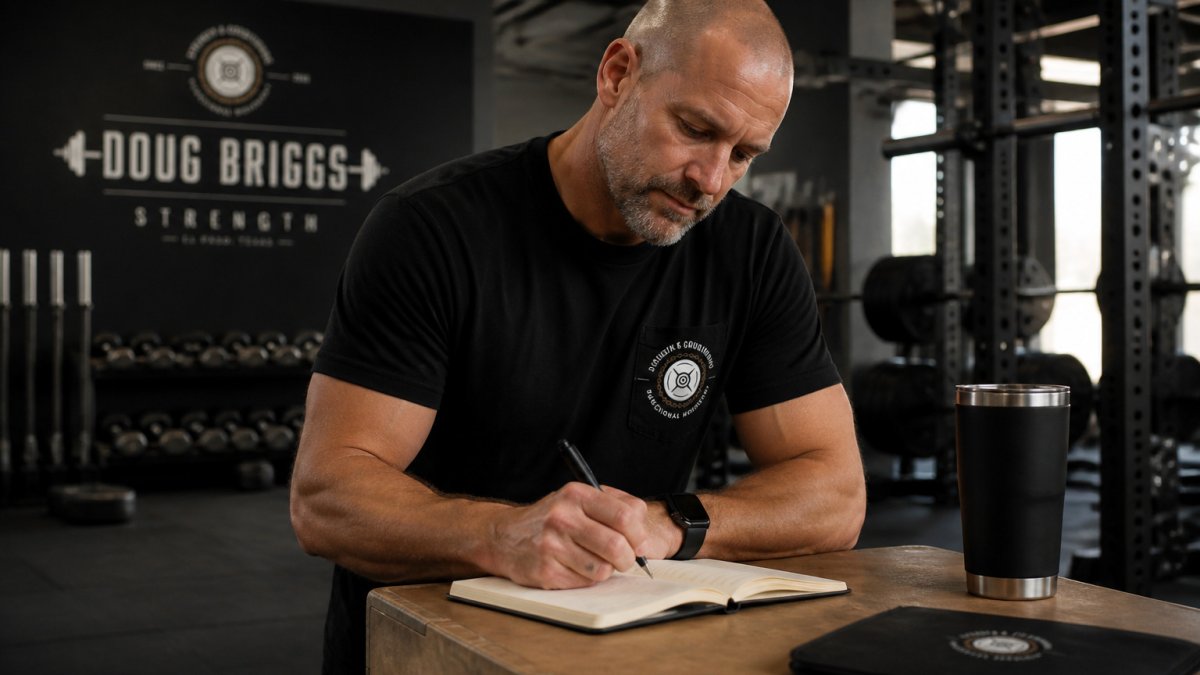
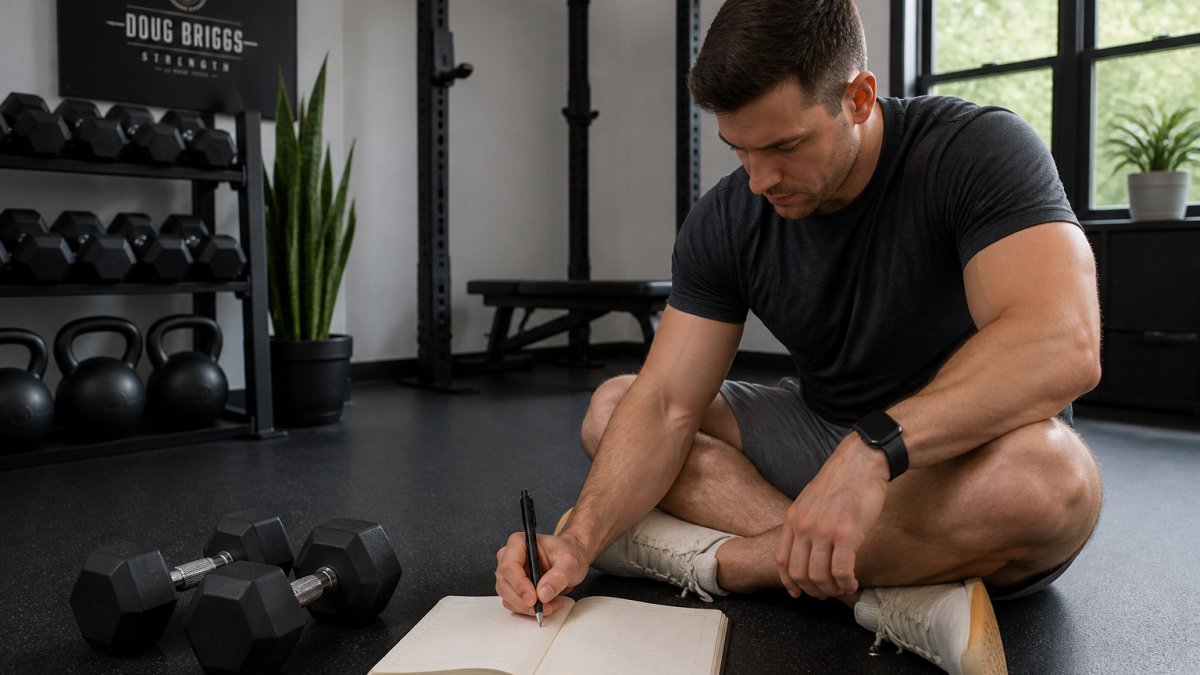
Write down four things for each exercise: the weight, the reps, the number of sets, and how hard the last set felt (easy, moderate, or hard). A paper notebook, a notes app, or a spreadsheet all work, the format matters less than the habit of recording. Tracking does two jobs: it shows progress you would otherwise miss, and it tells you exactly when to add reps or weight. Without a log, progressive overload becomes guesswork.
Habit 9: Choose a safe starting load and judge effort honestly
Pick a weight where the last two reps of a set are challenging but still clean. A simple effort cue: you should be able to finish the set with about two or three reps left in reserve, meaning you could have done a few more with good form but chose to stop. If you cannot control the movement on the way down, the weight is too heavy. If the set feels like a warm-up, it is too light. When in doubt, start lighter than you think you need; beginners almost always underestimate how much load good form can handle and overestimate how much they need on day one.
Habit 10: Stay consistent with a system, not willpower
Set a recurring time for your workouts and treat it like any other appointment. Put it on your calendar, lay out your clothes the night before, and keep a short backup session ready for busy weeks. Missing one session is fine. Missing two in a row is where habits start to break down, so the rule is simple: never miss twice.
Adapt the plan to your body and your starting point
Not every beginner starts from the same place. If you have mobility limitations, swap a full squat for a box squat or a chair sit-to-stand. If your knees or shoulders complain, reduce range of motion or use bands instead of dumbbells. Older beginners and people returning after a long break should start with two sessions per week and add the third only after a month of consistent training. The habits above are the frame; the exercises inside them should fit the person doing them.
Booking a Free Consultation to Start Your Habit Plan
Building these habits on your own is possible, but a personalized plan speeds up the process and keeps you accountable. See how personalized fitness coaching delivers measurable results. At Doug Briggs Strength, our programs are built around your goals, your schedule, and any injuries or limitations you bring to the table. Unlike a generic app, every program is structured by a coach with over 30 years of experience in youth, adult, and tactical training.
If you are ready to start, Our first step is a free consultation, where we talk through your goals and map out a realistic starting point. Follow this step-by-step guide to hiring a personal strength coach online to see how booking works. Book a free consultation today and get a plan that fits your life.
Frequently Asked Questions
How often should beginners strength train?
Most beginners do well training two to three non-consecutive days per week, with one full-body session per day. This gives each major muscle group at least two stimulus sessions weekly while leaving time for recovery. Start at two days if your schedule is tight, and add a third only after two weeks of consistent attendance and normal soreness. Consistency across months matters far more than hitting a perfect weekly count.
How long should a beginner strength training workout last?
A beginner strength session usually runs 30 to 60 minutes including a warm-up. Four to six exercises covering the major muscle groups, performed for two to three sets each, fit comfortably in that window. Shorter sessions done consistently beat longer sessions you skip. Keep rest periods between sets around one to two minutes so the workout stays efficient without rushing your form.
How many sets and reps should beginners do?
Beginners typically start with two to three sets of 8 to 12 repetitions per exercise, leaving one to three reps in reserve on the final set. Lower reps with heavier loads build strength, while higher reps are useful for technique practice. Choose a weight that lets you complete every rep with good form. If the last rep looks like a struggle to control, the load is about right.
What should beginners do before starting strength training?
Begin with five to ten minutes of light cardio and dynamic movements such as leg swings, arm circles, and bodyweight squats. Then perform one or two lighter warm-up sets of your first exercise before working sets. If you have a past injury, such as a shoulder that flares up, consult a qualified professional before you begin and modify movements that cause pain. Pain that persists after the session is a signal to adjust, not push through.