 blog
10 Best Endurance Training Drills for First Responders
Table of Contents
- Why First Responder Workouts Need Endurance Training Drills
- The 10 Best Endurance Training Drills for First Responders
- First Responder Workouts: Role-Specific Variations
- Firefighter Endurance Training: Building Work Capacity Under Load
- Cardiovascular Endurance Exercises for Long Shifts
- Stair Climbing Workout for Firefighters: Benchmarks and Progression
- How to Build a 12-Week Progressive Plan
- Conclusion: Train for the Call, Not the Mirror
- Frequently Asked Questions
Last Updated: October 18, 2026
Why First Responder Workouts Need Endurance Training Drills
Endurance training drills are structured, repeatable bouts of work that build the stamina first responders need under load for extended periods.
The work is unpredictable: a firefighter may climb stairs in full gear, drag a hose, then carry a patient; an EMT may lift a stretcher four times in an hour; an officer may sprint, hold position, then sprint again.
That is the gap most first responder workouts fall into: people train for the mirror or a 5K, then find the stairwell in full gear feels like a different sport.
The 10 Best Endurance Training Drills for First Responders
These ten drills cover the strength, cardiovascular conditioning, and core stability emergency response demands. Ranked from most job-specific to most restorative, each includes exact work, rest, and progression. Pick three or four per week and rotate.
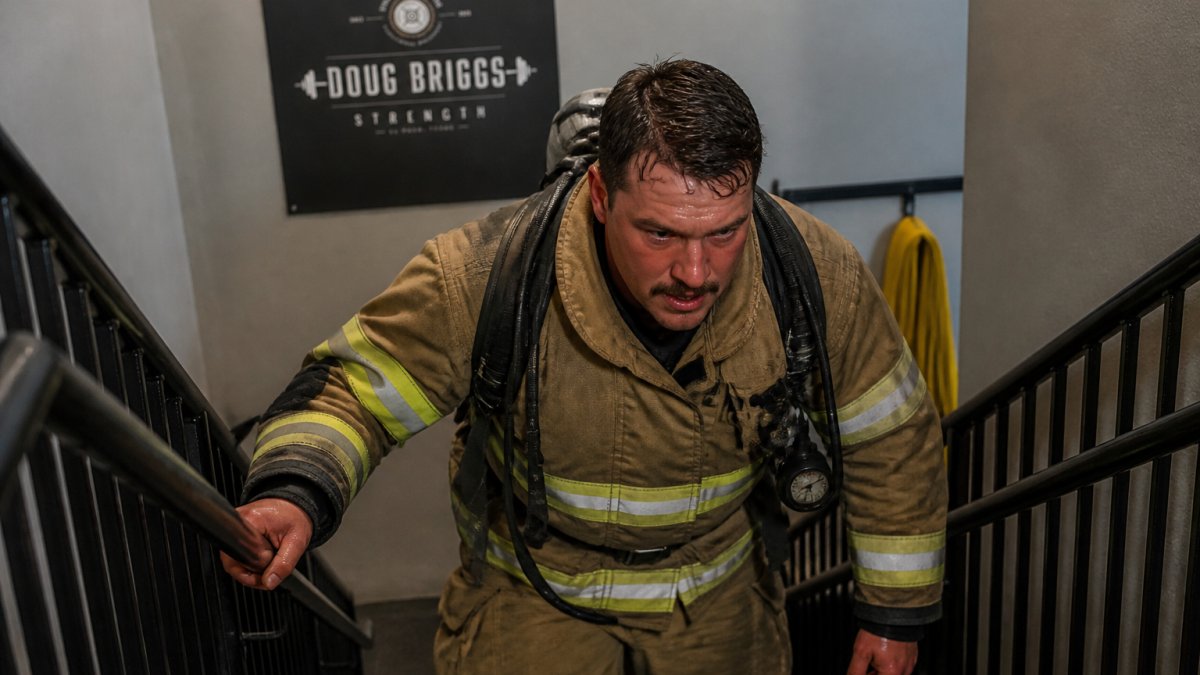
1. Stair Climb with Pack
The stair climb with pack is the most transferable drill for firefighters and any responder working in multi-story buildings. Load a pack with 20 to 45 pounds, climb at a steady pace for 3 to 5 minutes, rest 2 minutes, and repeat 4 to 6 rounds.
- Work: 3-5 minutes climbing
- Rest: 2 minutes
- Progression: add load first, then rounds, then speed
Keep your steps deliberate. Rushing the descent is where knees get hurt.
2. Hose Drag Intervals
Hose drag intervals build the pulling endurance and grip strength hose advancement requires. Attach a heavy rope or drag strap to a sled or weighted bag, drag it 15 to 20 meters, walk back, and repeat for 6 to 8 rounds with 60 seconds rest.
- Work: 15-20 meters
- Rest: 60 seconds
- Progression: add weight before adding distance
Stay low and drive with your legs. If your lower back aches, the load is too heavy or your hips are too high.
3. Kettlebell Deadlift to Carry
This drill pairs posterior-chain strength with loaded carries, mirroring the lift-and-move pattern of patient handling. Deadlift a kettlebell, stand tall, then carry it 20 meters. Do 5 to 6 rounds with 90 seconds rest.
- Work: 5 deadlifts plus a 20-meter carry
- Rest: 90 seconds
- Progression: heavier bell, longer carry, or both
4. Battle Rope Waves
Battle rope waves are a low-skill, high-output conditioning tool. Alternate waves for 30 seconds, rest 30 seconds, and repeat for 10 to 12 rounds. Keep your knees soft and your core braced.
- Work: 30 seconds
- Rest: 30 seconds
- Progression: longer work intervals, then shorter rest
5. Bodyweight Circuit (Push-Ups, Squats, Lunges, Planks)
This bodyweight circuit builds work capacity with zero equipment, perfect for shift days. Run 40 seconds of work per exercise with 20 seconds rest, three rounds.
- Push-ups
- Squats
- Walking lunges
- Planks
That is one 20-minute workout. Add repetitions or rounds as you adapt.
6. Pull-Up and Bent-Over Row Ladder
Pulling endurance matters for ladder work, rescue drags, and self-extraction. Alternate pull-ups with bent-over rows, adding one rep each round: 1 pull-up and 2 rows, up to 5 and 10. Rest 60 seconds between rounds.
- Work: ascending ladder to 5 pull-ups
- Rest: 60 seconds
- Progression: start the ladder higher or add load
7. 20-Minute Walk-Jog Intervals
Walk-jog intervals build a cardiovascular base without wrecking your joints. Jog 1 minute, walk 1 minute, repeat for 20 minutes, ideal for coming back from injury or building a first base.
- Work: 1 minute jog
- Rest: 1 minute walk
- Progression: lengthen the jog, shorten the walk
8. Sled Push and Pull
Sled work delivers high force with low eccentric stress, building leg endurance without the soreness of heavy squats. Push a loaded sled 20 meters, pull it back 20 meters, for 5 to 6 rounds with 90 seconds rest.
- Work: 20 meters push, 20 meters pull
- Rest: 90 seconds
- Progression: add plates, not speed
9. Core Stability Complex
Core stability keeps your spine safe while you carry, drag, and lift. Run this complex for 3 rounds with 60 seconds rest between rounds.
- Plank: 30-45 seconds
- Side plank: 20-30 seconds per side
- Dead bug: 8 reps per side
- Bird dog: 8 reps per side
Quality beats duration. Stop the set when your form breaks.
10. Mobility and Flexibility Flow
Mobility work is recovery, and recovery is part of the program. Spend 10 to 15 minutes on a flow covering hips, thoracic spine, shoulders, and ankles. Move slowly and breathe.
- Hip flexor stretch: 45 seconds per side
- Thoracic rotation: 8 reps per side
- Shoulder pass-through: 10 reps
- Ankle rocks: 10 reps per side
First Responder Workouts: Role-Specific Variations
The same ten drills serve every responder, but emphasis, loading, and weekly volume should shift with the job.
| Role | Priority Drills | Weekly Emphasis | Key Benchmark |
|---|---|---|---|
| Firefighters | Stair climb with pack, hose drag intervals, sled push/pull | 2 loaded sessions, 1 aerobic base session, 1 mobility session | 6 rounds of 4 minutes at 45 lb with 90 seconds rest, steady steps throughout |
| EMTs and paramedics | Kettlebell deadlift to carry, core stability complex, walk-jog intervals | 2 carry/core sessions, 2 aerobic base sessions, 1 mobility session | 6 rounds of 5 deadlifts plus 20-meter carry at a fixed bell with no form break |
| Law enforcement | Sprints, bodyweight circuit, battle rope waves | 2 interval sessions, 1 strength-endurance session, 1 mobility session | 10 rounds of 30 seconds on / 30 seconds off with consistent output in the final round |
| All roles | Mobility flow, core stability, walk-jog intervals | At least 1 recovery session and 1 full rest day per week | Resting heart rate holding steady as work rounds increase |
Firefighters. Loaded climbing and dragging are the job.
EMTs and paramedics. Patient handling is the dominant injury risk, so the deadlift-to-carry and core complex deserve the most attention.
Law enforcement. Foot pursuits and control situations are intermittent, so short, sharp intervals matter more than long steady work.
Shift-friendly and low-impact alternatives. Not every responder can train in a gym or train hard on a given day.
Firefighter Endurance Training: Building Work Capacity Under Load
Work capacity under load is the ability to keep doing useful work while wearing gear and carrying weight. For firefighter endurance training, that means training in conditions that resemble the job: heat, load, and limited rest.
Build it in layers. Start with unloaded conditioning, then add a weighted vest or pack, then add turnout gear for short bouts. Never jump straight to full gear if your base is thin. The National Strength and Conditioning Association publishes guidance on load progression and tactical training that is worth reading before you add weight.
Cardiovascular Endurance Exercises for Long Shifts
Long shifts demand cardiovascular endurance that lasts, not intensity that spikes. The goal is a big aerobic base that lets you recover between calls and stay sharp at hour 18.
The best cardiovascular endurance exercises for this job are the boring ones: walk-jog intervals, steady stair climbing, and sled work. They build the engine without beating up your joints.
The American College of Sports Medicine recommends a mix of moderate and vigorous aerobic work each week for adults.
Stair Climbing Workout for Firefighters: Benchmarks and Progression
A stair climbing workout for firefighters should be measured, not guessed. Use these benchmarks to see where you stand, then progress one variable at a time.
| Level | Load | Work | Rounds | Rest |
|---|---|---|---|---|
| Beginner | 20 lb | 2 minutes | 3 | 2 minutes |
| Intermediate | 35 lb | 3 minutes | 5 | 2 minutes |
| Advanced | 45 lb | 4 minutes | 6 | 90 seconds |
Progress load before you progress speed. Add 5 pounds only when you finish all rounds with steady breathing and clean steps. If your form breaks, drop back a level.
How to Build a 12-Week Progressive Plan
A 12-week program should move from base building to job-specific work, then peak.
Weeks 1-4 (base). Three sessions per week plus one mobility session.
Weeks 5-8 (build). Three to four sessions per week.
Weeks 9-12 (peak). Two hard sessions, one recovery session, one mobility session.
Frequency and recovery. Keep one full rest day. Sleep and stress management are part of the plan, not extras.
Progression rules. Progress one variable at a time: load first, then rounds, then speed.
Measurable checkpoints. Track two numbers only: stair climb rounds at a fixed load and resting heart rate.
This is where personalized coaching earns its keep. Doug Briggs Strength builds programs around your shift schedule, your injury history, and your current capacity, so the plan fits your life instead of fighting it.
Conclusion: Train for the Call, Not the Mirror
The hardest part of first responder fitness is not the workout. It is building a plan you can repeat on a chaotic schedule, with old injuries and long shifts working against you.
You get structured training that fits a three-day week, hands-on seminar options, and measurable results in movement and performance. Book a free consultation and get a plan built for the call, not the mirror.
Frequently Asked Questions
What is the best endurance training for first responders?
The best endurance training for first responders combines job-specific movements with structured conditioning. Prioritize stair climbs with a pack, hose drags, kettlebell carries, and 20-minute walk-jog intervals. These drills mirror the demands of emergency response: carrying equipment, climbing stairs, and maintaining work capacity under pressure. Aim for 2-3 endurance sessions per week alongside strength training, and progress work intervals gradually. A balanced plan includes cardiovascular endurance exercises, core stability work, and mobility to reduce injury risk and improve operational readiness.
How do first responders build stamina for long shifts?
Build stamina for long shifts by training your cardiovascular system and muscular endurance together. Use intervals that mimic shift demands: 30-60 seconds of hard work (stair climbs, sled pushes, battle ropes) followed by 60-90 seconds of rest, repeated for 15-20 minutes. Add longer steady-state sessions like 20-30 minute walk-jog intervals once a week. Prioritize recovery, sleep, and stress management, because fatigue on shift often comes from accumulated stress, not just physical load. Consistency across a 12-week program matters more than any single workout.
What exercises improve cardiovascular endurance for firefighters?
Stair climbing, hose drags, sled pushes, battle rope waves, and walk-jog intervals are among the most effective cardiovascular endurance exercises for firefighters. These movements recruit large muscle groups and mimic the sustained effort of fireground work. A practical session: 5 rounds of 1-minute stair climb with pack, 1-minute rest, then 10 minutes of walk-jog intervals. Track your heart rate and aim to keep it elevated for 15-20 minutes per session. Progress by adding load, reducing rest, or increasing duration over 12 weeks.
How often should first responders do endurance training?
Most first responders do well with 2-3 endurance sessions per week, spaced to allow recovery. If you also strength train, pair endurance work after strength sessions or on separate days. A sample week: two 20-minute interval sessions and one longer 30-minute steady-state session. During busy shift cycles, use low-impact and shift-friendly alternatives like bodyweight circuits or mobility flows. Adjust volume based on sleep, stress, and injury history. A coach can help you periodize endurance training around your shift schedule and job demands.