 How-to
Is Remote Strength Coaching Effective? A Practical Guide
Last Updated: November 19, 2026
Quick Summary
Remote strength coaching is effective for most healthy lifters, especially for general strength and adherence, though results depend on how much human feedback you receive. Research summarized by Thesis shows adherence at 81.2% with an app versus 88.2% in person, so structured check-ins and video review matter more than the format itself.
- Remote coaching with structured feedback and regular check-ins produces outcomes close to in-person coaching for general strength and adherence.
- Most strength studies run 8 to 24 weeks and use general markers like squat, bench, and deadlift in adult populations.
- The weekly coaching loop includes program delivery, workout logging, video review, check-ins, and program adjustment.
- Ask each coach how many video reviews per month are included, how often programs are updated, and response times.
- Film lifts from a consistent front and side angle, and send the ones that feel off, not just the good ones.
Table of Contents
- What the Evidence Says About Remote Strength Coaching
- How Online Personal Training Works in Practice
- Remote Workout Programming: Personalized Plans vs. Generic Templates
- Remote vs. In-Person Training: Pros, Cons, and a Side-by-Side Comparison
- What an Online Personal Training App Can and Can't Do
- How to Find the Best Online Personal Trainer for Your Goals
- Safety, Form Checks, and Injury Considerations
- Book a Free Consultation With Doug Briggs Strength
- Frequently Asked Questions
What the Evidence Says About Remote Strength Coaching
Is remote strength coaching actually effective? The honest answer is yes for most healthy lifters, with caveats that depend on how you measure success. The problem with most guides is that they blur three different questions: does remote coaching improve strength, does it improve adherence, and does it match in-person coaching? Those are separate questions with separate evidence, and treating them as one is why the debate stays muddy.
At Doug Briggs Strength, we have spent 30+ years coaching youth, adult, and tactical athletes.
Strength Outcomes vs. General Fitness Outcomes
The strongest evidence for remote coaching is on adherence and general strength outcomes, not on sport-specific peak performance. A review of five published studies summarized by Thesis on online personal training data reports that supervised remote exercise produces gains in strength, fitness, and adherence.
Read that number carefully. App-based coaching trails in-person coaching on adherence by roughly seven percentage points, and the unidentified comparison condition trails both by a wide margin. The lesson is not that remote coaching fails.
On strength specifically, the evidence is encouraging but narrower than the marketing suggests. Most studies use general strength markers, squat, bench, deadlift, or a composite strength score, in adult populations over 8 to 24 weeks.
How to Read the Research Without Overclaiming
When you see a claim that remote coaching is 'just as effective,' ask three questions. First, what outcome was measured, strength, adherence, or satisfaction? Second, who was studied, beginners, trained lifters, or clinical populations? Third, what did the remote group actually receive, weekly video review, daily messaging, or a downloadable PDF?
A common pattern in the literature is that remote coaching with structured feedback and regular check-ins produces outcomes close to in-person coaching for general strength and adherence, while low-touch app-only programs produce weaker adherence. That distinction matters more than the headline verdict.
Measurable Success Criteria and Realistic Timelines
Effectiveness is easier to judge when you define it before you start. Useful indicators include load progression on your main lifts, rep quality at a given load, weekly training consistency, adherence to the prescribed plan, and recovery markers like sleep and soreness.
Realistic expectations vary by experience level. If a coach promises dramatic strength gains in a few weeks regardless of your training age, that is a signal to ask harder questions.
Watch out: a single good study or a coach's testimonial is not proof your program will work for you.
How Online Personal Training Works in Practice
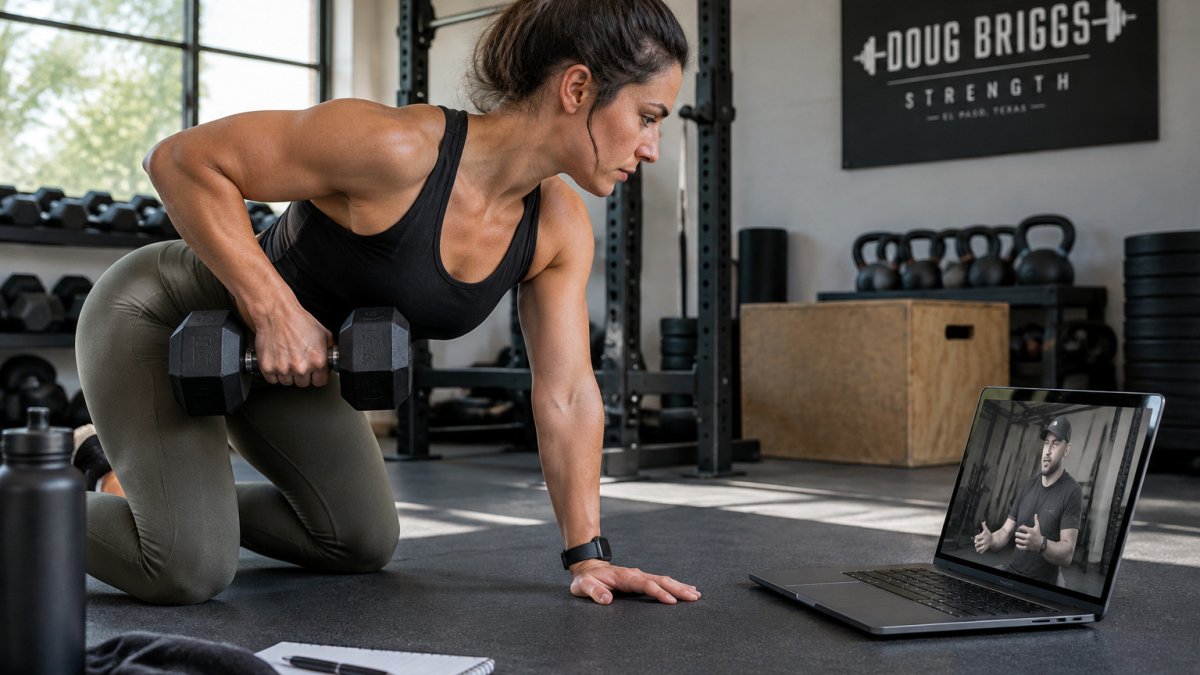
Online personal training is a coaching relationship delivered through remote tools: video calls, uploaded training footage, messaging, and a shared training plan. The coach designs programming, reviews technique, and adjusts the plan based on your feedback and logged results.
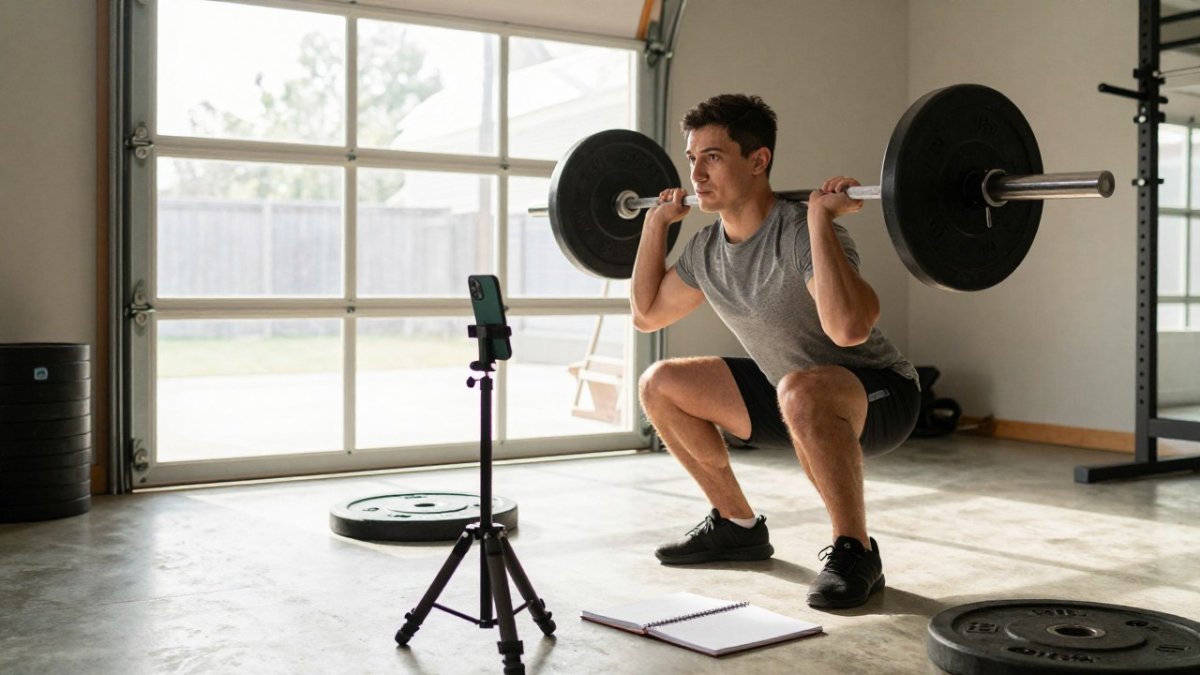
The Weekly Coaching Loop
Most effective remote programs follow a repeatable cycle. It looks like this:
| Stage | What Happens | Frequency |
|---|---|---|
| Program delivery | Coach posts your next block of training | Weekly or biweekly |
| Workout logging | You record sets, reps, load, and how it felt | Every session |
| Video review | You upload key lifts for form checks | 1-2 lifts per week |
| Check-in | Structured feedback on energy, soreness, sleep | Weekly |
| Program adjustment | Coach tweaks load, volume, or exercise selection | Based on check-in |
The loop is the product. Skip the logging or the video review and you have bought a template, not coaching.
Remote Workout Programming: Personalized Plans vs. Generic Templates
Personalized programming starts from your training history, injury profile, available equipment, and schedule. A generic template starts from an average athlete who does not exist. That distinction decides most of the outcomes.
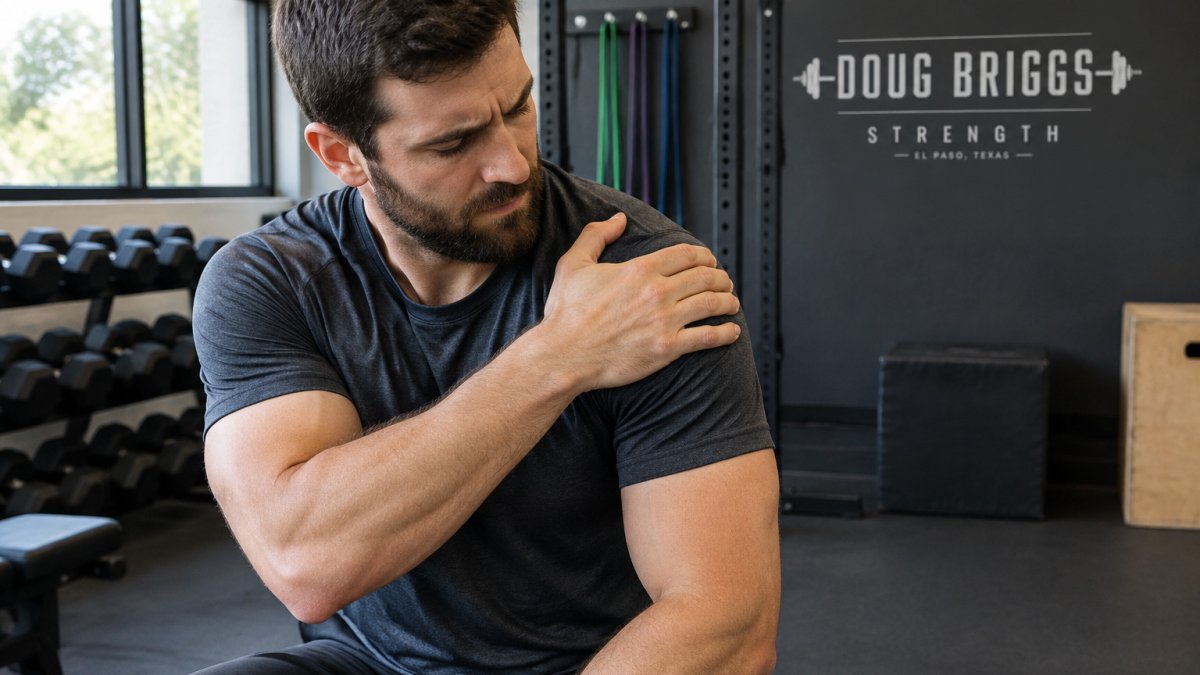
A coach building an individualized program will adjust for a cranky shoulder, a three-day training week, and a job that keeps you on your feet. A template cannot see any of that.
Remote workout programming done well includes progression rules, deload timing, and exercise substitutions written in advance. Ask any coach to show you how they handle a missed week or a flare-up. The answer tells you whether you are buying personalization or a PDF.
Remote vs. In-Person Training: Pros, Cons, and a Side-by-Side Comparison
Remote and in-person coaching each have different strengths, and the right choice depends on your goals, your equipment, and how much structure you need.
Remote coaching pros:
-
Train on your schedule, in your own space
-
Access coaches outside your local area
-
Written programming you can review and keep
Remote coaching cons:
- Technique feedback is delayed, not instant
- Requires self-motivation between check-ins
- Equipment limits can constrain exercise selection
In-person coaching pros:
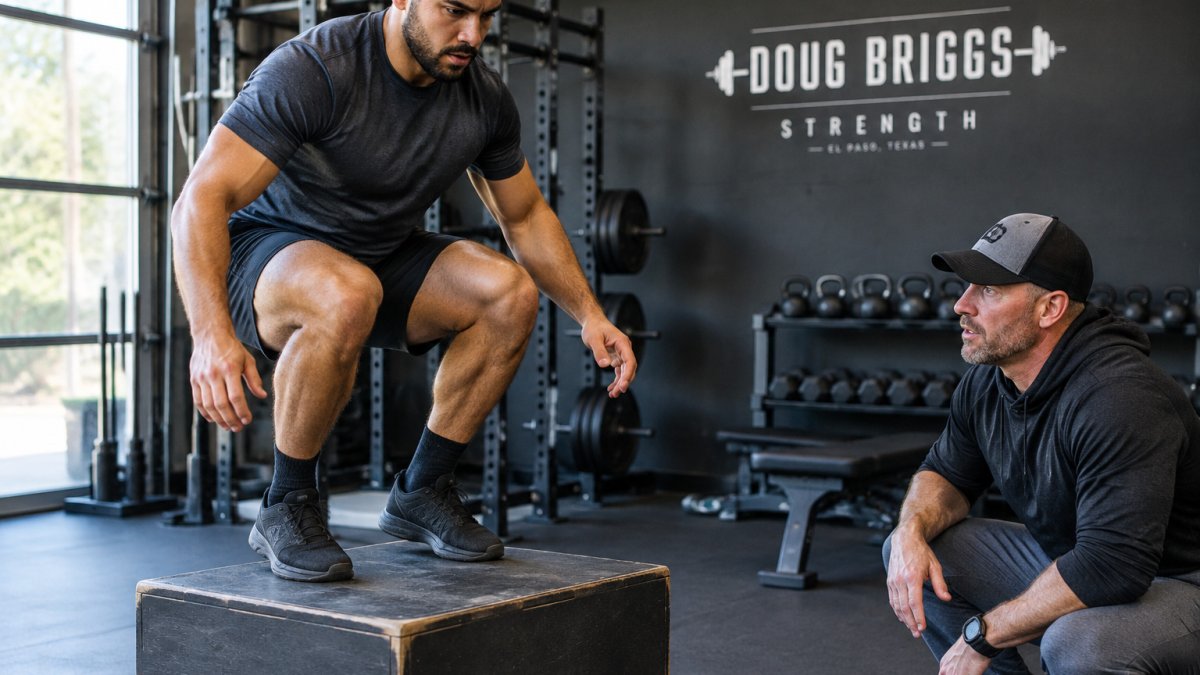
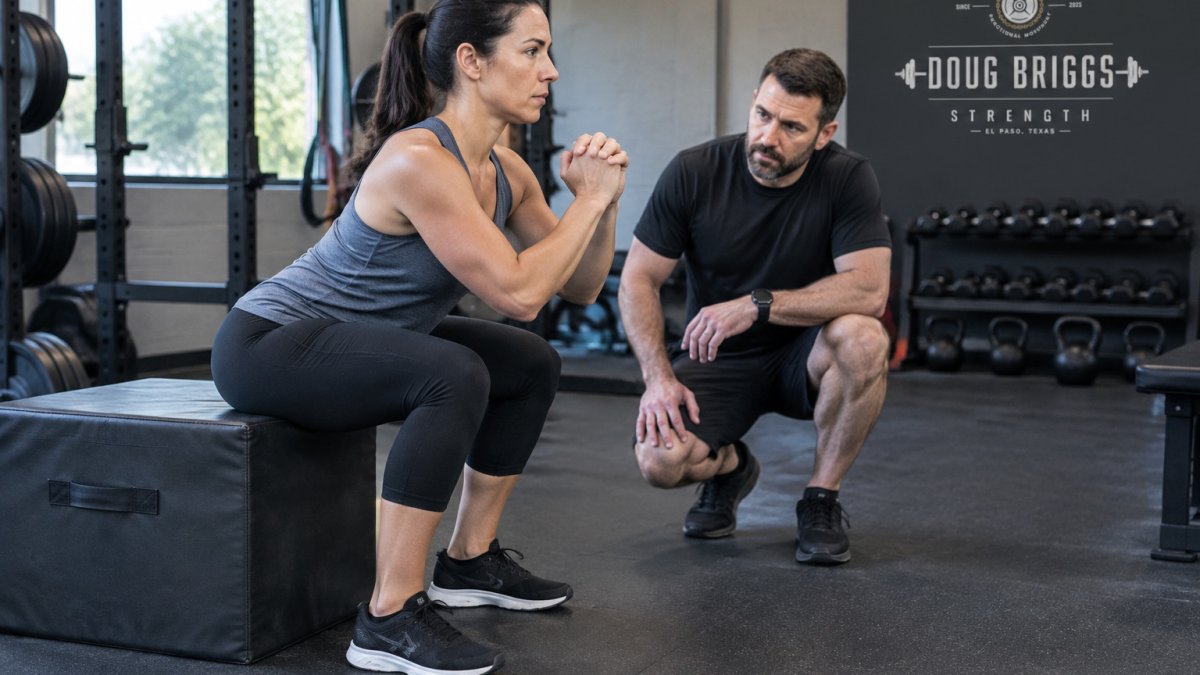
- Real-time cues and hands-on spotting
- Immediate safety intervention on heavy lifts
- Built-in accountability from a scheduled appointment
In-person coaching cons:
- Travel time and fixed scheduling
- Limited to local coaches
If you are choosing a coach, our guide to picking the right bench press coach walks through the questions that separate a real programmer from a rep counter.
What an Online Personal Training App Can and Can't Do
An online personal training app excels at delivery and tracking. It can store your program, log every set, chart progression, and remind you to train.
Apps handle structure. Coaches handle judgment. The best setup combines both: an app for logging and a human for program design and feedback. If you are weighing apps against coaching, alternatives to generic fitness apps for strength covers what to look for when you outgrow template programming.
Watch out: apps that auto-progress load without any technique review are how lifters quietly build movement faults. If nobody is watching your form, nobody is catching the drift.
How to Find the Best Online Personal Trainer for Your Goals
The best online personal trainer for you is a certified professional who programs for your specific sport, injury history, and schedule, and who can show you exactly how they measure progress. Credentials matter, but the intake process and the service level matter more. Most guides stop at 'ask about certifications.' That is not enough to tell individualized coaching from a workout-plan subscription.
Know Which Service Level You Are Buying
Remote coaching comes in several models, and the fees typically reflect how much human attention you get. A template or plan subscription gives you a program, often delivered through an app, with little or no individual review. Group coaching adds scheduled check-ins and a community but limited one-on-one feedback. One-on-one remote coaching includes individualized programming, video review, and regular communication. Hybrid coaching blends remote work with periodic in-person sessions.
Before you compare coaches, decide which level fits your goals and budget. If you need technique correction on heavy lifts, one-on-one or hybrid coaching is usually the better fit. If you mainly need structure and accountability, a group or app-supported program may be enough.
A Practical Screening Checklist
Use these questions to assess coaching quality before you sign up:
- What certification do you hold, and are you insured?
- How do you assess technique on a lift you cannot see in person?
- What does a weekly check-in actually include, and how quickly do you respond?
- How do you adjust programming around an old injury or a missed week?
- What results should I expect in 8, 12, and 24 weeks, and how will we measure them?
- Can I see a sample program you wrote for someone with my training age and equipment?
- What happens if I plateau or get hurt?
Look for a coach who asks about your training age, equipment, and time constraints before quoting a program. NASM's 2026 State of the Personal Trainer Report found that NASM-certified trainers were 2.2 times more likely to offer hybrid and remote services, which means the market is crowded. Screening hard is your job.
What a Strong Onboarding and Weekly Workflow Looks Like
Quality shows up in the process, not the sales page. A strong coach starts with an assessment: training history, injury profile, available equipment, schedule, and current strength markers. From there, expect a written program with progression rules and deload timing, a logging method, a video-review cadence, and a scheduled check-in.
Ask a prospective coach to walk you through a typical week. For a structured walkthrough of the hiring process, hire a personal strength coach online breaks it into steps.
Watch out: a low fee often signals a template subscription rather than individualized coaching. Compare what each fee includes, video reviews, program updates, and response times, before you assume the cheaper option is the better value.
Safety, Form Checks, and Injury Considerations
Safety in remote strength coaching comes down to three things: honest intake, filmed technique review, and conservative progression. No coach can spot you through a screen, so the system has to catch problems before they become injuries.
Film your lifts from a consistent angle, ideally front and side, and send the ones that feel off, not just the good ones.
This is where remote coaching earns its keep or loses it. Professional guidance means knowing when to hold load steady, when to substitute an exercise, and when to send you to a physician. A template cannot make that call. A certified trainer can.
Book a Free Consultation With Doug Briggs Strength
The real test of remote strength coaching is not the research summary. It is whether the format fits your life well enough that you actually train. That is the problem we solve.
Doug Briggs Strength builds structured, evidence-based programs for youth, adult, and tactical athletes, with 30+ years of coaching experience behind every plan.
If you are ready to see what personalized coaching looks like for your situation, explore our strength coaching services or take the first small step and book a free consultation.
The gap between a program on your phone and a coach who adjusts it is the gap between hoping and knowing. If you have been training on templates and plateauing, that gap is worth closing.
Frequently Asked Questions
Is remote strength coaching as effective as in-person training?
For many lifters, yes, provided the program is individualized and the coach actually reviews your training. A review of five studies on remote coaching summarized by Thesis reports adherence of 88.2% with in-person coaching versus 81.2% with an app, so the gap is real but not enormous.
Can an online coach check your lifting form?
It is not the same as a coach standing beside you mid-set, so it suits lifters who can follow cues and self-correct between sessions. Ask any prospective coach how often they review video and how quickly they respond, because that cadence is what separates real coaching from a downloaded plan.
How often should a remote strength coach update your program?
Most lifters need adjustments every two to six weeks, with smaller tweaks weekly based on how sessions felt and what the numbers show. A coach who never changes your plan is not coaching. Look for someone who tracks your workout logging, reviews check-ins, and explains why a block is changing. Doug Briggs Strength builds programs around your schedule and goals.
How much does online strength coaching cost?
Pricing depends on the level of service, how much direct contact you get, and how often your program is revised, so there is no single figure. Treat a coach's rate as a question of what is included: video review, check-in frequency, and program updates all affect the number. Ask for a clear breakdown before you commit, and compare it with what a gym membership plus personal training sessions actually costs you each month. Visit the Doug Briggs Strength website for current pricing or a quote.