 How-to
Strength and Power Training: How to Combine Both in One Plan
Last Updated: November 21, 2026
Quick Summary
To combine strength and power training, lift heavy first and move fast second in the same session: do your heavy strength lift for 3-5 sets of 3-6 reps, rest fully, then perform a power movement for 3-5 sets of 3-5 reps. Lifting first keeps the power sets fresh, because fatigue kills speed.
- Rest 3-5 minutes between heavy strength sets at 80-90% of your one-rep max.
- Stop the power set when bar speed visibly drops or reps start to grind.
- Run a three-day plan with at least one full rest day between sessions.
- Build volume for three weeks, intensify for two, then deload in week 6.
- If a session feels flat, cut power volume by half rather than pushing through.
Table of Contents
- Strength vs. Power: The Difference That Changes Your Program
- How to Combine Strength and Power Training in a Single Session
- Power Training Exercises That Pair With Heavy Lifts
- Power Training Sets and Reps: Loading, Intent, and When to Stop
- A Three-Day Strength and Power Training Program
- How to Improve Strength and Power Without Burning Out
- Book a Free Consultation With Doug Briggs Strength
- Frequently Asked Questions
Strength vs. Power: The Difference That Changes Your Program
Strength is the maximum force a muscle can produce against a load. Power is that force multiplied by speed, meaning how fast you can express it.
At Doug Briggs Strength, we coach youth, adult, and tactical athletes through this exact problem. The fix is not more exercises. It is better sequencing.
Here is the distinction that matters:
- Maximal strength is a slow, grinding quality. Think a heavy squat that takes three seconds to finish.
- Muscular power is a fast, explosive quality. Think a jump, a sprint start, or a hard push off the ground.
- Rate of force development is how quickly you build force (ncbi.nlm.nih.gov). Power depends on it.
Research published through the National Center for Biotechnology Information shows that well-designed strength programs improve both maximal strength and rate of force production.
If you want the deeper breakdown of power work on its own, our guide to Power Training Programs: The 2026 Ultimate Guide walks through it step by step.
How to Combine Strength and Power Training in a Single Session
The most reliable way to combine strength and power training in one session is to lift heavy first, then move fast. Heavy work primes the nervous system. Explosive work then recruits that readiness.
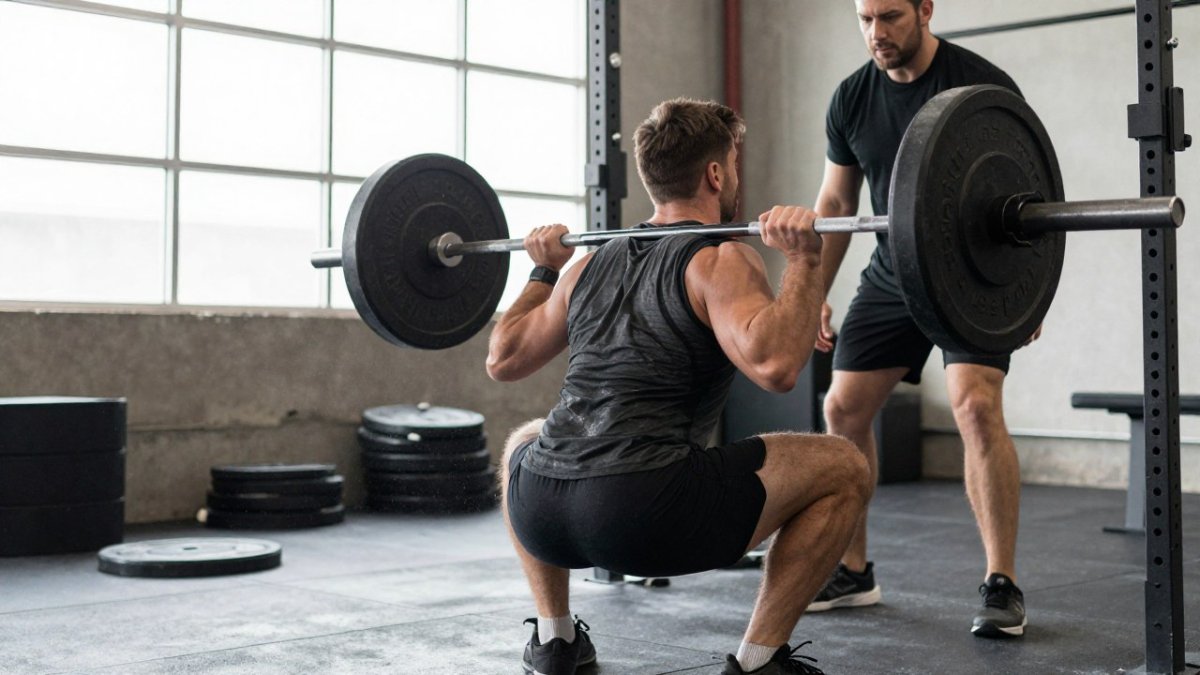
A simple template:
- Warm up with movement prep and light sets.
- Do your heavy strength lift for 3-5 sets of 3-6 reps.
- Rest fully, then perform a power movement for 3-5 sets of 3-5 reps.
- Finish with accessory work and core.
Keep the power work crisp. If bar speed drops, stop the set.
Why the Lifting Comes First
Fatigue kills speed. When you do power work after a long, grinding session, the movement slows down and you train slowness instead of explosiveness.
Lifting first keeps the power sets fresh. That is why exercise sequencing matters more than exercise selection for most lifters.
Two Sequencing Models for a Single Session
There are two practical ways to order strength and power work inside one workout. Choose based on your goal and your recovery capacity.
Model 1: Strength first, power second (block sequence). Complete all heavy strength sets for a movement pattern, rest 3-5 minutes, then perform the paired power exercise. This is the safest default for most lifters because it keeps power output high and limits technical breakdown. Use it when power quality is the priority and you have 60-75 minutes to train.
Model 2: Alternating pairs (complex or contrast sets). Perform one heavy strength set, rest 2-4 minutes, then immediately perform one explosive set of a similar movement. Repeat for the prescribed number of rounds. This saves time and creates a post-activation potentiation effect, but it accumulates fatigue faster. Use it only when your technique is solid and your power output holds across rounds. Because alternating pairs demand careful timing and recovery, keeping the plan realistic around a busy schedule matters as much as choosing the right exercises, a balance Sigma Fitnezz can help put in perspective.
A common pattern is to run the block sequence first, then switch to the alternating-pairs model as a density progression. Watch out: alternating pairs on back-to-back days is the fastest way to turn crisp jumps into slow grinds.
Rest Intervals That Preserve Power
Rest is the variable most lifters get wrong. Power output recovers more slowly than perceived readiness.
- Between heavy strength sets: 3-5 minutes for compound lifts at 80-90% of your one-rep max.
- Between a heavy set and its paired power set: 2-4 minutes in complex or contrast pairings.
- Between power sets: 2-3 minutes minimum; extend to 4 minutes if bar speed or jump height visibly drops.
If you cannot complete the prescribed power reps at the same speed as the first rep, the rest interval is too short or the strength volume is too high for that day.
A Concrete Single-Session Example
Here is how a 60-minute lower-body session looks when you apply the block sequence:
- Warm-up (10 min): movement prep, empty-bar squats, light band work, two ramp-up sets at 50% and 70% of working weight.
- Strength block (20 min): back squat, 4 sets of 4 reps at 80-85% of one-rep max, resting 3-4 minutes between sets.
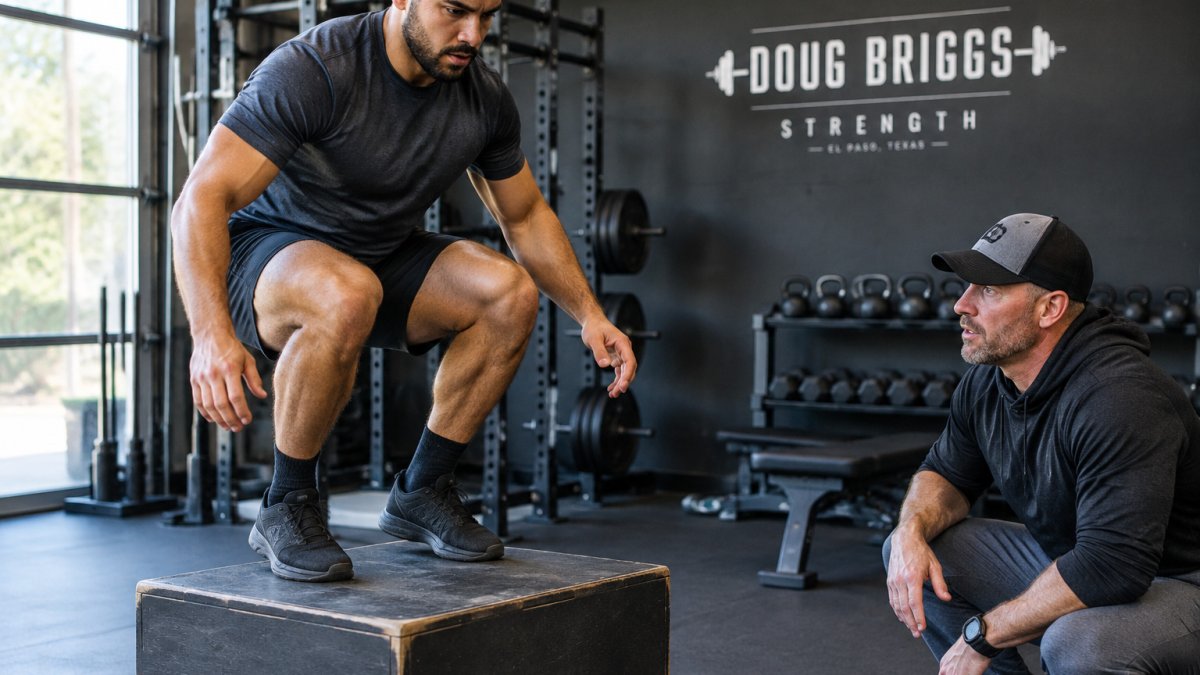
- Power block (12 min): box jumps, 4 sets of 3 reps, resting 2-3 minutes between sets. Step down from the box; do not rebound.
If you only have 40 minutes, cut the accessory block and keep the strength and power blocks intact. The order and the rest intervals are what make the session work.
Power Training Exercises That Pair With Heavy Lifts
Power training exercises are the fast, explosive movements you pair with your main lifts: jumps, throws, and fast bar work. Pick ones that use the same muscle groups as your heavy lift.
Common pairings:
- Squat pairs with box jumps or jump squats
- Deadlift pairs with kettlebell swings or broad jumps
- Bench press pairs with medicine ball chest throws
Keep volume low and intent high. Three to five quality reps beat ten sloppy ones.
Complex and Contrast Pairings
Complex training means a heavy set followed immediately by an explosive set of a similar movement. Contrast training uses a heavier load then a lighter, faster one.
Both work because the heavy set wakes up the nervous system. The catch is fatigue. Rest 2-4 minutes between the heavy set and the power set, or the speed falls apart.
Power Training Sets and Reps: Loading, Intent, and When to Stop
Power training sets and reps are low and fast: 3-5 sets of 3-5 reps, with full rest between sets. Load sits light to moderate, often well below your one-repetition maximum.
The intent to move fast matters more than the actual speed. Push the bar or your body as hard as you can on every rep.
Stopping rules:
- Stop the set when speed visibly drops
- Stop the exercise when reps start to grind
- Rest 2-3 minutes between power sets
For loading and progression, our guide on how to apply progressive overload safely covers the rules we use with clients.
A Three-Day Strength and Power Training Program
A three-day plan works well for busy professionals and tactical athletes. Here is the structure we use:
| Day | Focus | Main Lift | Power Pairing | Sets x Reps |
|---|---|---|---|---|
| Day 1 | Lower body | Back squat | Box jumps | 4x5 strength, 4x3 power |
| Day 2 | Upper body | Bench press | Med ball chest throw | 4x5 strength, 4x3 power |
| Day 3 | Full body | Deadlift | Kettlebell swing | 3x5 strength, 4x5 power |
Leave at least one rest day between sessions. Add conditioning on separate days if needed.
If you want a structured plan built around your schedule, contact us to discuss personalized programming.
Week-by-Week Progression
The table above is the starting point, not the whole program. Here is how to progress it across a six-week block. The pattern is a common one among strength coaches: build volume for three weeks, then reduce volume and raise intensity for two weeks, then deload.
- Weeks 1-3 (accumulation): keep strength sets at 4x5 and power sets at 4x3. Add 5 pounds to the bar each week on the main lift if all reps are clean. Keep power volume fixed; do not add reps.
- Week 4 (intensification): drop strength sets to 4x3 and raise the load to roughly 85-90% of your one-rep max. Keep power sets at 4x3 but reduce total power volume by one set if bar speed or jump height drops.
- Week 5 (peak): strength sets at 3x2 at 90-95% of one-rep max. Power sets at 3x2 with maximum intent. This is the week to test a vertical jump or broad jump.
After week 6, repeat the block with starting loads 5-10 pounds heavier on the main lifts. Watch out: adding 5 pounds every week without a deload is the most common way lifters stall by week five.
Rest and Recovery Between Sessions
The three-day structure only works if the rest days are real rest days.
- Place at least one full rest day between Day 1 and Day 2, and between Day 2 and Day 3. A Monday-Wednesday-Friday schedule is the standard pattern.
- Keep conditioning on separate days or after the strength and power work, not before. Endurance work before lifting blunts power output for the rest of the session.
- Aim for 7-9 hours of sleep. Power output is among the qualities most sensitive to poor sleep.
Warm-Up and Accessory Work
The table does not show warm-up or accessory work, but both matter for keeping the program sustainable.
- Warm-up (8-10 min): five minutes of easy bike or rowing, then movement prep for the day's pattern (hip hinge, squat, or press), then two ramp-up sets at 50% and 70% of the working weight.
- Accessory work (10-15 min): two or three exercises that support the main lift. For Day 1, Romanian deadlift and split squat. For Day 2, row and face pull. For Day 3, carry variation and hanging knee raise. Keep accessory sets at 2-3x8-12 and stop two reps short of failure.
How to Measure Progress
Use objective tests, not how you feel. Test in week 5 of each block.
- Vertical jump or broad jump for lower-body power.
- Medicine ball chest throw for upper-body power.
- Estimated one-rep max from a 3-5 rep set for strength.
If strength goes up but jump height stays flat, the power work is too light or too fatigued. If jump height goes up but strength stalls, the strength volume is too low. Adjust one variable at a time.
How to Improve Strength and Power Without Burning Out
The biggest mistake we see is stacking heavy lifting and explosive work on back-to-back days. That is how lifters stall and get hurt.
To improve strength and power, manage the load:
- Cap power volume. Stop while reps are still fast.
- Separate heavy days. Give each muscle group recovery time.
- Watch for interference. Too much endurance work blunts power gains.
A common mistake is chasing a personal record every session. In practice, most lifters do better with planned easy weeks.
Watch out: adding power work on top of an already full program is the fastest route to nagging joint pain.
Book a Free Consultation With Doug Briggs Strength
Combining strength and power training is not complicated, but it is easy to get the order and the load wrong.
At Doug Briggs Strength, we build programs around your life, not an app's template.
Explore our Strength Coaching Services or contact us to book a free consultation.
Most lifters do not need more exercises. They need the right order, the right load, and someone checking the details.
Frequently Asked Questions
Can you train power and strength at the same time?
Yes, and most athletes should. Heavy strength work builds the force base that power expresses, while explosive work teaches your nervous system to produce that force quickly. Both traditional strength training and power training drive muscle-related adaptations, which is why pairing them works. The practical key is ordering: put the heavy lift first, then the explosive movement, and keep total weekly volume in check so neither quality gets diluted.
Should you do power exercises before strength exercises?
It depends on what you want to emphasize that day. Power work depends on a fresh nervous system, so when explosive quality is the priority, do jumps, throws, or Olympic-style lifts first and heavy strength after. When maximal strength is the priority, lift heavy first and follow with power. Never stack power work at the end of a session after you are already fatigued, because movement speed drops and the training stimulus changes from power to grindy endurance.
How many sets and reps should you use for power training?
Power training sets and reps follow a different rule than hypertrophy work. Use 3 to 5 sets of 1 to 5 reps at roughly 30 to 60 percent of your one-repetition maximum for jumps and throws, or 70 to 85 percent for Olympic-style lifts, with full rest of 2 to 4 minutes between sets. Stop a set the moment bar speed or jump height visibly drops. Quality beats volume here: six crisp sets build more power than twelve sloppy ones.
How many days a week should you train for strength and power?
Three days a week is enough for most busy adults and youth athletes, provided each session includes one heavy strength block and one power block. Total weekly training time for most adults is often modest, which fits neatly into three 30-to-40-minute sessions. Add a fourth day only if recovery, sleep, and schedule genuinely support it.