 how-to
How to Start Strength Training Safely as a Beginner
Last Updated: November 4, 2026
Quick Summary
To start strength training safely, first set a baseline with simple movement, mobility, and cardio checks, and get clearance from a healthcare provider if you have heart conditions, uncontrolled blood pressure, recent surgery, or a limiting joint injury. Begin with two to three sessions per week on non-consecutive days, master bodyweight movements before adding resistance, and choose a weight you can lift for 12 to 15 reps with two reps still in reserve.
- Two to three sessions per week is enough for a beginner, and three is better than five because recovery is where strength happens.
- A pair of 5 lb and 10 lb dumbbells covers most beginner movements.
- Three sets of 8 to 12 reps per exercise is a sound starting point, resting 60 to 90 seconds between sets.
- Beginner sets should mostly land at 6 to 7 on a perceived-effort scale from 1 to 10.
- Add weight only when you hit the top of your rep range with two reps in reserve on every set, two sessions in a row.
Table of Contents
- Step 1: Set Your Baseline Before You Touch a Weight
- How to Start Strength Training Safely at Home
- How to Start Strength Training Safely With Weights
- Beginner Strength Training Exercises That Build the Whole Body
- How Often Should Beginners Strength Train?
- Effort vs. Pain: How to Tell Soreness From Injury
- Your First Month: A Four-Week Progression Plan
- Book a Free Consultation With Doug Briggs Strength
- Frequently Asked Questions
Step 1: Set Your Baseline Before You Touch a Weight
Learning how to start strength training safely begins before your first rep. A baseline is a clear picture of where your body stands today, and it decides everything that follows. Coaches who assess first tend to see beginners stick with their training.
Here is what a simple baseline looks like:
- Movement check: Can you sit to stand from a chair without using your hands?
- Mobility check: Can you raise both arms overhead without arching your back?
- Cardio check: Can you walk briskly for ten minutes without stopping?
None of this requires a gym. It requires honesty.
Check With a Healthcare Provider First
A healthcare provider should clear you for exercise if you have heart conditions, uncontrolled blood pressure, recent surgery, or a joint injury that still limits you. This is the difference between a program that builds you up and one that sets you back.
Bring two questions to that visit: What movements should I avoid, and what warning signs mean stop? Write the answers down. They shape your first month.
Pick a Realistic Weekly Schedule
Two to three sessions per week is enough for a beginner. Three is better than five, because recovery is where strength actually happens.
Look at your real calendar, not your ideal one. If Tuesday and Thursday evenings are chaos, do not schedule training then. Readers with packed schedules can find more guidance in strength training for busy professionals.
How to Start Strength Training Safely at Home
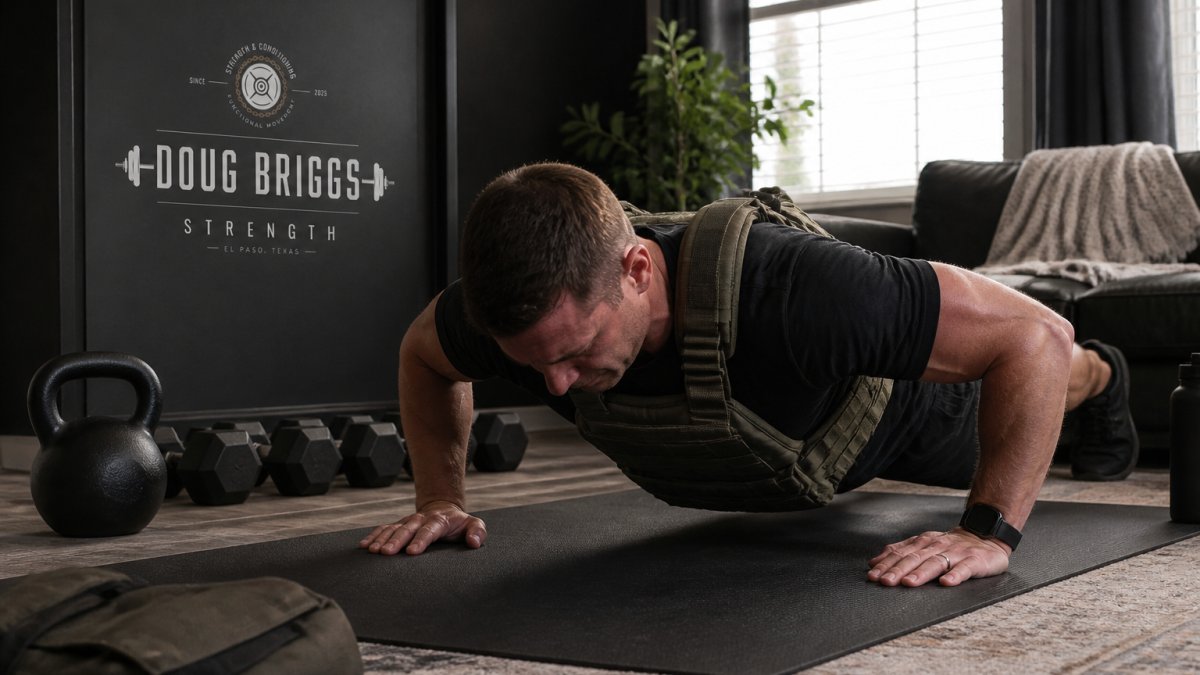
You can build real strength at home with almost no equipment. A clear floor space, a sturdy chair, and a wall cover most beginner needs.
The rules for home training are simple:
- Clear a space you can move in without stepping over anything.
- Wear shoes with grip, or train barefoot on a non-slip surface.
- Keep water within reach.
- Put your phone on silent so you are not distracted mid-set.
Resistance bands and a pair of light dumbbells are worth adding once bodyweight movements feel easy.
Watch out: training on carpet in socks can cause slips during split squats and planks. Bare feet on a hard floor, or shoes with grip, reduce that risk.
How to Start Strength Training Safely With Weights
Weights are safe for beginners when the load matches your control. Master the movement pattern with bodyweight first, then add resistance. What most beginners get wrong is the first weight they pick and how they decide to add the next one.
Dumbbells, Barbells, or Machines: What to Start With
Each tool has a real trade-off, and the right first choice depends on your confidence and your space.
- Dumbbells are the most forgiving starting tool. You can set them down mid-rep, they expose side-to-side differences, and they train stabilizer muscles that machines do the work for. A pair of 5 lb and 10 lb dumbbells covers most beginner movements.
- Machines guide the path for you, which makes them a reasonable first few weeks if balance or confidence is low. The trade-off is that the machine stabilizes the weight, so you build less control. Move to free weights once the movement feels automatic.
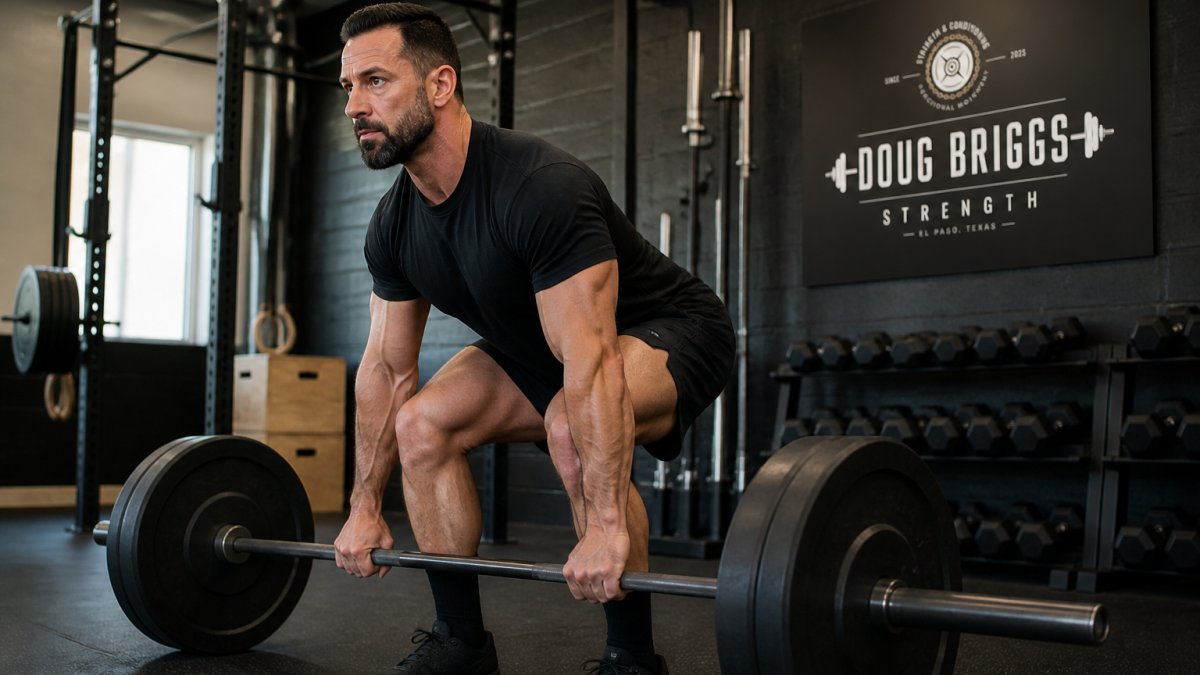
- Barbells let you load the most weight, but a loaded barbell is the hardest tool to bail out of safely. Most beginners do better spending the first month with dumbbells or bodyweight, then learning the barbell under supervision.
How Much Weight Should a Beginner Lift?
A beginner should choose a weight they can lift for 12 to 15 repetitions with two reps still in reserve, the last rep is work, but you could do two more with good form. This is deliberately conservative.
Here is how to find that weight on your first session:
- Pick the lightest dumbbell available and do 10 controlled reps.
- If those 10 felt easy and your form stayed clean, rest 60 seconds and try the next size up for 8 reps.
- Stop at the weight where rep 8 is work but rep 10 would still be clean. That is your starting weight.
- Write it down. Next session, start there.
If you cannot control the weight through the full range of motion, it is too heavy. If you finish 15 reps feeling like you could do 15 more, it is too light.
Watch out: adding weight because the previous set felt easy is the most common beginner error. Easy on rep 10 does not mean ready for more load, it means you are in the right rep range.
How to Bail Out of a Lift Safely
Knowing how to stop a rep is part of lifting safely, and it is why dumbbells beat barbells for beginners.
- Dumbbells: lower them to your sides or the floor under control. Never drop them from overhead.
- Barbell back squat: set the safety pins in a rack at the depth where you squat, so a failed rep lands on the pins, not on you.
- Bench press: use a spotter or set the pins just above chest height. Do not bench alone with a loaded barbell and no safeties.
Proper form comes before load. Every time. If your knees cave in during a squat or your back arches during an overhead press, the weight is too heavy regardless of what the number says.
A Note on Health Conditions and Life Stages
Some readers need individualized guidance before adding load. If you are pregnant, over 65 and new to training, recovering from an injury or surgery, or managing a chronic condition such as high blood pressure, diabetes, or osteoporosis, ask a healthcare provider or a qualified coach to review your plan before you progress past bodyweight. The same applies if you take medication that affects heart rate or balance.
Beginner Strength Training Exercises That Build the Whole Body
Six movement patterns cover the whole body: squat, hinge, push, pull, carry, and brace. Pick one exercise per pattern and you have a complete session.
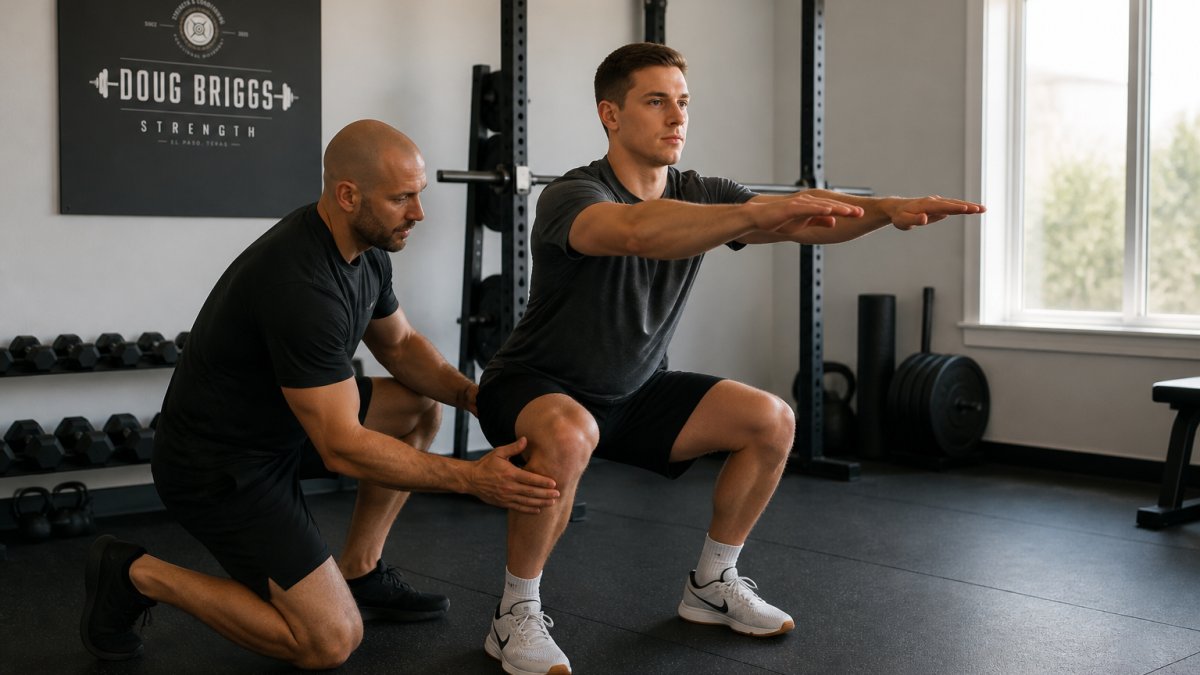
Here is a beginner-friendly starting set:
- Squat: bodyweight squat or goblet squat
- Hinge: hip bridge, then Romanian deadlift with light dumbbells
- Push: push-up from an incline, then floor push-up
Three sets of 8 to 12 reps per exercise is a sound starting point. Readers ready to try exercises can follow this list of basic beginner movements. Rest 60 to 90 seconds between sets.
Substitutions When Equipment or Mobility Is Limited
You do not need a gym to train every pattern. Substitutions keep the plan alive when equipment, mobility, or confidence gets in the way.
- No dumbbells? Use water jugs, a loaded backpack, or resistance bands.
- Shoulder pain on overhead press? Press at an incline or use a landmine-style angle.
- Cannot get to the floor? Do planks against a counter and rows seated with a band.
If mobility is the real limit, work on it directly.
How Often Should Beginners Strength Train?
Beginners should strength train two to three times per week on non-consecutive days. That schedule gives each muscle group roughly 48 hours to recover, which is when adaptation happens.
Full-body sessions are a sensible choice at this stage, since you practice each movement pattern more often.
Rest days are not lost days. Walk, stretch, and sleep. If you feel run down for two sessions in a row, take an extra day.
Effort vs. Pain: How to Tell Soreness From Injury
Normal soreness shows up hours after training, feels dull and spread across a muscle, and fades within a couple of days. Injury pain is sharp, localized, and often arrives during the rep itself. The decision you make during a set determines whether a minor niggle becomes a months-long setback.
The Stop-or-Modify Check
Use this check the moment something feels off during a rep:
| Signal | Normal Effort | Possible Injury |
|---|---|---|
| Timing | Next day | During the set |
| Feel | Dull ache | Sharp or stabbing |
| Location | Whole muscle | One joint or spot |
| Response | Eases with movement | Worsens with movement |
| Duration | One to two days | Lingers past a week |
Then apply one of three decisions:
- Modify if the sensation is mild, dull, and in the muscle belly. Reduce the range of motion, drop the weight by one size, or swap to an easier variation and finish the set.
- Stop the set if you feel a sharp catch, a pop, or pain in a joint rather than a muscle. End the exercise, not necessarily the workout, move to a different movement pattern that does not involve the area.
- Stop the session if the pain is sharp and persists at rest, if you feel numbness or tingling, or if a joint gives way. Rest, ice if swollen, and do not train that area until you have spoken to a provider.
Watch out: pushing through joint pain to "finish the workout" is the most common way beginners turn a minor niggle into a months-long setback. Muscle soreness is a signal to manage; joint pain is a signal to stop.
Symptoms That Warrant Professional Assessment
Most training aches resolve on their own within a week. See a healthcare provider if any of the following apply:
- Pain that lasts longer than a week or worsens despite rest.
- Pain that limits daily movement, walking, sitting, lifting objects, or sleeping.
- Swelling, bruising, or a joint that looks different from the other side.
A physical therapist or sports medicine provider can assess whether the issue is technique, load, or tissue, and give you a modified plan rather than a blanket stop. Early assessment usually shortens time off.
Tracking Effort So You Catch Problems Early
A simple perceived-effort scale helps you notice when a session is drifting toward trouble. Rate each set from 1 to 10, where 10 is the hardest rep you could do. Beginner sets should mostly land at 6 to 7, work, but not a grind. If a set that felt like a 6 last week now feels like an 8 at the same weight, check sleep, stress, and recovery before adding load.
Your First Month: A Four-Week Progression Plan
A first month should build consistency, not intensity. Here is a plan we would hand a new client.
- Week 1: Two sessions. Bodyweight only. Three sets of 10 reps. Focus on form.
- Week 2: Three sessions. Add light dumbbells to squats and rows. Same reps.
- Week 3: Three sessions. Add a set to each exercise. Keep reps at 10 to 12.
Track every session. Note the exercise, weight, reps, and how it felt. Progress beyond the bar counts too: better depth, steadier balance, and easier breathing all signal adaptation.
When to Add Weight and When to Hold Steady
Add weight when you hit the top of your rep range with two reps in reserve on every set, two sessions in a row. For a deeper guide, see how to apply progressive overload safely. That is the signal to progress.
Hold steady when form breaks down, joints complain, or sleep and stress are poor. A week at the same weight is not a setback. It is consolidation.
Book a Free Consultation With Doug Briggs Strength
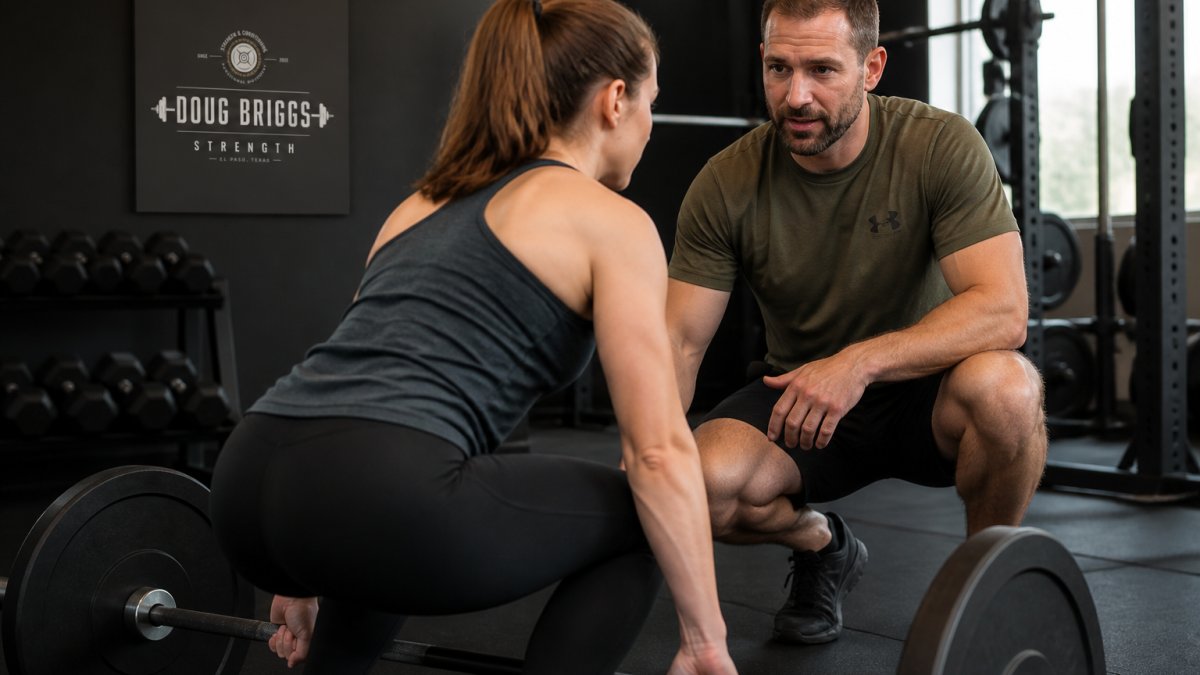
Starting safely is a skill, and it is far easier to learn with a coach watching your first reps.
You get a plan that fits your life, hands-on coaching, and clear progress markers in movement and performance.
Get started with Doug Briggs Strength and book a free consultation to build a first month that actually holds up.
Frequently Asked Questions
What is the 3-3-3 rule for strength training?
The 3-3-3 rule is a simple beginner framework: three sessions per week, three exercises per session, and three sets per exercise. It keeps volume low enough to recover from while still hitting the major movement patterns. Three well-chosen lifts per session leaves plenty of room to rotate movements later. Start with a manageable load at 8 to 12 reps and add resistance only when all sets feel controlled.
How much weight should a beginner lift when starting strength training with weights?
Pick a load you can move for 12 to 15 repetitions with two reps still in reserve. That usually means a pair of light dumbbells or an empty bar for the first two weeks. Movement quality should come before load, so if your form breaks down before rep 10, the weight is too heavy. Add resistance in small increments once you complete all prescribed sets cleanly.
How often should beginners strength train each week?
Two to three full-body sessions per week is the standard starting point, with at least one rest day between sessions. That frequency gives each major muscle group 48 hours to recover while still building the habit. Busy professionals training three days a week can pair sessions with a simple schedule like Monday, Wednesday, and Friday. If you are sore for more than two days after a session, cut a set from each exercise before you cut a training day.
Can you start strength training at home without a gym?
Yes. Bodyweight movements like squats, push-ups, planks, and split squats cover every major movement pattern, and a set of resistance bands or adjustable dumbbells adds load as you progress. Clear a safe space about 6 feet by 6 feet, check that the floor is level, and keep a chair or bench nearby for balance support. Once bodyweight reps feel easy at 15 to 20 per set, add bands or weights rather than adding more reps.