 how-to
How to Build Muscle as an Adult Athlete
Table of Contents
- The Adult Athlete Muscle-Building Framework
- Progressive Resistance Training and Lifting Weights
- Building a Muscle Building Workout for Athletes
- Muscle Gain Nutrition for Athletes
- How Fast Can You Build Muscle Naturally
- Building Muscle Without Getting Slower
- Common Mistakes Adult Athletes Make When Building Muscle
- Creating a Sustainable Strength Plan That Fits Your Life
- Frequently Asked Questions
Last Updated: October 15, 2026
The Adult Athlete Muscle-Building Framework
How to build muscle as an adult athlete differs from generic fitness advice.
At Doug Briggs Strength, we work with adult athletes facing real constraints: limited time, previous injuries, and the need to stay sharp.
The fundamentals are simple: lift with increasing demands, eat enough protein and calories, recover, and stay consistent. The complexity is fitting this into your life while keeping your athletic edge.
Progressive Resistance Training and Lifting Weights
Progressive resistance training is the foundation of muscle growth: lifting creates a stimulus, your body adapts by building muscle, and you progress by gradually increasing the demand.
You don't need a fancy program or gym membership. Bodyweight exercises, dumbbells, and barbells all work, what matters is creating tension and increasing it over time.
Exercise Selection and Compound Movements
Focus on compound exercises first, they work multiple muscle groups at once and create the most efficient growth stimulus.
The best compound movements for adult athletes include:
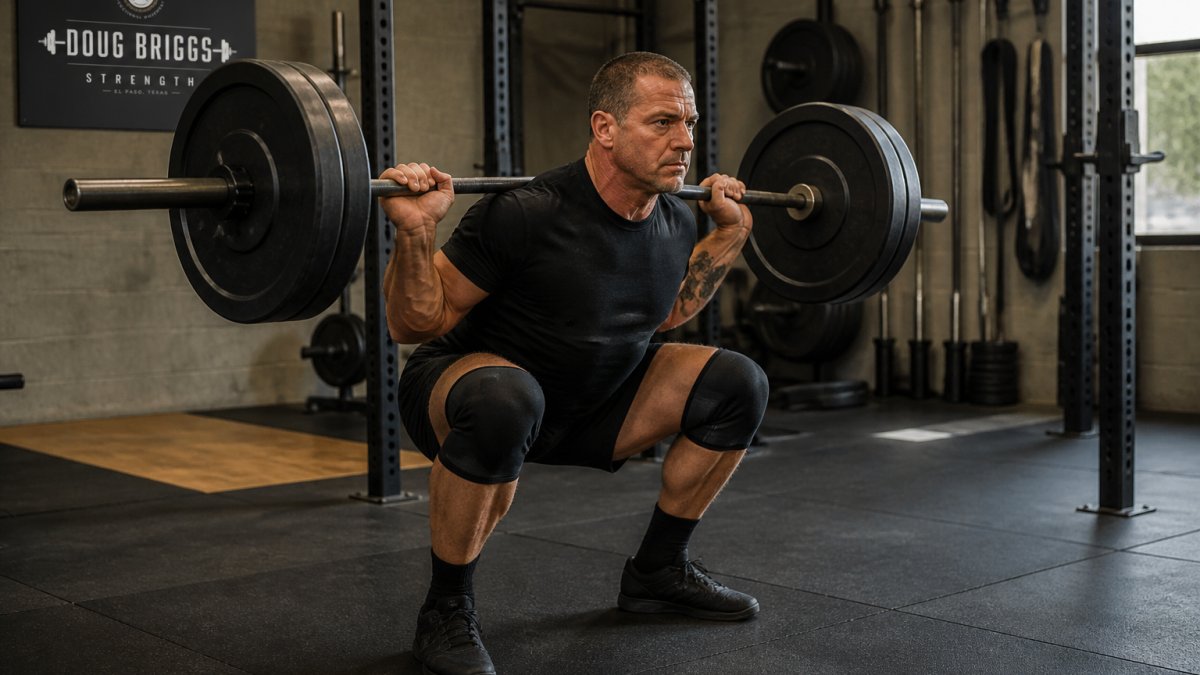
- Squats (barbell, dumbbell, or bodyweight)
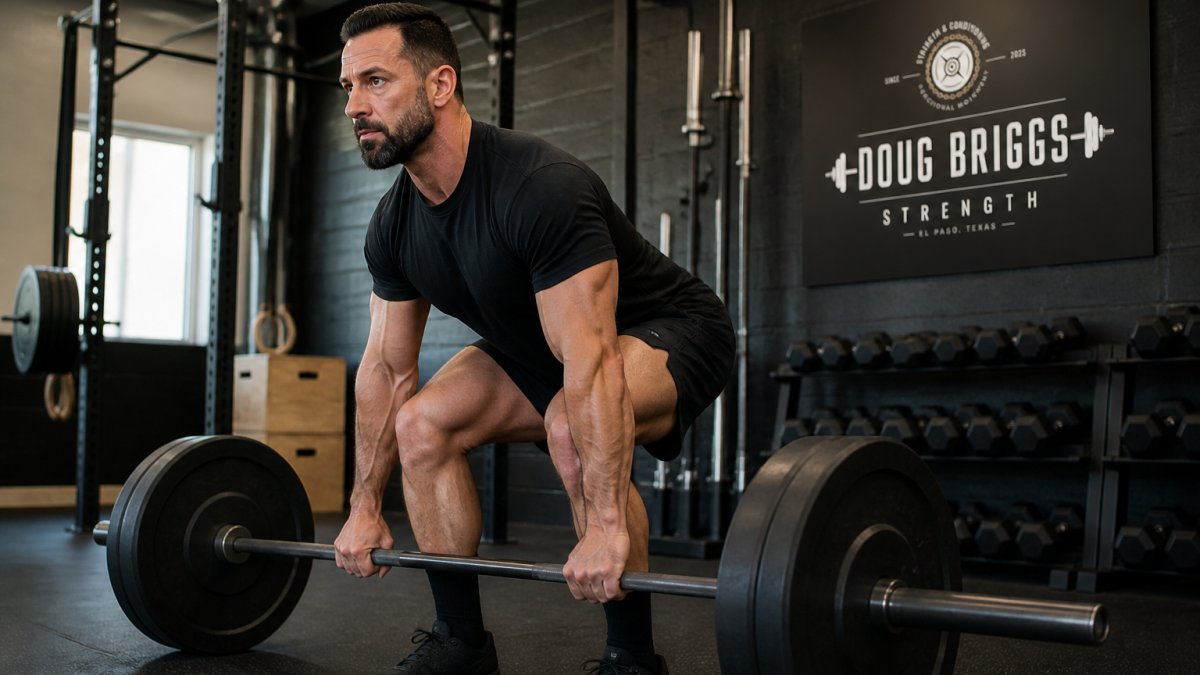
- Deadlifts (barbell or trap bar)
- Push-ups or bench press variations
These build strength that transfers to your sport: a stronger squat makes you more explosive, a stronger deadlift improves power off the ground, and rows and presses build upper body stability.
Isolation exercises (bicep curls, leg extensions) are secondary. Build around compound movements, then add isolation work if you have extra time.
Training Intensity, Volume, and Progressive Overload
Progressive overload is the engine of muscle growth, systematically increasing demand week to week.
You create progressive overload by:
- Adding weight to the bar
- Doing more repetitions with the same weight
- Adding more sets to your workout
Most adult athletes respond well to moderate weight (6-12 reps per set) with good form. You don't need to fail on every set, leaving a rep or two in the tank helps you recover faster.
Volume, sets × reps × weight, drives growth, but there's a limit. Doing 50 sets per muscle group weekly isn't better than 12-18.
Building a Muscle Building Workout for Athletes
Understanding how to build muscle as an adult athlete means balancing intensity with recovery and sport-specific needs. You're training like an athlete who wants to be stronger, not a bodybuilder.
Workout Frequency and Session Duration
Most adult athletes build muscle with 3-4 strength sessions per week, each lasting 45-60 minutes. Longer means too much volume or too much rest.
Three sessions work if you're busy; four spreads volume across more sessions, which feels less taxing per workout.
A typical week might look like:
- Monday: Lower body (squats, deadlifts, accessory work)
- Wednesday: Upper body (pressing, rowing, accessory work)
- Friday: Lower body or full body
Consistency is key: a realistic program you do every week beats an ambitious one you abandon after two weeks.
Rest Periods and Recovery Between Sessions
Rest 60-90 seconds between compound sets to maintain strength and tension in the next set.
For isolation exercises, 30-60 seconds works fine.
Between sessions, most adult athletes do well training each muscle group twice per week, enough frequency to progress without constant fatigue.
Sleep and stress management matter more than most athletes realize. Muscle growth happens during recovery, not the workout, sleeping 5 hours and running stressed won't build muscle efficiently even with perfect training.
Muscle Gain Nutrition for Athletes
You can't build muscle in a calorie deficit, your body needs extra energy to build tissue. For an adult athlete, the harder problem is eating enough of the right things while also fueling practices, games, and conditioning.
Calorie Surplus and Protein Intake
A modest surplus of 300-500 calories above maintenance supports growth without excessive fat gain, usually an extra meal or snack per day.
Protein is critical for repairing and building muscle tissue. Research suggests 0.7-1 gram per pound of body weight daily, roughly 130-180 grams for a 180-pound athlete.
Distribution matters as much as the daily total.
Good protein sources include:
- Chicken, turkey, lean beef
- Fish and seafood
- Eggs
You don't need expensive supplements. Whole foods work fine.
Carbohydrates as Training Fuel
Carbohydrates fuel workouts and support recovery. For an adult athlete they do double duty: powering your sport and sparing protein so it builds muscle instead of being burned for energy.
Eat carbs around training: a carb-and-protein meal 2-3 hours before gives you energy, and a carb-and-protein snack after supports recovery.
Good carb sources include:
- Oats and whole grains
- Rice and potatoes
- Bread and pasta
Amount depends on training volume and sport demands.
Fueling Around Practice, Games, and Lifting
Adult athletes often fuel two demands on the same day. A few practical rules:
- Before training: A mixed meal 2-3 hours out, or a lighter carb-and-protein snack 60-90 minutes out if you're short on time. Avoid heavy fat and fiber right before hard efforts.
- During long or hot sessions: Water and electrolytes for most sessions under an hour; carbs and fluids for anything longer or repeated.
- After training: Carbs plus protein within a couple of hours, sooner if you have another session the same day.
To check whether your intake works, track body weight and a couple of strength numbers for 2-3 weeks. Steady weight with rising strength means you're recomping well; weight climbing fast with no strength change means the surplus is too big; weight falling while trying to grow means you're under-eating.
How Fast Can You Build Muscle Naturally
Realistic expectations matter: you won't build 10 pounds of muscle in a month.
Beginners or those returning after time off gain faster in the first 3-4 months; experienced lifters gain more slowly. An adult athlete balancing strength training with sport practice gains slower than someone training strength as their primary focus.
Over a year of consistent training, good eating, and enough sleep, you might gain 8-15 pounds of muscle, substantial, and translating to real strength and performance gains.
Rate also depends on age, genetics, training history, and existing muscle. There's no universal timeline, but consistency over months and years produces results.
Building Muscle Without Getting Slower
The biggest concern for adult athletes is losing speed and agility while gaining muscle. Train smart and it doesn't have to happen: periodize, match lifting volume to what your sport demands right now, and monitor recovery so you back off before you break down.
In-Season Versus Off-Season Training Approaches
In-season, reduce training volume, you can't train hard for your sport and add significant muscle simultaneously. The goal is maintenance, not growth.
A workable in-season template:
- 2 strength sessions per week, ideally on non-game days or the day after a game, not the day before.
- 2-4 compound movements per session, 2-3 sets each, at moderate intensity (leaving 2-3 reps in reserve).
- Keep total sets per muscle group around 4-8 per week. That's enough to hold onto strength without digging a recovery hole.
Off-season is when you build aggressively: 3-4 sessions per week, 12-18 sets per muscle group weekly, pushing closer to failure on last sets.
A simple annual rhythm:
- Off-season (4-6 months): Build. Higher volume, higher calories, more sessions.
- Pre-season (4-8 weeks): Transition. Keep volume moderate, add sport-specific conditioning, hold calories near maintenance.
- In-season (3-6 months): Maintain. Low volume, 2 sessions per week, calories at maintenance.
This approach builds muscle in the off-season and maintains it while staying sharp in competition.
Deloads and Managing Fatigue
A deload is a planned easy week, not weakness. Most adult athletes benefit every 4-8 weeks of hard training, or whenever two or more recovery markers go bad at once.
A simple deload: same exercises and weights, sets cut roughly in half, each set stopped well short of failure. You keep the movement pattern and habit while your body catches up.
Monitoring Recovery and Managing Injury Risk
Recovery monitoring tells you if you're pushing too hard. Track:
- Sleep: Hours and quality. Under 7 hours most nights is a red flag for muscle gain.
- Resting heart rate: A morning reading 5-10 beats above your normal baseline suggests you're not recovered.
- Soreness: Normal muscle soreness fades in 24-72 hours. Soreness that lingers, or that shows up in joints and tendons rather than muscle, is a warning.
If two or more markers are off, cut volume 30-50% for a week before pushing again. Constant fatigue or performance drops mean you're likely overtraining, back off volume or frequency.
Injury risk increases when you're fatigued and not recovering well. Use good form on every set. Don't chase numbers at the expense of technique.
Many adult athletes have old injuries or movement limitations.
Keeping Speed and Power While You Grow
Muscle alone doesn't slow you down, losing speed and power qualities does. Two things protect them:
- Keep some explosive work in your program year-round. Short sprints, jumps, or med-ball throws, done fresh at the start of a session, 2-3 times per week. Low volume, high intent.
- Don't let body weight climb faster than your strength. If you're adding pounds faster than your lifts are going up, you're adding weight your sport has to carry, not muscle it can use.
Gaining 0.5-1 pound per week while lifts and sport numbers hold or improve means you're doing it right. If speed drops and lifts stall, cut the surplus and add a deload before adding volume.
Common Mistakes Adult Athletes Make When Building Muscle
Doing too much volume too fast is common, you jump into 25 sets per muscle group per week and burn out or get injured within weeks.
Ignoring nutrition is another: training hard without enough protein or calories gives your body no raw materials.
Inconsistency kills progress. Six weeks on, three weeks off doesn't work, you need months of consistent effort.
Neglecting recovery is common too: training hard on 6 hours of sleep without managing stress stalls progress. Recovery is where adaptation happens.
Creating a Sustainable Strength Plan That Fits Your Life
The best program is one you'll actually do. A perfect program you quit is worthless.
Start simple: two compound exercises per session, 3 sessions per week, basic nutrition focus. Add complexity once that's consistent.
Track progress simply: note weight and reps, aim to add weight or reps each week. A notebook works fine, no fancy apps needed.
Building muscle as an adult athlete is achievable, but it requires patience and consistency. You're balancing strength training with sport-specific demands, which means your approach differs from someone training strength alone. With over 30 years of experience, Doug crafts programs tailored to your goals, schedule, and movement history. Book a free consultation to discuss your situation and see how a structured, evidence-based approach can fit your life.
Frequently Asked Questions
How fast can an adult athlete naturally build muscle?
Adult athletes typically gain 0.5 to 2 pounds of muscle per month when following progressive resistance training, eating a calorie surplus with adequate protein, and prioritizing recovery. The rate depends on training experience, age, genetics, and consistency. Beginners and returning athletes often see faster initial gains, while those with years of training experience progress more slowly. Realistic expectations prevent frustration and support long-term commitment.
How many days a week should an adult athlete strength train to build muscle?
Most adult athletes see results training 3 to 5 days per week, with 3 days being sufficient if intensity and volume are adequate. Busy professionals often succeed with 3 focused sessions per week targeting major muscle groups. More frequent training allows higher total training volume, but recovery capacity and consistency matter more than frequency. The best frequency is one you can sustain while managing work, family, and sleep.
Can you build muscle and maintain athletic speed and endurance?
Yes. Strategic programming separates hypertrophy work from sport-specific training. Off-season training emphasizes muscle gain through higher volume resistance work, while in-season training maintains strength with lower frequency and volume, preserving speed and endurance. Compound exercises build functional strength without sacrificing athletic performance. Recovery monitoring ensures fatigue doesn't compromise sport skill or injury resilience.
What role does protein play in building muscle as an adult athlete?
Protein supports muscle protein synthesis, the process that builds new muscle tissue. Adult athletes aiming to build muscle should consume 0.7 to 1 gram of protein per pound of body weight daily from protein-rich foods like meat, fish, eggs, dairy, legumes, and whole grains. Meeting protein targets within a calorie surplus creates the nutritional environment needed for hypertrophy. Consistency with protein intake matters more than supplements.