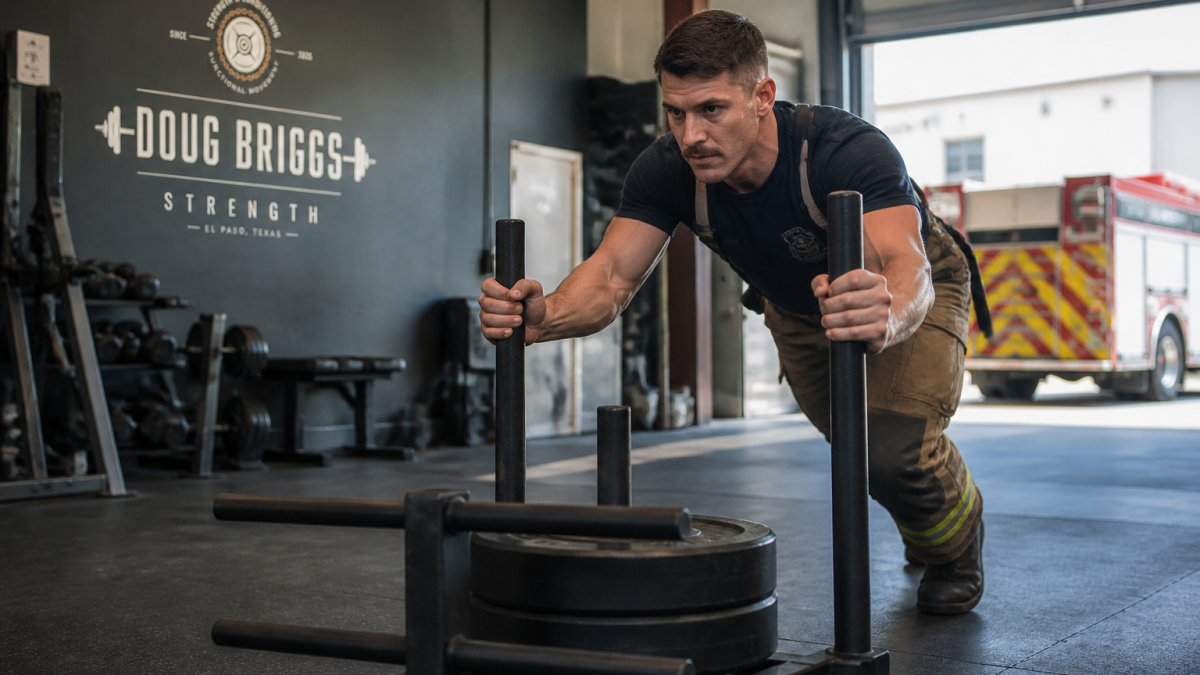
 comparison
Is Tactical Strength Training Worth It for Firefighters?
Table of Contents
- Is Tactical Strength Training Worth It for Firefighters? The Short Answer
- The Physical Demands of the Job and Why Fireground Readiness Depends on Strength
- Tactical Strength Training vs. Conventional Gym Workouts and Cardio-Only Programs
- What a Firefighter Strength and Conditioning Program Should Include
- Firefighter Strength Training Exercises That Transfer to the Fireground
- Building a Firefighter Workout Schedule Around Shifts and Interrupted Sessions
- Risks, Evidence Limitations, and When to Modify Training
- Conclusion: Who Benefits Most From Tactical Strength Training
- Frequently Asked Questions
Last Updated: October 5, 2026
Is Tactical Strength Training Worth It for Firefighters? The Short Answer
Yes, for most firefighters, tactical strength training is worth it. This guide covers what it involves, where it beats conventional routines, and how to fit it around shift work.
The case rests on a mismatch: a firefighter may need to drag a charged hose line, force a door, climb stairs in full gear, and carry a victim in the same call.
What Tactical Strength Training Actually Involves
Tactical strength training is a style of strength and conditioning that builds the physical qualities first responders need on the job, rather than the qualities a bodybuilding or powerlifting program rewards. The focus is functional strength, work capacity, and movement patterns that transfer to real tasks.
In practice, a tactical program typically includes:
- Compound lifts for raw strength: squats, deadlifts, presses, rows
- Loaded carries that mimic equipment carries and hose handling
- Stair climbing and incline work for fireground endurance
The goal is not a bigger bench press but arriving on scene able to perform, then recovering for the next call.
The Physical Demands of the Job and Why Fireground Readiness Depends on Strength
Fireground readiness is the ability to perform job-specific tasks safely under load, heat, and time pressure.
Advancing a charged hose line requires sustained grip and trunk strength; raising a ladder demands shoulder and overhead capacity; searching a smoke-filled room in full gear taxes legs, back, and lungs at once.
That is why job-specific training matters more than raw numbers.
The National Institute for Occupational Safety and Health firefighter resources has documented the physical strain of firefighting and the value of fitness for the role.
Tactical Strength Training vs. Conventional Gym Workouts and Cardio-Only Programs
Tactical training differs from conventional gym work and cardio-only programs in one key way: it trains strength and endurance together, under conditions that resemble the job. Each alternative has a place, but each leaves a gap on its own.
Here is how the three approaches compare across the dimensions that matter:
| Dimension | Tactical strength training | Conventional gym training | Cardio-only training |
|---|---|---|---|
| Primary adaptation | Strength + work capacity + aerobic base | Maximal strength and muscle size | Aerobic and cardiovascular endurance |
| Carryover to hose drag / victim drag | High, loaded carries and sled work | Moderate, depends on exercise selection | Low, little loaded pulling |
| Carryover to stair climb in gear | High, weighted step-ups and stair intervals | Low to moderate | Moderate, legs conditioned but unloaded |
| Carryover to ladder raise / overhead work | High, pressing and overhead patterns | Moderate to high | Low |
| Typical weekly time cost | 4-6 hours across 4-5 sessions | 4-6 hours across 4-6 sessions | 3-5 hours across 3-5 sessions |
| Recovery demand | Moderate to high (mixed loading) | High (heavy loads, high volume) | Low to moderate |
| Main limitation | Requires structured programming and coaching | Weak transfer to endurance and carry tasks | Weak transfer to strength and power tasks |
| Best fit | Firefighters prioritizing job-specific readiness | Off-season strength base or physique goals | Base conditioning, active recovery, heart health |
Where Conventional Gym Training Falls Short
Conventional gym training is not wasted time: it builds strength and muscle mass, and a well-programmed strength block can raise the ceiling on almost every fireground task. But a bodybuilding split rarely prepares you for a hose drag or a stair climb in gear.
A firefighter who can bench press a heavy single but cannot carry a 150-pound sandbag 100 feet without setting it down has a transfer problem, not a strength problem.
Where Cardio-Only Training Falls Short
Cardio-only training builds a strong heart and lungs but leaves the musculoskeletal system underprepared for load. Firefighting is rarely steady-state: it is bursts of near-maximal output, then recovery, then another burst, often in heat and under self-contained breathing apparatus.
Running and cycling improve aerobic conditioning, which matters for recovery between calls and long-term cardiovascular health. What they do not build is the grip, trunk, and lower-body strength needed to move a victim, force a door, or advance a charged line.
The Honest Trade-Offs
Tactical strength training is not free. It asks for more planning than a generic gym split, usually requires a rack, a sled, and open space for carries, and is harder to program around a disrupted shift schedule than a simple run.
The trade-off is worth it when the goal is fireground performance, because the job is a mixed-modality event. It is not worth it if the only goal is general health and a structured program will not be sustained, consistent cardio plus two full-body strength sessions beats an ambitious tactical plan abandoned in three weeks.
A Note on the Evidence
Much of the comparison research comes from military and law-enforcement populations, with smaller firefighter-specific samples. The general finding, that combined strength and aerobic training outperforms either alone for occupational task performance, is well established. The firefighter-specific dose, frequency, and exercise selection are less settled, which is why the guidance below leans on specificity and consistency rather than a single definitive protocol.
What a Firefighter Strength and Conditioning Program Should Include
A firefighter strength and conditioning program should combine resistance training, aerobic conditioning, high-intensity work, and recovery, structured around the job's physical demands rather than a generic template.
Prioritize these components:
- Muscular strength: heavy compound lifts, progressed with progressive overload
- Muscular endurance: higher-rep work and carries sustained over time
- Cardiovascular endurance: steady aerobic work for recovery and heart health
Exercise selection should favor movements that look like the job: loaded carries, stair climbing, sled work, and awkward-object carries transfer better than machine isolation work.
Firefighter Strength Training Exercises That Transfer to the Fireground
The best firefighter strength training exercises train the same patterns the job demands: lifting, dragging, carrying, and climbing. Pick movements that load the whole body and reward consistency.
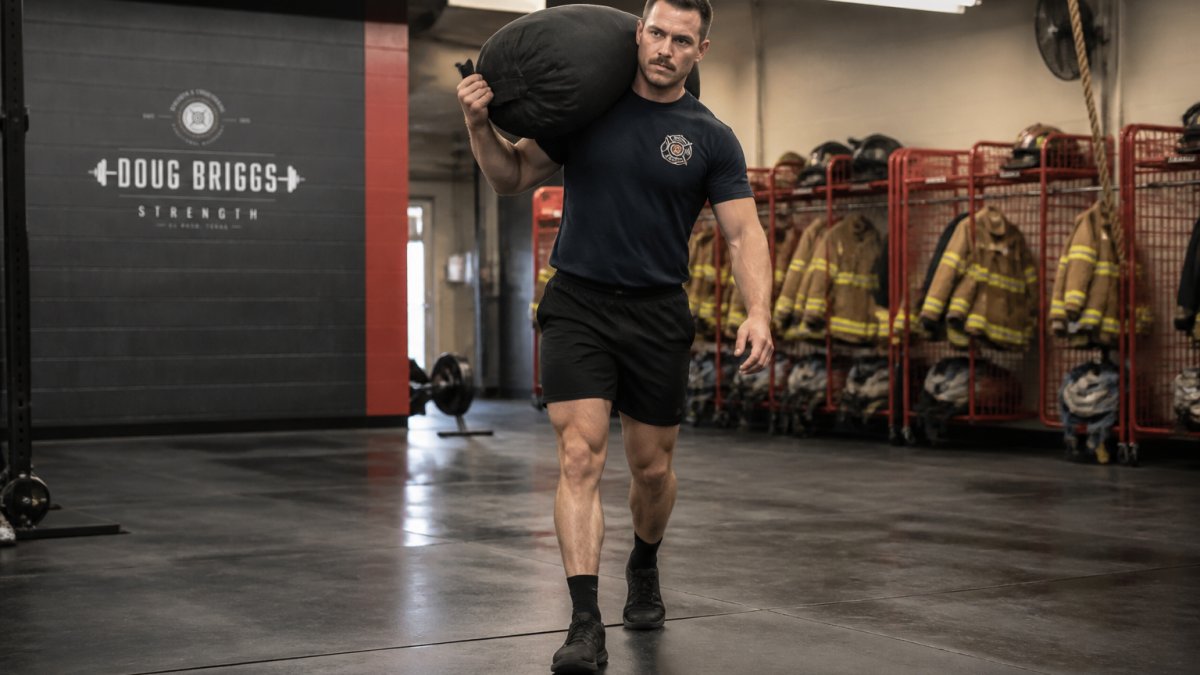
Consider these staples:
- Loaded carries: farmer's walks and suitcase carries for grip and trunk strength
- Stair climbing: weighted step-ups or stair work for fireground endurance
- Sled pushes and drags: force production under sustained effort
The common thread is transfer. A National Strength and Conditioning Association position on resistance training supports resistance training as a foundation for physical performance across populations, and tactical athletes are no exception.
Building a Firefighter Workout Schedule Around Shifts and Interrupted Sessions
A firefighter workout schedule works best when it assumes sessions will be interrupted. Shift work, calls, and fatigue mean the plan has to bend without breaking. Design for consistency over perfection.
Three principles keep a schedule sustainable:
- Train the big qualities first. If a session gets cut short, the strength work should already be done.
- Use flexible session lengths. A 20-minute session beats a skipped 60-minute one.
- Plan on-duty and off-duty training separately. On-duty work should be shorter and lower-risk; off-duty sessions carry the heavier loads.
A simple weekly template might look like this:
| Day | Focus | Duration | Notes |
|---|---|---|---|
| Day 1 | Full-body strength | 45-60 min | Squat, hinge, push, pull, carry |
| Day 2 | Aerobic conditioning | 30-40 min | Steady work for recovery |
| Day 3 | Full-body strength | 45-60 min | Vary loads and movements |
| Day 4 | High-intensity conditioning | 20-30 min | Intervals and circuits |
| Day 5 | Mobility and recovery | 20-30 min | Low-intensity, joint-friendly |
If a call interrupts a session, finish the strength work and drop the accessory work, that priority order protects progress when time runs short.
Risks, Evidence Limitations, and When to Modify Training
Tactical strength training carries real risks if programmed poorly or pushed too hard too soon. The most common mistakes are doing too much too fast, skipping recovery, and ignoring existing injuries. This section covers the specific risks, the contraindications that should change your programming, and the criteria for returning after a setback.
Common Risks and How They Show Up
- Overtraining and burnout: too much volume with too little rest. Early signs include resting heart rate creeping up, sleep quality dropping, and a session that used to feel easy now feeling like a grind. If two or more of those show up in the same week, cut volume by roughly a third before cutting intensity.
- Injury from rapid progression: adding load faster than the body adapts. A common pattern is adding weight every session for three weeks, then hitting a wall and a tweaked back. Progress load in small increments and deload every fourth week.
- Ignoring niggles: training through pain that signals a problem. Sharp, localized, or one-sided pain is different from general muscle soreness. Sharp pain is a stop signal; soreness is not.
Contraindications and When to Modify
Some situations call for modifying the program, not abandoning it:
- Acute low-back pain: swap heavy deadlifts and barbell rows for trap-bar deadlifts, hip hinges with light load, and carries at a weight that does not provoke symptoms. Keep moving; do not go to bed rest.
- Shoulder impingement or a history of rotator-cuff issues: reduce overhead pressing volume, emphasize neutral-grip pressing and rowing, and add scapular and rotator-cuff work before loading overhead.
- Knee pain with stair work: reduce weighted step-up height, slow the descent, and pair with isometric wall sits. Stair climbing is a job task, so the goal is to keep the pattern, not eliminate it.
Red Flags That Mean Stop and Get Evaluated
- Chest pain, pressure, or unusual shortness of breath during exertion
- Dizziness, fainting, or heart rhythm that feels irregular during a session
- Sharp joint pain that does not resolve within a few minutes of stopping
These are not "train around it" symptoms. They are reasons to stop, document what happened, and follow your department's injury-reporting and medical-evaluation process.
Return-to-Training Criteria
Before returning to full tactical training after an injury, most practitioners look for three things: pain-free range of motion in the affected joint, the ability to perform the movement pattern at bodyweight or light load without compensation, and a gradual reintroduction over at least two weeks. A firefighter returning from a shoulder injury should not jump straight back into heavy overhead work.
Evidence Limitations
Evidence quality in this field is uneven. Much of the tactical fitness research is small, mixed in population, or drawn from related fields rather than firefighters specifically. That does not make the training worthless, it means the case for tactical strength training rests more on the logic of specificity and consistent practice than on a single definitive study. Where the evidence is strong (combined strength and aerobic training improves occupational task performance), the guidance is firm.
Conclusion: Who Benefits Most From Tactical Strength Training
Tactical strength training pays off most for firefighters who want to perform on the fireground, not just look fit in the gym.
The honest answer comes down to fit. If your training already mirrors the job's demands, you are ahead.
That is where Doug Briggs Strength comes in.
Book a free consultation with Doug Briggs Strength and build a training plan that holds up on the fireground.
Frequently Asked Questions
Is tactical strength training better than a regular gym workout for firefighters?
It depends on what the gym workout includes. A general program built around bench presses and bicep curls leaves gaps in the movement patterns firefighters rely on: loaded carries, stair climbing, hose handling, and equipment carries. Tactical strength training organizes the same resistance training principles around those job tasks. If your current gym routine already covers squats, hinges, carries, and conditioning, the gap is smaller than program marketing suggests. The real difference is exercise selection and intent, not the gym itself.
How many days a week should firefighters strength train?
Two to three full-body sessions per week is enough to build and maintain muscular strength when the sessions include progressive overload. A firefighter workout schedule built around two quality sessions plus one conditioning day fits most shift rotations better than a five-day split that collapses the first time a call runs long. Consistency across months matters more than the number of days per week. If you can only train three days a week, that is a workable schedule, not a compromise.
Can firefighters build strength while on duty?
Yes, with realistic expectations. On-duty training works when sessions are short and flexible: 30 to 40 minutes of focused work, a plan for interrupted sessions, and a rule that finishing two or three key lifts beats abandoning the workout entirely. Station gyms rarely have everything, so bodyweight progressions, dumbbells, and a single barbell cover most needs. Treat on-duty sessions as maintenance or a supplement to your main training days rather than the foundation of your program.
Does strength training improve firefighter endurance?
It supports it, but it does not replace aerobic conditioning. Research on concurrent training shows strength and endurance work can coexist when program design manages fatigue, which is why most firefighter strength and conditioning programs pair resistance training with dedicated cardiovascular work. Strength training improves your ability to carry, climb, and drag without hitting a wall early; aerobic conditioning determines how long you can keep going. You need both, and the split between them should match your current fitness level.
What should firefighters look for in a tactical strength training program?
Look for four things: exercises that mirror job tasks like stair climbing, hose handling, and equipment carries; a progression scheme that applies progressive overload over months, not weeks; a schedule flexible enough to survive shift work and interrupted sessions; and a plan for recovery and fatigue management. Ask whether the program adjusts for individual fitness level and injury history. A program that ignores your shoulder or your 24-hour rotation is not tactical, no matter what the label says.