 ultimate-guide
Tactical Fitness Training: Core Benefits & Results
Table of Contents
- What Tactical Fitness Training Actually Is
- Physical Demands Tactical Professionals Face
- Tactical Fitness Injury Prevention Strategies
- How to Build Endurance for Tactical Operations
- Tactical Athlete Conditioning Programs: Building Work Capacity
- Mental Toughness and Stress Inoculation Through Training
- Why Personalized Tactical Fitness Training Delivers Results
- Frequently Asked Questions
Last Updated: September 21, 2026
What Tactical Fitness Training Actually Is
Tactical fitness training is specialized physical conditioning for high-stress professions, emphasizing functional strength, work capacity, and performance under physical and mental duress. Unlike general fitness programs, it combines strength development, cardiovascular endurance, mobility work, and stress inoculation into a cohesive system that builds operational readiness.
A person who can run five miles on a treadmill may collapse during a real emergency demanding explosive power, sustained load carriage, and decision-making under fatigue. Tactical fitness training addresses this gap by training the body and mind for exact operational conditions, delivering measurable improvements in performance under load and resilience during extended operations.
Tactical professionals, military personnel, first responders, nurses, operate in environments where physical failure isn't an option. They carry equipment, move rapidly, sustain effort for hours, and maintain cognitive function while exhausted. This reality shapes how tactical fitness training differs from conventional gym programming.
Physical Demands Tactical Professionals Face
Tactical professionals encounter a unique combination of physical stressors that rarely appear in standard fitness environments. Load carriage is fundamental: carrying body armor, weapons, medical supplies, or rescue equipment while moving at speed, climbing, crawling, or performing fine motor tasks. The weight is substantial, the duration unpredictable, and the terrain unforgiving.
Anaerobic demands are intense and repeated. Tactical operations require explosive effort, sprinting to cover, breaching doors, dragging casualties, or rapid repositioning, followed by brief recovery periods before the next demand. This isn't a single max-effort sprint; it's multiple high-intensity efforts separated by incomplete recovery. The body must generate power when already fatigued.
Sustained work capacity under stress separates those who endure from those who break. A shift for a nurse in an intensive care unit can span twelve hours of continuous problem-solving, physical movement, and emotional intensity. A tactical operator might move through an environment for hours with no predictable end point. The ability to maintain focus, strength, and decision-making when depleted is what operational readiness demands.
Environmental factors compound these demands. Cold, heat, altitude, darkness, and unfamiliar terrain all degrade performance. The body must function when conditions are adverse, when breathing is difficult, when visibility is poor, and when the nervous system is activated by genuine threat.
Tactical Fitness Injury Prevention Strategies
Injury prevention in tactical training builds durability so professionals sustain high performance without breaking down. The most common injuries occur from progressing too quickly, ignoring movement quality, or training through pain signals. Prevention requires understanding how different tissues adapt and recover, knowledge that separates sustainable programming from approaches that create chronic breakdown.
Tissue Adaptation Timelines and Progressive Overload
Muscle tissue adapts within 2-4 weeks, but tendons and ligaments adapt over 8-12 weeks, and bone over 12-16 weeks. Many athletes progress too quickly, overwhelming connective tissue before it's ready. This mismatch is why an athlete can feel strong enough to lift heavy but develop tendinopathy within weeks.
Progressive overload must respect different adaptation rates. A sustainable approach increases load by 5-10% per week; for load-bearing work, progression should be more conservative. Small, consistent increments allow tendons and bone to adapt alongside muscle, preventing acute failures that sideline professionals.
Movement Pattern Assessment and Corrective Sequencing
Many tactical athletes arrive with mobility limitations or movement compensations. A shoulder lacking external rotation will fail under load during overhead pressing. A hip lacking internal rotation forces lower back compensation during loaded carries. An ankle with restricted dorsiflexion shifts load to the knee.
Systematic assessment identifies constraints before loading begins. Evaluate shoulder external rotation (90 degrees minimum), hip internal/external rotation (40 degrees each), ankle dorsiflexion (10 degrees), and thoracic spine mobility. If limited, corrective work must precede strength training. Building strength around dysfunction guarantees it worsens under load.
Recovery Protocols: Sleep, Nutrition Periodization, and Stress Management
Recovery is part of the training system. Sleep, nutrition, and stress management directly influence injury risk and adaptation. An athlete sleeping 5-6 hours has impaired tissue repair, reduced immune function, and elevated cortisol. The National Sleep Foundation recommends 7-9 hours; tactical athletes under high training stress often need the upper range.
Nutritional periodization, adjusting intake based on training phase, is critical for injury prevention. During high-volume phases, athletes need 0.7-1.0 grams protein per pound of body weight daily and sufficient calories. Underfueling compromises adaptation and increases injury risk. During lower-volume phases, calories can decrease, but protein remains high.
Chronic occupational stress (shift work, on-call status) reduces recovery capacity for training adaptation. Acknowledging this means adjusting training volume or intensity during high-stress periods. A tactical professional working 12-hour shifts may need to reduce training volume by 20-30% to prevent overtraining and injury.
Effective injury prevention requires ongoing monitoring. Resting heart rate elevation (5+ bpm above baseline), persistent soreness beyond 48 hours, or declining performance signal overtraining. A program that adjusts based on these signals prevents fatigue accumulation that leads to injury.
How to Build Endurance for Tactical Operations
Endurance for tactical operations differs from traditional cardiovascular training. It's about sustaining high-intensity effort, recovering partially, and repeating under load while making critical decisions. This requires training specific energy systems and building psychological resilience.
Energy System Specificity: Anaerobic Power and Capacity
Tactical operations demand anaerobic power (maximum effort for 6-30 seconds) and anaerobic capacity (high-intensity effort for 30 seconds to 3 minutes, recovering partially, and repeating). Aerobic fitness supports recovery between efforts, but steady-state cardio alone doesn't prepare for tactical demands.
Specific protocols that match real demands include:
- Interval training: 20-40 seconds of maximum or near-maximum effort (sprints, rowing, assault bike) followed by 40-60 seconds of partial recovery, repeated for 8-12 rounds. This trains the body to clear lactate and maintain power output when fatigued.
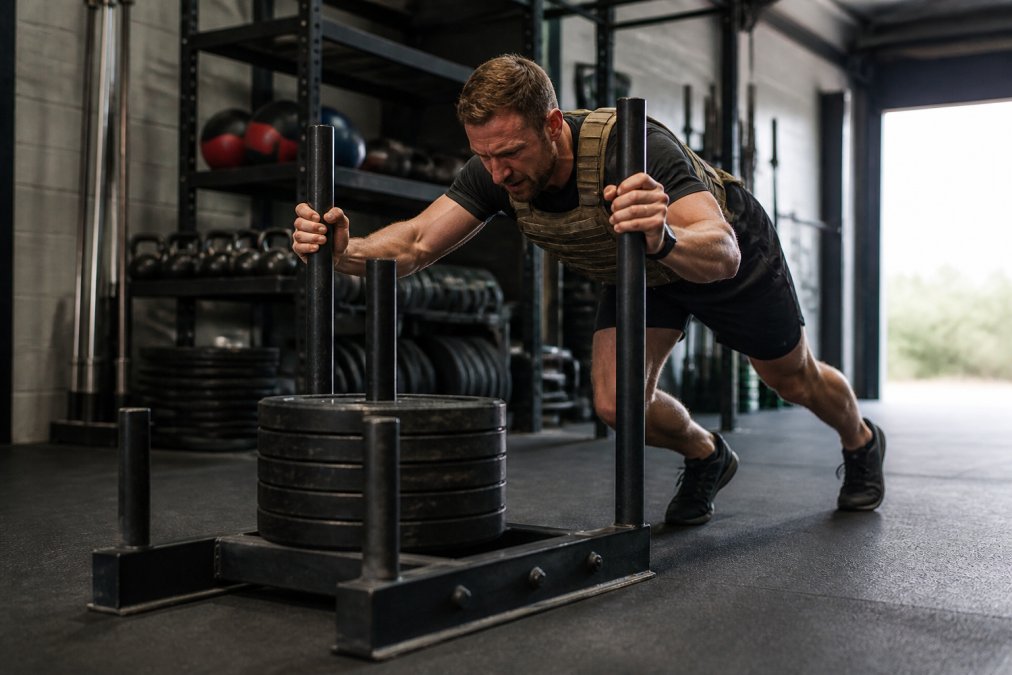
- Loaded carries and movement complexes: 30-60 second efforts carrying heavy loads (kettlebells, sandbags, weighted vests) or performing complex movement sequences (burpees, sled pushes, climbing), followed by 60-90 seconds of lighter work or rest. These build work capacity while maintaining movement quality under fatigue.
- Circuit training: Alternating between strength movements (heavy deadlifts, squats) and conditioning work (rowing, sprints, carries) with minimal rest. A typical circuit might include 5 rounds of: 5 heavy deadlifts, 200-meter sprint, 40-second kettlebell swing, 60-second rest. This trains the nervous system to function under the fatigue that tactical operations create.
An athlete trained primarily on steady-state running may have high aerobic capacity but will struggle with repeated high-intensity efforts and incomplete recovery that tactical work demands.
Work Capacity and Operational Readiness
Work capacity, total volume of quality work an athlete can perform, directly predicts operational success. A tactical professional with high work capacity accomplishes more while maintaining movement quality and decision-making ability.
Building work capacity happens through systematic progression of training volume and intensity over 12 weeks:
- Weeks 1-4 (Foundation): Establish baseline with moderate volume and intensity. Example: 3 rounds of 30-second efforts with 90-second recovery, 3 times per week.
- Weeks 5-8 (Build): Increase volume or intensity. Example: 4-5 rounds of 40-second efforts with 60-second recovery, 3-4 times per week.
- Weeks 9-12 (Peak): Maximum work capacity. Example: 6 rounds of 45-second efforts with 45-second recovery, or longer duration efforts (2-3 minutes) with partial recovery, 3-4 times per week.
This progression prevents plateaus and reduces injury risk. An athlete jumping from foundation to peak intensity in weeks 1-2 will break down or fail to adapt.
Decision-Making and Cognitive Load Under Fatigue
Endurance training must include cognitive demands. Real tactical operations require decision-making and fine motor control while exhausted. An athlete who can perform 50 burpees but can't think clearly afterward hasn't trained for actual demands.
Cognitive-load training adds decision-making to conditioning work. Examples include:
- Complex movement sequences under fatigue: Performing technical movements (kettlebell snatches, rope climbs, handstand holds) after high-intensity conditioning. This trains the nervous system to maintain motor control when depleted.
- Timed problem-solving during conditioning: Completing a conditioning circuit while solving math problems, recalling information, or executing a tactical scenario. This mimics the cognitive demands of real operations.
- Environmental stressors: Training in heat, cold, darkness, or unfamiliar terrain while performing conditioning work. These environmental factors degrade performance and require adaptation.
An athlete who has performed complex movements while exhausted, under time pressure, and in uncomfortable conditions develops confidence and reduces panic when real operations demand the same.
Aerobic Base as Recovery Foundation
A solid aerobic base improves recovery between high-intensity efforts and supports long-duration operations. Aerobic training should comprise 20-30% of total volume at moderate intensity (60-70% max heart rate), improving lactate clearance and recovery between intense efforts.
For tactical professionals with irregular schedules, aerobic training is flexible and solo-friendly, fitting into schedules more easily than structured intervals while building endurance capacity.
Tactical Athlete Conditioning Programs: Building Work Capacity
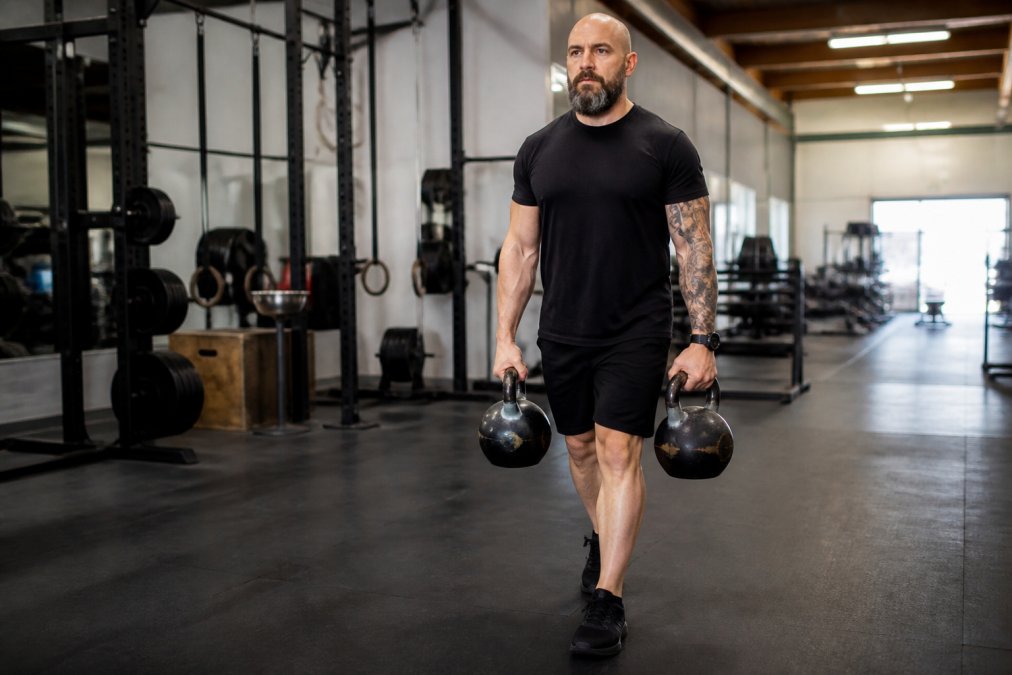
Building work capacity is the central goal of tactical conditioning. A tactical professional with high work capacity sustains performance through extended operations without degradation.
Periodization structures the training year into phases: strength (baseline power and movement quality), power (explosive application), conditioning (work capacity and anaerobic threshold), and maintenance (sustain gains and recovery).
Mental Toughness and Stress Inoculation Through Training
Physical capability without mental resilience fails under pressure. Mental toughness, the ability to maintain focus and execute under extreme stress, can be trained.
Why Personalized Tactical Fitness Training Delivers Results
Generic programming fails tactical athletes because it doesn't account for individual differences in movement capacity, injury history, schedule constraints, or role demands. A nurse working twelve-hour shifts faces different recovery challenges than a full-time military operator.
Frequently Asked Questions
What are the primary physical benefits of tactical fitness training?
Tactical fitness training builds functional strength, work capacity, and resilience under physical stress. You develop the ability to carry heavy loads over distance, maintain performance during fatigue, and recover faster between high-intensity efforts. These improvements directly translate to operational readiness, the core measure of whether you can execute your role effectively when it matters most.
How does tactical fitness training differ from traditional gym workouts?
Traditional gym training often prioritizes isolated muscle development or aesthetic goals. Tactical fitness training prioritizes movement patterns, load carriage, and performance under sustained stress. The focus is on multi-modal conditioning, combining strength, endurance, and mobility, rather than maximizing a single metric. This approach builds longevity and reduces injury risk during real operational demands.
Why is injury prevention so important in tactical athlete conditioning programs?
Tactical professionals cannot afford downtime. Injury mitigation through proper movement patterns, progressive overload, and recovery protocols ensures you stay operational year-round. Conditioning programs that prioritize longevity, not just peak performance, protect your career and quality of life. Preventive training catches imbalances and weaknesses before they become injuries.
How long before I see measurable results from tactical fitness training?
Most people notice improved energy, better movement quality, and increased work capacity within 3-4 weeks of consistent training. Significant strength and endurance gains typically appear within 8-12 weeks. The timeline depends on your starting point, training frequency, recovery habits, and nutrition. Personalized programs accelerate results because they address your specific gaps rather than following generic progressions.